Category: Ecommerce Growth & Strategy

  • State of Indian D2C 2026: RTO Rates, Ad Costs, Retention Benchmarks (Industry Report)

    State of Indian D2C 2026: RTO Rates, Ad Costs, Retention Benchmarks (Industry Report)

    About This Report

    This report aggregates data from 200+ Indian D2C brands across fashion, beauty, food, home, and electronics categories. Data was collected from brands doing ₹5L to ₹5Cr/month in revenue during Jan-Sep 2026.

    This is not recycled industry data. These are real numbers from real Indian D2C businesses.

    Key Findings

    1. Average D2C brand becomes profitable at order #2.3 — First orders are unprofitable for 78% of brands. Retention is the path to profitability.
    2. Meta ad CAC rose 32% year-over-year — From ₹380 average in 2025 to ₹502 in 2026.
    3. Brands with 25%+ repeat purchase rate have 3.4x higher profit margins than brands with under 15% repeat rate.
    4. COD still accounts for 45% of Indian D2C orders — down from 55% in 2024, but still a massive working capital drag.
    5. Quick commerce grew 85% YoY for FMCG D2C brands — Blinkit, Zepto, and Instamart are now meaningful channels.

    Customer Acquisition Costs (2026)

    ChannelAverage CACMedian CACTop 25% Brands
    Meta Ads (Facebook + Instagram)₹502₹420₹280
    Google Ads (Search + Shopping)₹650₹550₹380
    Influencer Marketing₹350₹300₹180
    Organic (SEO + Social)₹85₹60₹30
    WhatsApp Marketing₹120₹95₹55
    Referral Programs₹150₹120₹75

    Key insight: The gap between average and top-25% brands is enormous. Top performers achieve 40-50% lower CAC through better creative, stronger organic presence, and higher conversion rates.

    RTO (Return to Origin) Rates by Category

    CategoryAverage RTO RateBest-in-Class RTOWorst Quartile RTO
    Fashion/Apparel22%8-12%35-45%
    Footwear18%7-10%30-35%
    Beauty/Skincare8%3-5%15-20%
    Electronics12%5-8%20-25%
    Food/Grocery5%2-3%10-12%
    Home Decor14%6-9%25-30%

    What separates low-RTO brands: COD verification (OTP-based), accurate product descriptions, size recommendation tools, and WhatsApp order confirmation before shipping.

    Retention Benchmarks

    MetricAverageTop 25%Bottom 25%
    30-day repeat purchase rate12%22%5%
    90-day repeat purchase rate18%32%8%
    Customer lifetime value (12 months)₹2,800₹6,500₹1,200
    Average orders per customer (12 months)1.42.81.1
    Email/WhatsApp list engagement rate15%28%6%

    Revenue Channel Mix (2026)

    ChannelAverage Revenue ShareTrend vs 2025
    Own website (D2C)52%Stable
    Amazon22%Slight decline
    Flipkart12%Stable
    Quick commerce (Blinkit/Zepto/Instamart)6%Up 85%
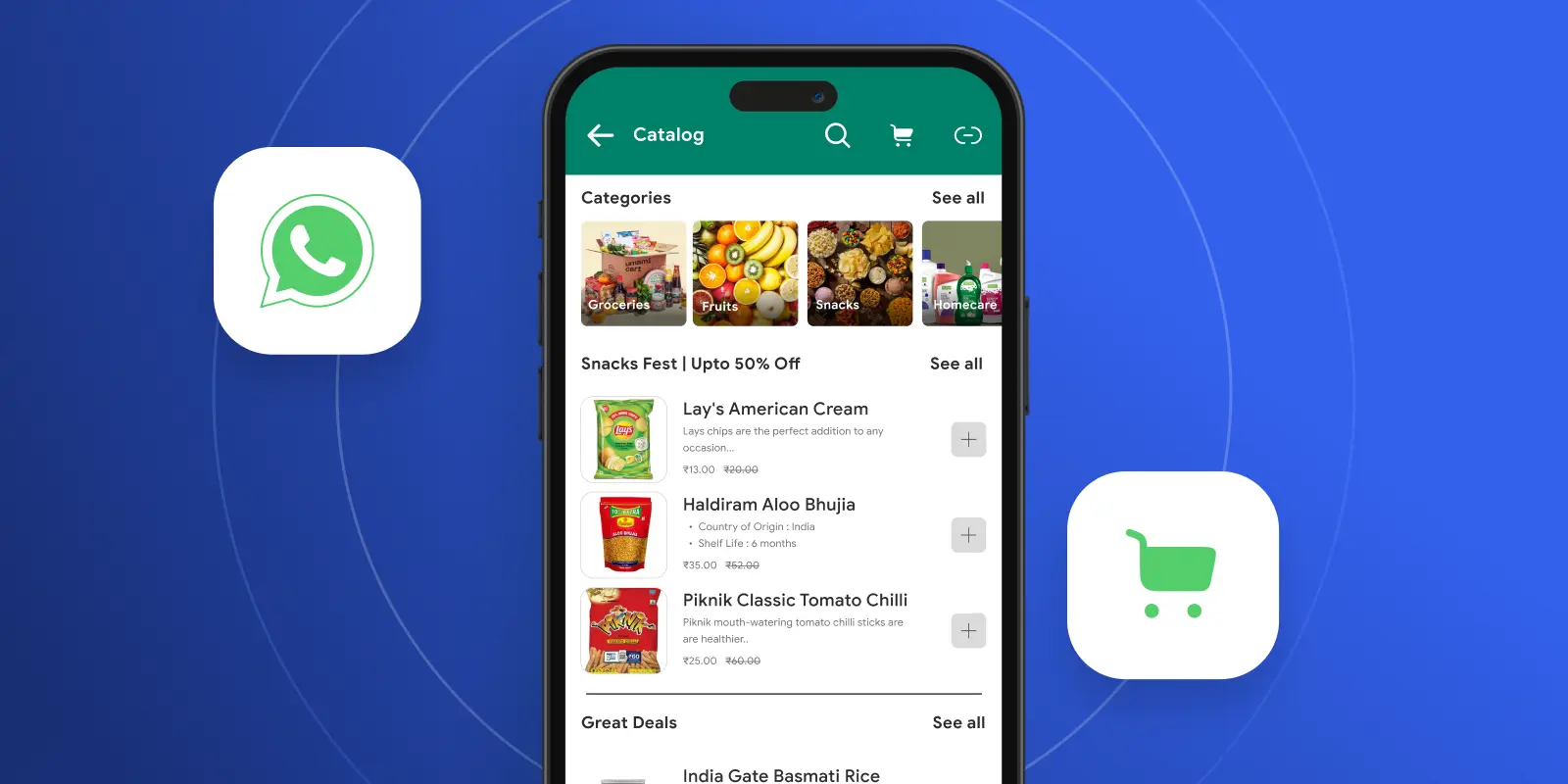
    WhatsApp commerce4%Up 40%
    Offline/retail4%Up 20%

    Ad Spend Efficiency

    Monthly RevenueAverage Ad Spend % of RevenueAverage ROAS
    Under ₹5L35-50%2-3x
    ₹5L-20L25-35%3-4x
    ₹20L-50L20-28%4-5x
    ₹50L-1Cr15-22%5-7x
    Above ₹1Cr12-18%6-8x

    As brands scale, ad spend as a percentage of revenue decreases — but only if they invest in retention and organic channels.

    Predictions for 2027

    • CAC will continue rising 20-30% — Brands not investing in retention will become unprofitable.
    • Quick commerce will become a top-3 channel for FMCG D2C brands.
    • AI will reduce customer support costs 40-60% for brands that adopt chatbots.
    • Video commerce (live selling) will account for 5-8% of revenue for fashion/beauty brands.
    • The D2C shakeout continues — Brands with poor unit economics and no retention strategy will shut down. Survivors will be stronger.

    Download the Full Report

    Want the complete dataset with category-specific breakdowns? Contact us for the full report — free for brands considering working with Growww Tech.

    Related reading:

  • HSN Code Guide for Ecommerce: Stop Getting Penalized for Wrong Classification

    HSN Code Guide for Ecommerce: Stop Getting Penalized for Wrong Classification

    What Are HSN Codes and Why They Matter

    HSN (Harmonized System of Nomenclature) codes are standardized codes that classify traded products. Every product sold in India needs an HSN code on its GST invoice.

    Why getting it wrong is expensive:

    • Wrong GST rate applied — If your HSN code maps to 18% GST but you’re charging 12%, you owe the difference + interest
    • Input Tax Credit blocked — Your buyers can’t claim ITC if the HSN code is wrong on your invoice
    • GST notice — Mismatch triggers automated notices from the GST system
    • Penalty — Up to ₹50,000 per instance of incorrect HSN reporting
    • Marketplace listing issues — Amazon and Flipkart increasingly validate HSN codes during listing

    How to Find Your Product’s HSN Code

    Method 1: GST Portal HSN Search

    1. Go to cbic-gst.gov.in → GST Rate Finder
    2. Enter your product description
    3. Review the results — look for the most specific match (8-digit HSN is most accurate)
    4. Verify the GST rate matches what you’ve been charging

    Method 2: Customs Tariff

    • The Central Board of Indirect Taxes and Customs (CBIC) maintains the complete HSN tariff
    • Navigate by chapter (e.g., Chapter 61 = Knitted garments, Chapter 62 = Woven garments)
    • More precise but harder to navigate

    Common HSN Codes for D2C Products

    Product CategoryHSN CodeGST Rate
    Cotton t-shirts/tops (≤₹1,000)61095%
    Cotton t-shirts/tops (>₹1,000)610912%
    Silk sarees50075%
    Leather bags/wallets420218%
    Skincare (cosmetics)330418%
    Organic food products0904-09105%
    Handmade jewellery (imitation)71173%
    Electronic accessories854418%
    Fitness equipment950612%
    Home decor (wooden)442012%
    Scented candles340612%
    Coffee/tea0901/09025%

    Note: GST rates and HSN classifications are updated periodically. Always verify with the latest GST rate schedule.

    HSN Code Requirements by Turnover

    Annual TurnoverHSN Digits Required on Invoice
    Up to ₹5 crore4-digit HSN code
    Above ₹5 crore6-digit HSN code
    Exports8-digit HSN code

    Common Mistakes

    • Using generic HSN codes — ‘Articles of apparel’ (Chapter 62) instead of specific ‘Men’s cotton shirts’ (6205). Be as specific as possible.
    • Same HSN for all variants — A product priced at ₹800 (5% GST) and ₹1,200 (12% GST) need different tax treatment even if they’re the same product.
    • Not updating after GST Council changes — GST rates change periodically. Review your HSN codes after every GST Council meeting.
    • Ignoring marketplace validation — Amazon and Flipkart now cross-check HSN codes. Incorrect codes can lead to listing suspension.

    Need Help With GST Compliance?

    At Growww Tech, we help ecommerce sellers get their GST setup right — from HSN classification to return filing to TCS reconciliation. Get your compliance sorted.

    Related reading:

  • 78% Mobile Traffic, 50% Lower Conversion: The Indian D2C Mobile Problem

    78% Mobile Traffic, 50% Lower Conversion: The Indian D2C Mobile Problem

    The Mobile Conversion Gap

    Every Indian D2C store we audit shows the same pattern:

    MetricMobileDesktopGap
    Traffic share78-85%15-22%Mobile dominates
    Conversion rate0.8-1.5%2-3.5%Mobile converts 50% lower
    Average order value₹1,200-1,800₹1,800-2,500Mobile AOV 25-35% lower
    Cart abandonment75-82%65-72%Mobile abandons 10-15% more

    You’re paying the same ad cost to drive a mobile visitor and a desktop visitor. But the mobile visitor is half as likely to buy and spends less when they do.

    Why Mobile Converts Lower in India

    1. Slow page loads on 4G — Average Indian 4G speed: 15-25 Mbps. Your 4MB product page takes 3-5 seconds. 53% of mobile users leave if page takes >3 seconds.
    2. Small screen, complex checkout — Address forms designed for desktop are painful on a 6-inch screen. Tiny buttons, multiple page loads, keyboard switching between text/numbers.
    3. Payment friction — Typing card details on mobile is tedious. UPI helps, but only if it’s the default option with intent flow.
    4. Distraction-rich environment — Mobile users are multi-tasking. WhatsApp notification → they leave your checkout → never come back.
    5. Low-end devices — 60%+ of Indian smartphones are under ₹15,000. Heavy Shopify themes with animations and high-res images lag on these devices.

    7 Fixes for Mobile Conversion

    1. Speed: Under 3 Seconds Load Time

    • Compress all images to WebP format (50-70% smaller than JPEG)
    • Lazy load images below the fold
    • Remove unnecessary Shopify apps (each adds JavaScript)
    • Use Shopify’s native features over third-party apps where possible
    • Test on a ₹12,000 Android phone, not your iPhone 15

    2. Simplified Navigation

    • Max 5 items in mobile menu
    • Sticky ‘Add to Cart’ button that follows scroll
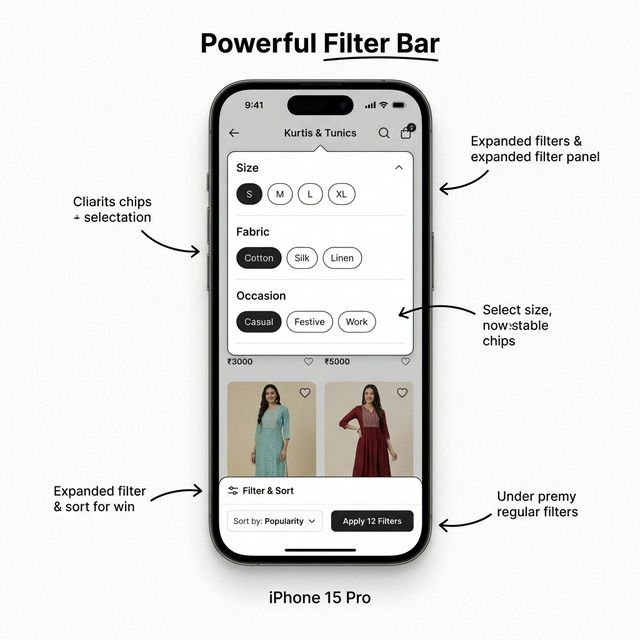
    • Product filters: max 3 visible, rest in ‘More Filters’
    • Search bar prominently placed (not hidden behind an icon)

    3. Thumb-Friendly Design

    • All tap targets: minimum 44x44px
    • CTA buttons: full-width on mobile, at least 48px tall
    • Key actions (Add to Cart, Buy Now, Checkout) reachable by thumb in natural holding position
    • No hover states — they don’t work on mobile

    4. Single-Page Checkout

    • Shopify’s default checkout is already good — don’t redirect to external pages
    • Minimize form fields: name, phone, address, payment. That’s it.
    • Pincode → auto-fill city and state
    • Remember returning customers (auto-fill from last order)

    5. UPI Intent Flow

    • When customer selects UPI, open their UPI app directly (Google Pay, PhonePe, etc.)
    • No manual VPA entry — that’s a conversion killer on mobile
    • Razorpay and Cashfree both support intent flow — make sure it’s enabled

    6. WhatsApp as Backup

    • Floating WhatsApp button on product pages
    • If someone spends 30+ seconds on a product page, trigger: ‘Have questions? Chat with us on WhatsApp’
    • WhatsApp conversation → payment link → purchase. Bypasses the entire checkout friction.

    7. App Clip / PWA

    • Progressive Web App (PWA) adds your site to the home screen like an app
    • Faster repeat loads, push notification capability, offline product browsing
    • Shopify apps: Plobal Apps, Appbrew for full PWA implementation
    • Not needed for all brands — prioritize if you have high repeat purchase frequency

    Need Help With Mobile Optimization?

    At Growww Tech, we optimize Shopify stores for Indian mobile users. Get a free mobile UX audit.

    Related reading:

  • COD-to-Prepaid Conversion: How Top D2C Brands Get 50%+ Prepaid Orders

    COD-to-Prepaid Conversion: How Top D2C Brands Get 50%+ Prepaid Orders

    Why COD Is Killing Your Margins

    The real cost difference between COD and prepaid orders:

    Cost FactorPrepaid OrderCOD OrderDifference
    Payment gateway fee2% (₹30 on ₹1,500)0% (collected on delivery)₹30
    COD remittance fee₹0₹30-50₹30-50
    RTO rate5-10%15-30%10-20% more returns
    RTO cost (shipping both ways)₹0₹80-120 per RTO₹80-120
    Effective RTO cost per order₹10-15₹30-50₹20-35
    Total cost difference₹40-85 per order

    On 1,000 orders/month with 60% COD, that’s ₹25,000-50,000/month in avoidable costs.

    7 Strategies to Increase Prepaid Orders

    1. Prepaid Discount (Most Effective)

    • Offer ₹50-100 off for prepaid payment
    • Frame it as ‘Prepaid Discount’ not ‘COD Surcharge’ — positive framing converts better
    • Display prominently on product page and checkout: ‘₹50 off on prepaid orders!’
    • Expected shift: 10-20% of COD orders move to prepaid

    2. Free Shipping for Prepaid Only

    • ‘Free shipping on prepaid orders. COD orders: ₹49 shipping fee’
    • This creates a tangible benefit for choosing prepaid
    • Customers don’t mind paying for convenience, but they love getting something free
    • Expected shift: 8-15% of COD orders move to prepaid

    3. Partial Payment (COD + Advance)

    • Collect ₹100-200 advance online, rest on delivery
    • Reduces RTO (customer has skin in the game) while still offering ‘COD feel’
    • Shopify apps like Kwik COD offer this feature
    • Expected RTO reduction: 40-50% on partial COD orders

    4. UPI as Default Payment

    • Make UPI the first and most prominent payment option
    • Use UPI intent flow (opens UPI app directly)
    • Many customers choose COD because they don’t trust online payment — UPI feels safe and familiar
    • Expected shift: 5-10% of COD orders move to UPI

    5. Trust Signals at Checkout

    • Display ‘Secure Payment’ badges, ‘Easy Returns’ promise, and customer count
    • COD is often chosen out of trust deficit, not payment preference
    • Add ‘Trusted by X,000 customers’ and payment partner logos
    • Expected shift: 3-5% improvement

    6. Cashback on Prepaid

    • Offer loyalty points or store credit for prepaid orders
    • ‘Earn ₹75 in store credit on every prepaid order!’
    • This creates a recurring incentive that compounds with repeat purchases
    • Expected shift: 5-10% improvement

    7. WhatsApp COD Verification + Prepaid Nudge

    • When COD order is placed, send WhatsApp: ‘Your order is confirmed! Switch to prepaid now and get ₹75 off: [payment link]’
    • 25-30% of customers convert to prepaid when given a post-order nudge
    • This also verifies the order is genuine (reducing fake COD orders)

    Realistic Prepaid Targets

    Brand StageTypical COD %Target Prepaid %Timeline
    New brand (0-6 months)60-70% COD40-50% prepaid3-6 months
    Growing brand (6-18 months)50-60% COD50-60% prepaid3-4 months with strategies above
    Established brand (18+ months)30-40% COD60-70% prepaidAlready there with consistent effort

    Need Help Reducing COD?

    At Growww Tech, we implement COD-to-prepaid conversion strategies for Indian D2C brands. Let’s fix your payment mix.

    Related reading:

  • GST TCS Reconciliation: Why Your Working Capital Is Stuck (And How to Fix It)

    GST TCS Reconciliation: Why Your Working Capital Is Stuck (And How to Fix It)

    The TCS Problem for Marketplace Sellers

    Under GST law, ecommerce operators (Amazon, Flipkart, Meesho, etc.) must collect 1% TCS (Tax Collected at Source) on the net value of goods sold through their platform.

    On paper, this is a credit you can claim when filing your GST returns. In practice:

    • Marketplace TCS data doesn’t match your GST returns — Different periods, different classifications, rounding differences
    • The credit sits unclaimed for months — Until you reconcile and claim it in GSTR-2B
    • At ₹10L/month marketplace sales, that’s ₹10,000/month stuck — Over a year, ₹1.2L in working capital trapped in the GST system

    Step-by-Step TCS Reconciliation

    Step 1: Download Marketplace TCS Certificates

    • Amazon: Seller Central → Reports → Tax Document Library → TCS Certificate
    • Flipkart: Seller Hub → Payments → Tax Reports → TCS Certificate
    • Download monthly TCS certificates (Form GSTR-8 filed by the marketplace)
    • These certificates show the TCS collected on your sales

    Step 2: Match with GSTR-2B

    • Login to GST portal → Returns → GSTR-2B
    • Navigate to ‘TCS Credit Received’ section
    • This shows the TCS credits reported by marketplaces against your GSTIN
    • Compare each marketplace’s TCS certificate total with the GSTR-2B amount
    • Common mismatches: timing differences (marketplace reported in different month), GSTIN errors, inter-state vs intra-state classification

    Step 3: Reconcile Mismatches

    • Timing mismatch: If Amazon collected TCS in March but reported in April, it will show in your April GSTR-2B. Wait one month before flagging.
    • Amount mismatch: Compare line by line. Common causes: returns processed after TCS collection, cancellations, GST rate differences.
    • Missing entries: If TCS is on your certificate but not in GSTR-2B, raise a ticket with the marketplace. They need to correct their GSTR-8 filing.

    Step 4: Claim the Credit

    • In your GSTR-3B filing, include the TCS credit in the ‘TCS credit received’ field
    • This offsets your GST liability for that month
    • If TCS credit exceeds your liability, the balance carries forward

    Common TCS Issues and Fixes

    IssueCauseFix
    TCS not showing in GSTR-2BMarketplace filed late or with wrong GSTINRaise ticket with marketplace seller support
    Amount mismatchReturns/cancellations processed differentlyReconcile with order-level data from marketplace reports
    Inter-state vs intra-state wrongMarketplace classified shipment origin incorrectlyRaise correction request with marketplace
    Credit not reflecting in GSTR-3BDidn’t include in the correct fieldEnsure TCS credit is entered in Table 4 of GSTR-3B

    Pro Tips

    • Reconcile monthly, not quarterly — Monthly reconciliation catches issues early. Quarterly means 3 months of compounded mismatches.
    • Use reconciliation software — Tools like ClearTax, Zoho Books, or TallyPrime have auto-reconciliation features that match marketplace TCS with GSTR-2B.
    • Keep a TCS tracker spreadsheet — Log: marketplace, month, TCS amount on certificate, TCS amount in GSTR-2B, claimed in GSTR-3B, status (matched/pending/disputed).
    • File on time — Late GSTR-3B filing means late TCS credit claim, which means longer working capital lockup.

    Need Help With GST Compliance?

    At Growww Tech, we help ecommerce sellers set up proper GST workflows and reconciliation processes. Don’t leave money stuck in the system.

    Related reading:

  • D2C Brand Building in India: Beyond Performance Marketing (The Long Game)

    D2C Brand Building in India: Beyond Performance Marketing (The Long Game)

    The Performance Marketing Trap

    Most Indian D2C brands are built on Meta ads. Turn off the ads, revenue drops to zero. That’s not a brand — that’s a marketing channel with a Shopify store attached.

    The signs you’re in the performance marketing trap:

    • 80%+ of revenue comes from paid ads
    • Less than 15% repeat purchase rate
    • Customers don’t remember your brand name — they remember the ad they clicked
    • Price is your only differentiator — you compete on discounts, not value
    • You can’t raise prices — any increase tanks conversion rates

    Brand building is what gets you out of this trap. It’s slower, harder to measure, but it’s the only path to a sustainable D2C business.

    The Brand Building Framework for Indian D2C

    1. Define Your Brand POV (Point of View)

    Every strong D2C brand stands for something specific:

    • Mamaearth: Toxin-free, safe for babies → trust
    • boAt: Affordable audio for young India → accessibility + cool
    • Lenskart: Eyewear as fashion → style democratization
    • Your brand: What do you believe that competitors don’t? What would your brand say in a debate?

    This isn’t a mission statement on your About page. It should inform every product decision, every ad creative, every customer interaction.

    2. Build a Content Engine (Not Just Ads)

    • Instagram content: 80% value/education/entertainment, 20% promotional. Not the other way around.
    • YouTube: Long-form content that demonstrates expertise. ‘How to’ videos in your category.
    • Blog: SEO content that brings organic traffic. Reduces ad dependency over 6-12 months.
    • Email/WhatsApp newsletter: Regular value-add content keeps you top-of-mind.

    3. Create Brand Rituals

    • Unboxing experience: Custom packaging, handwritten thank you note, surprise sample. This gets shared on social media.
    • Community: WhatsApp group or Instagram community for your best customers. They become brand ambassadors.
    • Founder visibility: The founder is the brand’s most powerful asset. Share your journey, decisions, and values publicly.

    4. Invest in Organic Channels

    ChannelInvestmentTimeline to ROILong-term Value
    SEO/Blog₹15-30K/month (content)6-12 monthsHigh (compounding traffic)
    Instagram organicTime (daily posting)3-6 monthsMedium (algorithm dependent)
    YouTube₹10-20K/month (production)6-12 monthsVery high (evergreen)
    PinterestTime (15 min/day)3-6 monthsHigh (long pin lifespan)
    Email marketing₹2-5K/month (tool)1-3 monthsVery high (owned channel)

    Measuring Brand Building

    Brand building is harder to measure than performance marketing, but not impossible:

    • Brand search volume — Track your brand name searches on Google Trends. Rising brand searches = growing awareness.
    • Direct traffic — People typing your URL directly into their browser. This is pure brand recall.
    • Organic social following growth — Not bought followers, but genuine follower growth rate.
    • Repeat purchase rate — The best proxy for brand loyalty.
    • Word-of-mouth referrals — Ask new customers ‘How did you hear about us?’ Track ‘friend/family recommended’ responses.

    Need Help Building Your Brand?

    At Growww Tech, we help D2C brands transition from pure performance marketing to sustainable brand building. Let’s build a brand that lasts.

    Related reading:

  • ERP for Indian D2C Brands: Do You Need One? (Unicommerce vs Vinculum vs Zoho)

    ERP for Indian D2C Brands: Do You Need One? (Unicommerce vs Vinculum vs Zoho)

    When You Need an ERP/OMS

    You DON’T need an ERP if:

    • You’re doing under 100 orders/day
    • You sell on one channel (just your Shopify store)
    • Inventory is in one location
    • You can manage with Shopify + spreadsheets

    You DO need one when:

    • 100+ orders/day and manual processing causes errors
    • Multi-channel selling — Shopify + Amazon + Flipkart, and inventory sync is a nightmare
    • Multi-warehouse — Stock in 2+ locations and you’re overselling or underselling
    • High return rate — Returns processing and restocking is eating your time
    • Growth blocked — You can’t add a new marketplace or warehouse because operations can’t handle the complexity

    ERP vs OMS: What’s the Difference?

    OMS (Order Management System)ERP (Enterprise Resource Planning)
    FocusOrder processing, inventory, shippingEverything: orders, inventory, accounting, HR, procurement
    ComplexityMediumHigh
    Cost₹5K-25K/month₹15K-1L+/month
    Implementation time1-2 weeks4-12 weeks
    Best forD2C brands focused on operationsBrands needing full business management

    For most D2C brands doing 100-1,000 orders/day, an OMS is sufficient. You don’t need full ERP until you’re a ₹5Cr+ revenue business.

    Comparison: Unicommerce vs Vinculum vs Zoho Inventory

    FeatureUnicommerceVinculumZoho Inventory
    Starting price₹8K/month₹15K/month₹5K/month
    Best forIndian D2C, marketplace sellersEnterprise, multi-brandBudget-conscious, Zoho ecosystem
    Shopify integrationNativeNativeNative
    Amazon/Flipkart syncExcellentExcellentGood
    Quick commerce integrationYes (Blinkit, Zepto)YesLimited
    Warehouse managementYesYes (advanced)Basic
    Returns managementGoodExcellentBasic
    B2B/wholesaleLimitedYesYes
    Indian tax (GST)Built-inBuilt-inBuilt-in
    Implementation supportGood (Indian team)Excellent (dedicated manager)Self-serve + docs

    Our Recommendation

    • 100-500 orders/day, mostly D2C: Unicommerce — Purpose-built for Indian D2C, most marketplace integrations, affordable.
    • 500+ orders/day, multi-brand or B2B+D2C: Vinculum — Enterprise-grade, better for complex operations, dedicated implementation support.
    • Under 100 orders/day, tight budget: Zoho Inventory — Gets the basics right at the lowest cost. Upgrade when you outgrow it.

    Implementation Checklist

    1. Map your current process — Before implementing any system, document your order flow: order received → picked → packed → shipped → delivered/returned.
    2. Clean your data — Import accurate SKU data, current inventory counts, and supplier information. Garbage in = garbage out.
    3. Start with one channel — Don’t connect all channels on day one. Start with your highest-volume channel, verify everything works, then add others.
    4. Train your team — The tool is only as good as the people using it. Budget 1-2 weeks for training.
    5. Run parallel for 2 weeks — Keep your old system running alongside the new OMS for 2 weeks. Verify order counts and inventory match.

    Need Help With Operations?

    At Growww Tech, we implement OMS/ERP systems for D2C brands and optimize multi-channel operations. Let’s streamline your operations.

    Related reading:

  • Diwali 2026 Ecommerce Playbook: Week-by-Week Strategy for Indian D2C Brands

    Diwali 2026 Ecommerce Playbook: Week-by-Week Strategy for Indian D2C Brands

    Diwali 2026: The Biggest Revenue Opportunity of the Year

    Diwali season (Navratri through Diwali + 2 weeks) accounts for 35-50% of annual revenue for most Indian D2C brands. The brands that have a week-by-week plan outperform those that ‘wing it’ by 3-5x.

    This playbook gives you the exact week-by-week execution plan.

    Week 1: Navratri Launch (October 1-7)

    Campaigns

    • Launch ‘Navratri Collection’ or ‘Festive Edit’ — curated product bundles
    • Run Meta ads with Navratri-themed creatives (colors, rangoli, festive settings)
    • Google Shopping: Increase bids 20% on festive keywords
    • WhatsApp broadcast: ‘Festive season is here — early access for our community’

    Offers

    • 10% early-bird discount for email/WhatsApp subscribers
    • Free shipping on orders above ₹999
    • Bundle deals: ‘Buy 2 get 10% off, Buy 3 get 20% off’

    Week 2: Durga Puja + Dussehra (October 8-14)

    • Increase ad spend 30% — this is when shopping intent peaks in East India
    • Run flash sales (24-hour) on top products
    • Instagram stories: daily ‘Festive outfit/product of the day’ feature
    • Email sequence: 3 emails over the week (new arrivals, bestsellers, last chance early-bird)

    Week 3: Karva Chauth + Dhanteras Run-Up (October 15-21)

    • Karva Chauth-specific campaigns (if relevant to your product category)
    • Dhanteras preview for jewellery, gold-related, and premium product brands
    • Increase retargeting budget 50% — lots of window shoppers this week
    • Launch gift guide content: ‘Diwali Gifts Under ₹500 / ₹1,000 / ₹2,000’

    Week 4: Dhanteras + Diwali (October 22-28)

    This is your peak week. Everything you’ve built leads here.

    • Maximum ad spend — deploy 40% of total festive budget this week
    • Best offers: 20-30% off, BOGO on select items, free gift with purchase above threshold
    • WhatsApp: daily broadcasts with countdown (‘3 days to Diwali — last chance for delivery!’)
    • Customer support on overdrive — respond within 15 minutes
    • Monitor inventory hourly on top SKUs — stockout = lost revenue you’ll never recover

    Week 5: Post-Diwali (October 29 – November 10)

    • Clearance sale: 30-50% off remaining festive inventory
    • Target festive buyers with ‘Thank you’ email + next purchase incentive (₹200 off next order)
    • Retarget cart abandoners with maximum discount
    • Begin planning for Republic Day / Christmas if relevant to your category
    • Analyze: What worked? What didn’t? Document for next year.

    Creative Strategy for Festive Season

    Top 5 Performing Ad Types During Diwali

    1. Gift-giving UGC — Video of someone gifting your product to a loved one. Emotional, authentic, high conversion.
    2. Unboxing in festive setting — Product being opened with diyas/rangoli in background. Creates aspirational context.
    3. Before/After (home decor, fashion) — Room or outfit transformation with your product.
    4. Countdown/urgency statics — ‘Only 48 hours left’ with product + offer. Simple but effective.
    5. Founder festive message — Quick video from you wishing Diwali + sharing your best offer. Personal touch matters.

    Festive Season Metrics to Track

    MetricTargetWhy
    ROAS4x+Higher AOV should compensate for higher CPMs
    Cart abandonment rateUnder 60%Festive urgency should reduce abandonment
    Repeat purchase rate (from last year’s festive buyers)15-20%Measure retention from previous Diwali
    Average order value30-50% above normalBundle deals and gift purchases should lift AOV
    Customer acquisition costWithin 25% of normal CACAccept slightly higher CAC given higher LTV potential

    Need Expert Help With Diwali Campaigns?

    At Growww Tech, we run end-to-end Diwali campaigns for Indian D2C brands. From creative production to ad management to inventory planning. Start planning your Diwali campaign now.

    Related reading:

  • DPDP Act for D2C Brands: What You Need to Change Before 2027

    DPDP Act for D2C Brands: What You Need to Change Before 2027

    What Is the DPDP Act?

    The Digital Personal Data Protection Act, 2023 (DPDP Act) is India’s first comprehensive data privacy law. Think of it as India’s GDPR. It regulates how businesses collect, store, process, and share personal data of Indian citizens.

    If you run a D2C brand that collects customer names, phone numbers, email addresses, shipping addresses, or payment information — you are a ‘Data Fiduciary’ under this law. You have obligations.

    Key Requirements for D2C Brands

    1. Consent Before Collection

    • You must get explicit, informed consent before collecting personal data.
    • Pre-ticked checkboxes don’t count. The customer must actively opt in.
    • Your privacy policy must clearly state: what data you collect, why, how long you keep it, and who you share it with.
    • Action: Add a clear consent checkbox at checkout and account creation. Update your privacy policy.

    2. Purpose Limitation

    • You can only use data for the purpose you stated when collecting it.
    • Collected email for order updates? You can’t auto-add it to your marketing list without separate consent.
    • Collected phone number for delivery? You can’t share it with a marketing partner.
    • Action: Separate transactional consent (order processing) from marketing consent (newsletters, WhatsApp broadcasts).

    3. Data Minimization

    • Only collect data you actually need.
    • Does your checkout really need date of birth? Anniversary? If you’re not using it for personalization, don’t collect it.
    • Action: Audit your checkout fields and forms. Remove anything you don’t actively use.

    4. Right to Erasure

    • Customers can request deletion of their personal data.
    • You must delete it within a ‘reasonable’ timeframe (guidelines suggest 30 days).
    • Exception: data required for legal compliance (tax records, GST invoices) can be retained.
    • Action: Build or configure a data deletion workflow. Shopify has built-in customer data request handling.

    5. Data Breach Notification

    • If you suffer a data breach, you must notify the Data Protection Board of India AND affected customers.
    • No specific timeline in the Act yet, but expect 72-hour requirements similar to GDPR.
    • Action: Have an incident response plan. Know who to contact and what to communicate.

    Penalties

    ViolationMaximum Penalty
    Failure to take security measures₹250 crore
    Failure to notify breach₹200 crore
    Non-compliance with obligations to children₹200 crore
    General non-compliance₹50 crore

    These are maximum penalties. Early enforcement is likely to focus on large companies, but building compliance now protects you as enforcement scales.

    Compliance Checklist for D2C Brands

    1. Update your Privacy Policy — Make it clear, in simple language, what data you collect and why. Link it in your footer and checkout.
    2. Add consent mechanisms — Checkbox at checkout for marketing communication. Separate from order processing consent.
    3. Audit third-party data sharing — Who has access to your customer data? Analytics tools, ad platforms, CRMs, courier partners. Document all data processors.
    4. Set up data deletion workflows — Enable customers to request data deletion. Respond within 30 days.
    5. Secure your data — Use HTTPS everywhere. Encrypt stored data. Use strong passwords and 2FA on all admin accounts.
    6. Train your team — Anyone who handles customer data (support team, marketing team) should understand basic data protection principles.

    Need Help With DPDP Compliance?

    At Growww Tech, we help D2C brands audit their data practices and implement DPDP-compliant workflows. Don’t wait for enforcement — get compliant now.

    Related reading:

  • Quick Commerce Listing Optimization: How to Get Discovered in Dark Stores

    Quick Commerce Listing Optimization: How to Get Discovered in Dark Stores

    Why Quick Commerce Listing Optimization Is Different

    On Amazon, customers search, compare, and read reviews. On Blinkit/Zepto, they:

    1. Open the app with a specific need (‘need chips for tonight’)
    2. Scroll the category for 5-10 seconds
    3. Pick the first product that looks good at the right price
    4. Order. Done in under 60 seconds.

    Your listing has 3-5 seconds to win. The rules are different from marketplace optimization.

    Title Optimization

    Quick commerce titles should be SHORT and keyword-rich:

    • Bad: ‘Premium Organic Cold-Pressed Extra Virgin Coconut Oil with No Preservatives — 500ml Glass Bottle’
    • Good: ‘Organic Coconut Oil | Cold-Pressed | 500ml’
    • Maximum 60 characters visible on mobile
    • Lead with the most searchable term (what customers type in the search bar)
    • Include size/weight — customers need this to make instant decisions

    Image Strategy

    • Hero image: Clean product shot on white background. The product should fill 85%+ of the frame.
    • Image 2: Product in use (someone pouring the oil, wearing the cream, eating the snack)
    • Image 3: Key benefit callout (“100% Organic” badge, nutritional info highlight)
    • Mobile-first: Text on images must be readable on a 6-inch phone screen
    • Test with the ‘arm’s length’ rule — can you read your image text with your phone at arm’s length?

    Pricing Psychology

    Quick commerce is impulse-driven. Pricing sweet spots:

    Price RangeConsumer BehaviorStrategy
    Under ₹100No hesitationVolume play — maximize velocity
    ₹100-300Slight considerationAnchor against higher-priced alternatives in the category
    ₹300-500Compare 1-2 optionsStrong differentiator needed (organic, premium, unique)
    ₹500+Deliberate decisionHard to sell on quick commerce — consider if this is the right channel

    Platform Ads: The Visibility Play

    • Sponsored Product ads — Appear at the top of category and search results. Start at ₹3-5 per click.
    • Banner ads — Premium placement on home screen. Expensive (₹50K+ per campaign) but massive reach. Only for established brands.
    • Optimal ad spend: 10-15% of quick commerce revenue. If you’re spending less, you’re likely invisible to most customers.
    • Track ROAS weekly — Quick commerce ad ROI should be 3x+ to be profitable after platform fees.

    Common Quick Commerce Mistakes

    • Pricing the same as D2C website — Quick commerce customers pay for convenience. You can price 5-10% higher than your website without losing sales.
    • Running out of stock — On quick commerce, out-of-stock = lost ranking = lost slot. Maintain 15-day buffer inventory in dark stores.
    • Ignoring category trends — Quick commerce has strong time-of-day and seasonal patterns. Snacks spike evenings, health products spike mornings. Align promotions accordingly.
    • No exclusive SKUs — Create quick-commerce-exclusive pack sizes (single-serve, mini packs) that don’t cannibalize your D2C or Amazon listings.

    Need Help With Quick Commerce?

    At Growww Tech, we manage quick commerce presence for D2C brands — listing optimization, ad management, and inventory planning. Let’s maximize your dark store performance.

    Related reading: