Category: Ecommerce Growth & Strategy

  • Saree Suppliers in India: Cluster-by-Cluster Guide (2026)

    Saree Suppliers in India: Cluster-by-Cluster Guide (2026)

    Looking for saree suppliers and manufacturers in India? Skip the IndiaMART rabbit hole. We’ve built and shipped 200+ Shopify stores — here’s our hand-vetted, cluster-by-cluster guide to who supplies what (Surat printed sarees to Banaras handloom), with direct WhatsApp contacts, MOQs, and the operator’s view of where each cluster actually adds value to your inventory.


    Verified suppliers we’ve personally worked with

    We’ve shipped real orders with the suppliers below. We don’t take commission and we don’t charge them to be listed. Each WhatsApp link is pre-populated — “Hi [Name], Raghoo from GrowwwTech.com recommended you for saree supply…” — so the supplier knows where you came from.

    Vasudha Agencies — Surat (synthetic, printed, fancy, festive) MOQ ₹5,000–₹10,000 per order. Low entry barrier — useful for first-time resellers and Instagram boutiques testing inventory. WhatsApp Shiva · WhatsApp Vishnu

    Haneef Brothers — Pan Bazar, Secunderabad (Pattu silk, Gadwal, Pochampally, Venkatagiri, Mangalagiri, designer, wedding sarees) MOQ ₹5,000–₹10,000 per order. Multi-cluster catalogue under one roof — handy for testing several Telangana silks in one shipment. Pan India dispatch. 2,000+ wholesale customers (Instagram). WhatsApp Ikran Bhai · Store line

    Are you a saree supplier? D2C founders read this guide looking for supply chain. If you’ve been in business 3+ years and want to be listed, WhatsApp us — we vet, no fee.


    How big is the Indian saree market, really?

    Three numbers you’ll see thrown around: ₹50,000 crore (formal retail), ₹68,000 crore (Surat’s saree-industry output alone), and “₹1 lakh crore+” (the full economy when you add unorganised retail and exports). They all coexist because they measure different stages — what consumers buy formally, what factories produce, and what changes hands across the whole supply chain. The takeaway for sourcing: most popular cluster rankings are off by 10–70× because they confuse these layers. The cluster cards below use verified production-side numbers, sourced cluster-by-cluster.


    1. Saree Manufacturers in Surat — India’s Synthetic Capital
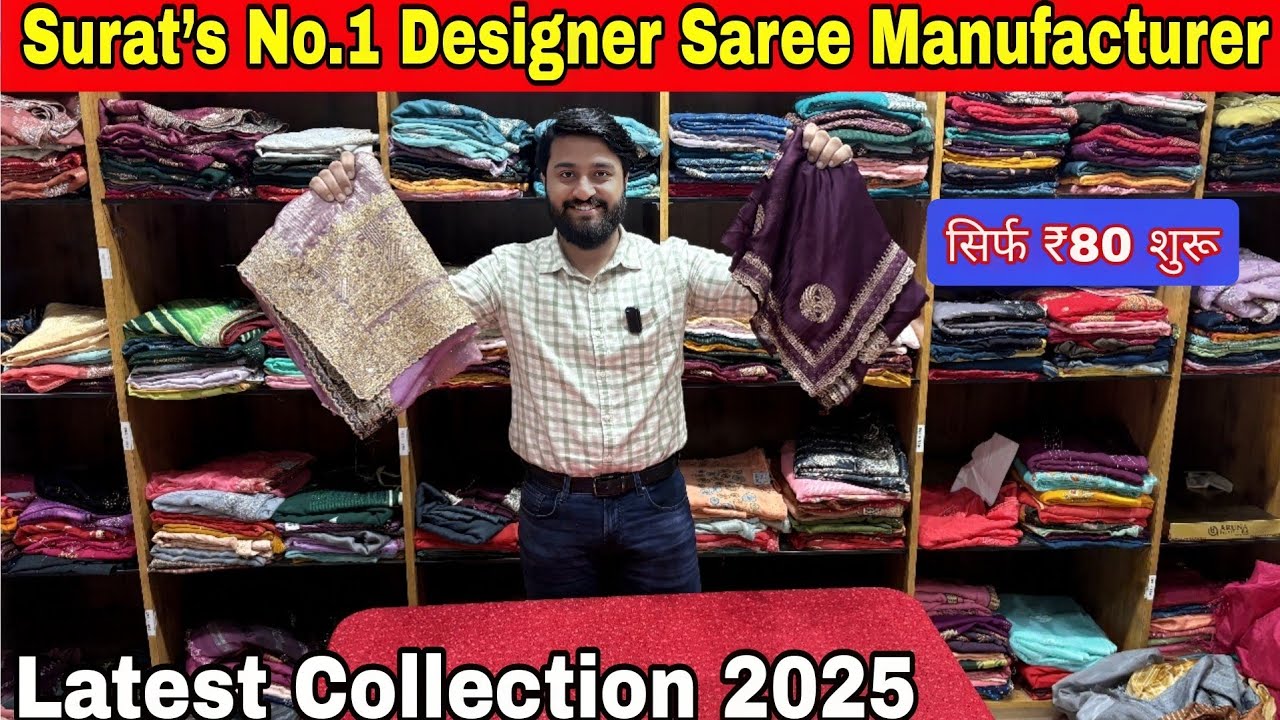
    Saree manufacturer Surat textile hub
    Surat’s textile hub — 25–30 million metres of cloth daily.

    ~₹68,000 Cr cluster output · ~₹10,000 Cr saree exports · 10 million sarees/day · 70,000+ traders. Surat owns synthetic — 90% of India’s synthetic fabric and 30% of global fabric production come from this 20-km radius. The new PM MITRA mega park at Vansi (1,142 acres) is targeting ₹10,000 Cr more investment by 2027 (India.gov.in).

    Source from Surat if: you sell printed sarees, georgettes, fancy synthetics, festival drops at ₹500–₹3,000 retail. The cheapest quote is almost always a re-seller — pick on response time and consistency, not unit price.


    2. Banarasi Saree Wholesalers — The Falling Crown, Still ₹5,000 Cr
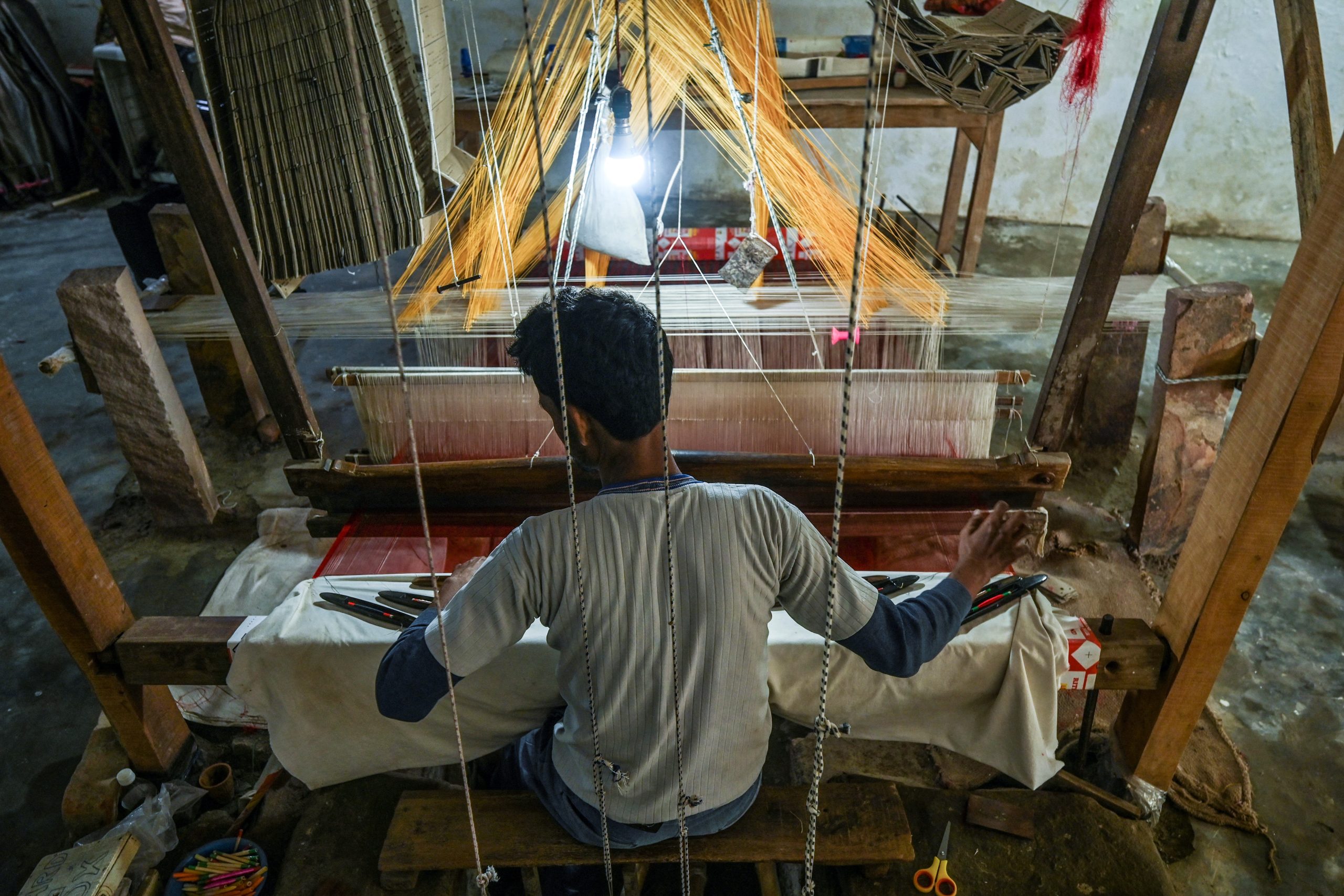
    Banarasi saree wholesaler weaver in Varanasi
    A Banarasi weaver in Varanasi. The cluster has lost ~50% of its weavers in a decade. (Al Jazeera)

    ₹5,000 Cr/year (down from ₹7,000 Cr) · 200,000 weavers (halved from 4 lakh in a decade) · GI tag 2009. GST 2017, US tariffs in 2024, the Bangladesh export freeze — Banaras has taken every macro hit possible, yet every Indian wedding wardrobe still wants one (Scroll).

    Source from Banaras if: you’re building a wedding/heritage brand and can do weaver-direct sourcing. The opportunity is the gap left by the Chowk middlemen — provenance proof, named weavers on the PDP, online distribution that bypasses wholesale.


    3. Pochampally Saree Manufacturers + Gadwal — ₹1,000 Cr in Telangana
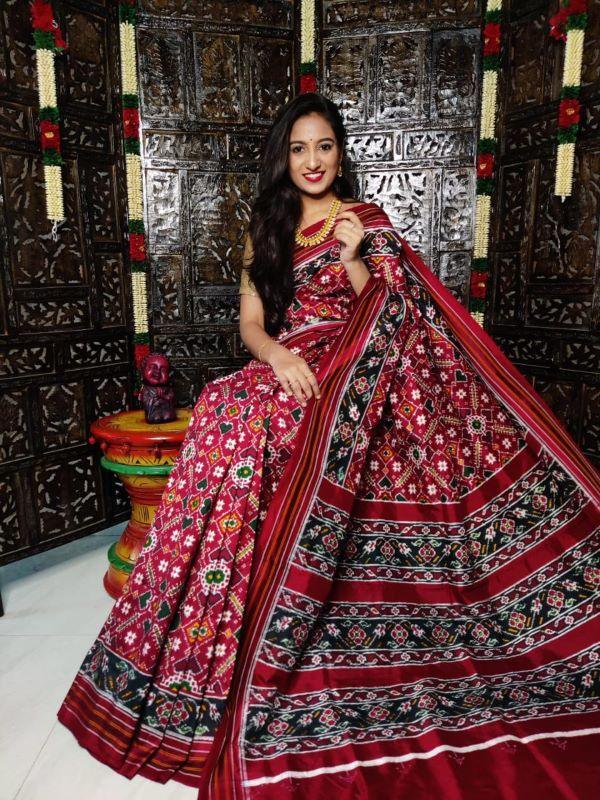
    Pochampally saree manufacturer double ikat Telangana
    Pochampally double ikat — globally protected, locally squeezed.

    ~₹1,000 Cr · 10,000 weaving families · Pochampally GI 2004–05, Gadwal GI 2010. Both are Telangana (state bifurcated 2014). The trap: only 800–1,200 GI-registered handlooms in Gadwal — ~80% of “Gadwal silk” sold online is power-loom imitation (Gadwal Weavers Society).

    Source from here if: you’re building a premium ikat/silk brand. A real Gadwal weaver makes 4–5 sarees/month — if your store lists 200 SKUs and promises 7-day dispatch, you’re selling power-loom under a heritage name. Stock 30, pre-order the rest, name the weaver.


    4. Mysore Silk Saree Manufacturer (KSIC) — ₹332 Cr, Demand Outstrips Supply
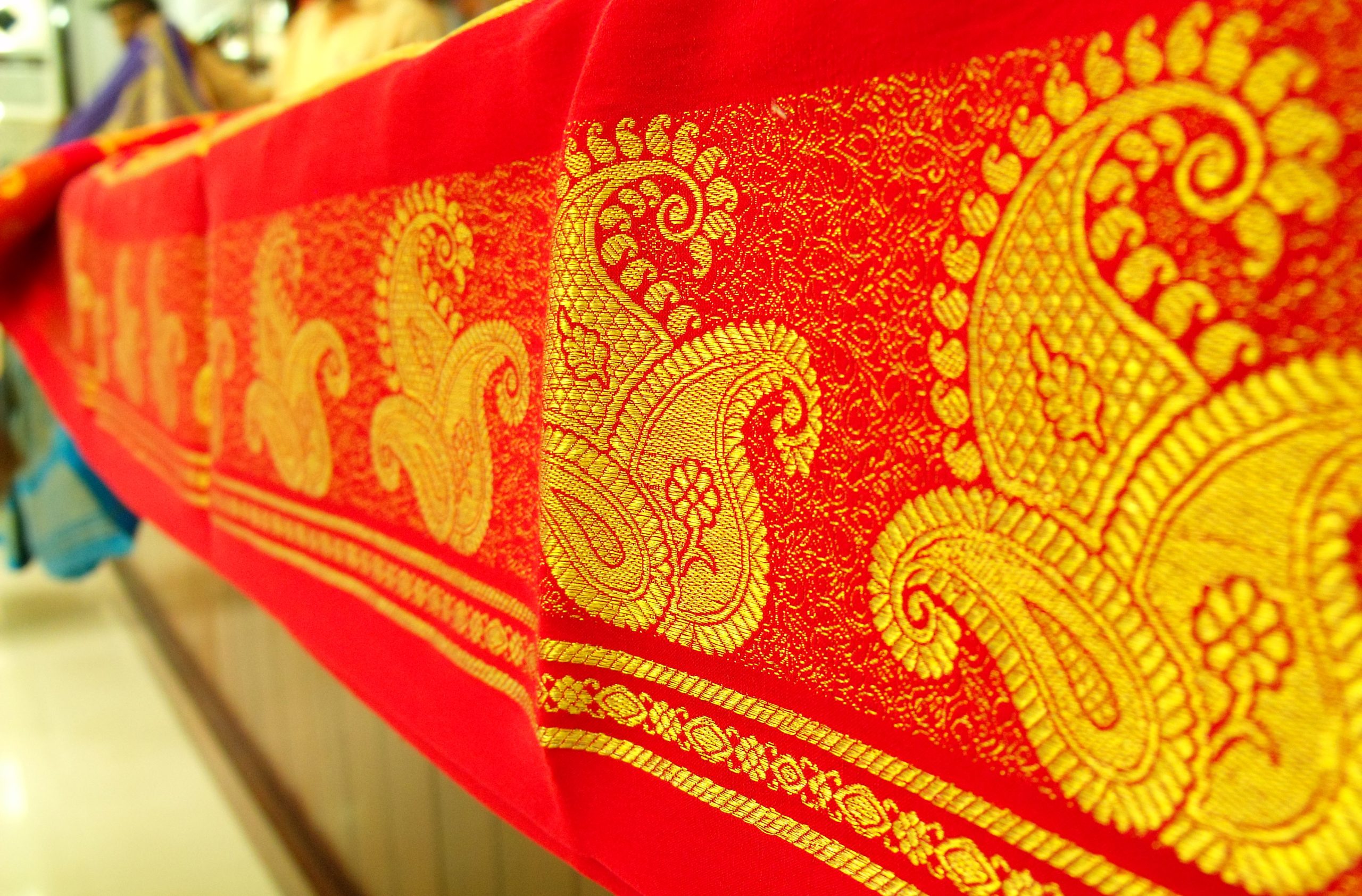
    Mysore silk saree manufacturer KSIC Karnataka
    A KSIC-produced Mysore silk saree.

    ₹332 Cr KSIC turnover (FY24-25, up from ₹126 Cr in 2020-21) · 1,03,347 sarees/year · 789 in-house weavers · GI tag 2005. KSIC is the only legally authorised producer (Deccan Chronicle). The 4 AM queues outside KSIC outlets aren’t an exaggeration — production is structurally under-supplied.

    Source from here if: you can negotiate a KSIC trade arrangement. Anyone selling “Mysore-style silk” online without it is selling a Bangalore weave with a hijacked name — the brand-trust cost is permanent.


    5. Kanchipuram Silk Saree Manufacturers — ₹200 Cr Co-ops, GI is the Moat
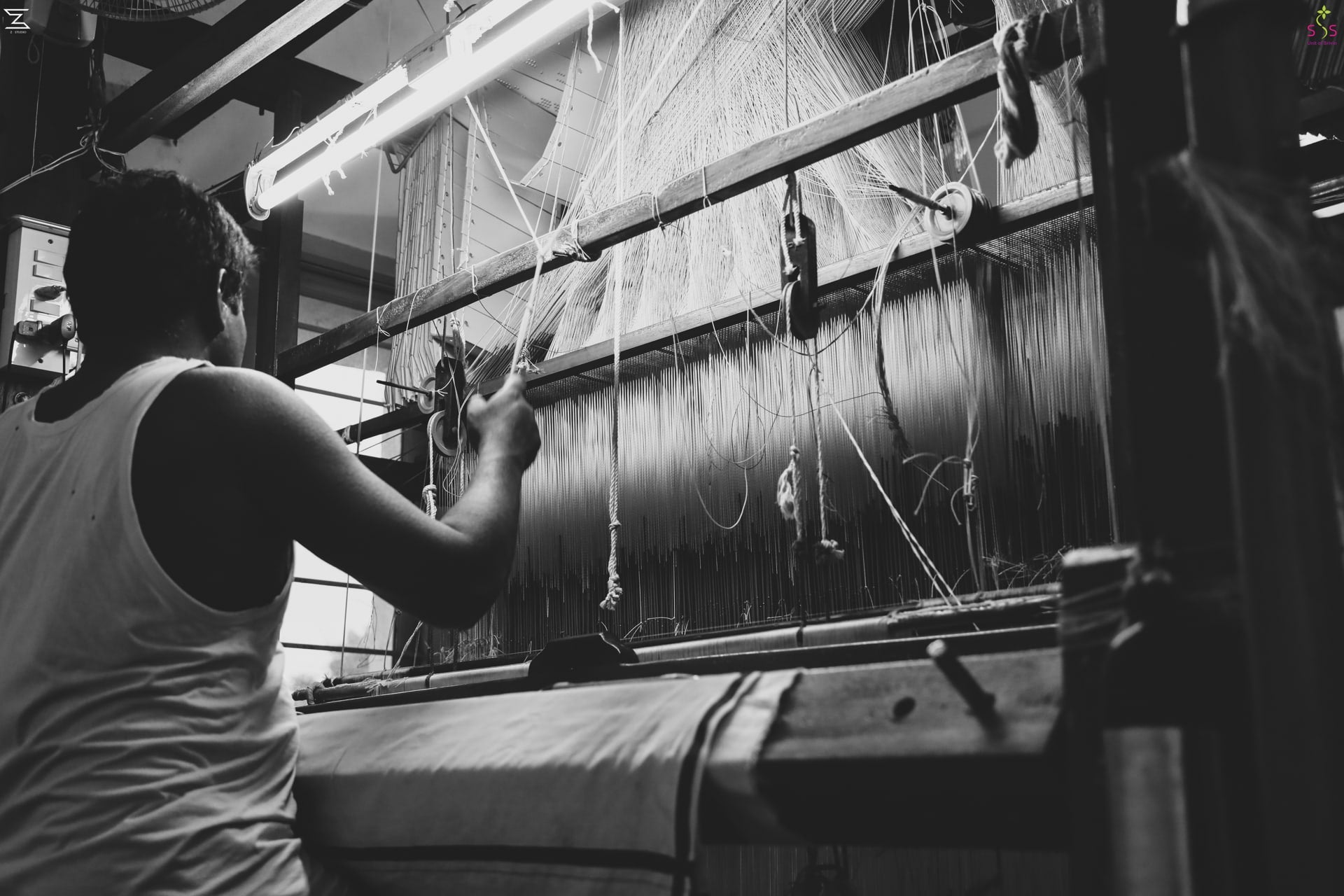
    Kanchipuram silk saree manufacturer weaver pit loom
    A Kanchipuram weaver at the pit loom.

    ~₹200 Cr formal cooperative turnover · 50,000 weavers · 60,000 looms · 24 cooperative societies · GI tag 2005–06. The “₹10,000 Cr Kanchipuram market” you see online conflates retail across India (mostly Bangalore/Salem imitations) with the actual cluster (New Kerala).

    Source from here if: you sell wedding silks at ₹40K+ AOV. GI authenticity is the pricing lever — customers pay 3–5× premium for verified GI over “Kanchi-style”. Build the proof into the PDP: weaver name, loom number, GI certificate.


    6. Bengal Jamdani Saree Suppliers / Tangail — ₹150 Cr, GI Just Landed
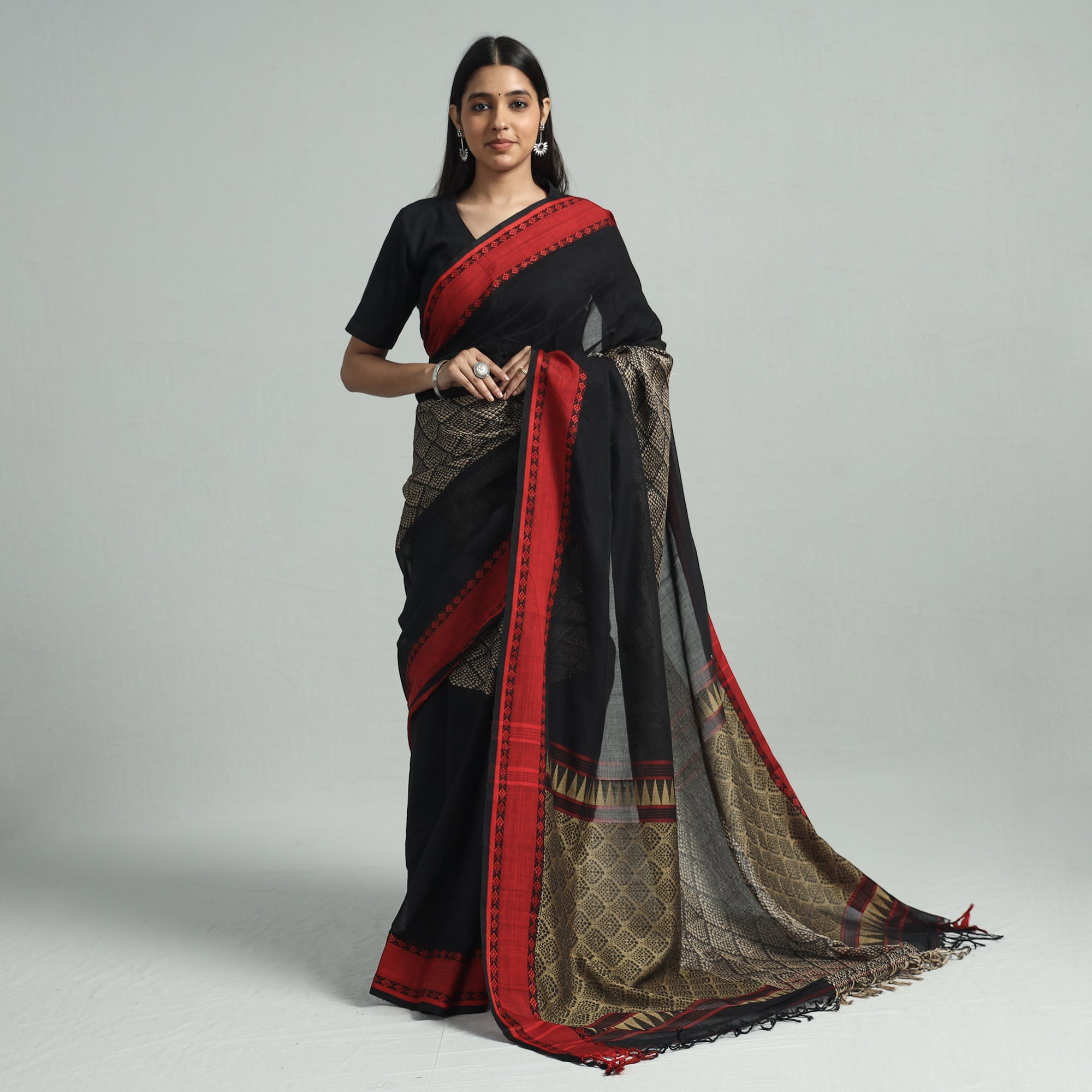
    Bengal Jamdani saree supplier Phulia handloom
    A Phulia Bengal Jamdani handloom saree.

    Jamdani specifically: ~₹150 Cr · 5,000 weavers. Bengal handloom cluster (Phulia + Shantipur + Nabadwip): 125,000+ looms. Two facts to fix: Jamdani is a muslin/cotton hybrid, not pure cotton; and it’s traditionally a Dhaka craft — Bangladesh holds the original GI. Tangail Saree of Bengal got its GI on 2 Jan 2024 (Wikipedia).

    Source from here if: you’re building a contemporary handloom brand. The GI on Tangail is brand-new — Bengal weavers are still pricing pre-recognition. There’s a 12–18 month window to lock capacity at the old rates.


    7. Assam Silk Saree Manufacturers (Sualkuchi) — ₹100 Cr Cluster, ₹40 Cr in Muga
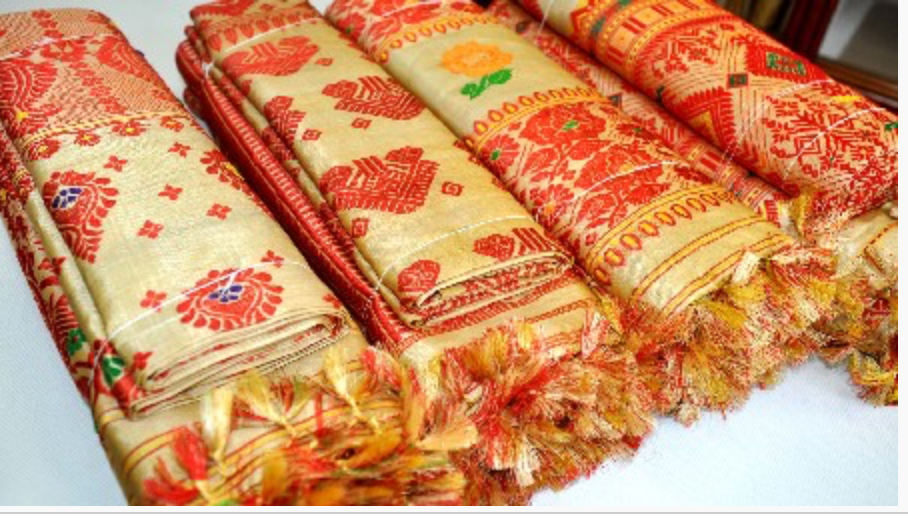
    Assam silk saree manufacturer Mekhela Chador Muga Sualkuchi
    Muga silk Mekhela Chador — Assam’s two-piece traditional drape.

    ~₹100 Cr cluster · 50,000 livelihoods · 7,000 looms · 20,000 weavers · Muga GI 2007. Assam produces 95% of India’s muga silk and 65% of eri. Muga is the only naturally golden silk in the world — climate-stressed, increasingly positioned for global luxury (The Fourth Plate).

    Source from here if: you sell premium ethnic at ₹15K+ AOV. Heads up: Mekhela Chador is a two-piece garment (mekhela + sador + blouse) — your Shopify variant structure has to handle the bundle, not three separate SKUs. Most stores get this wrong.


    8. Yeola Paithani Saree Manufacturers — 35,000 Artisans, 6–18 Months Per Saree
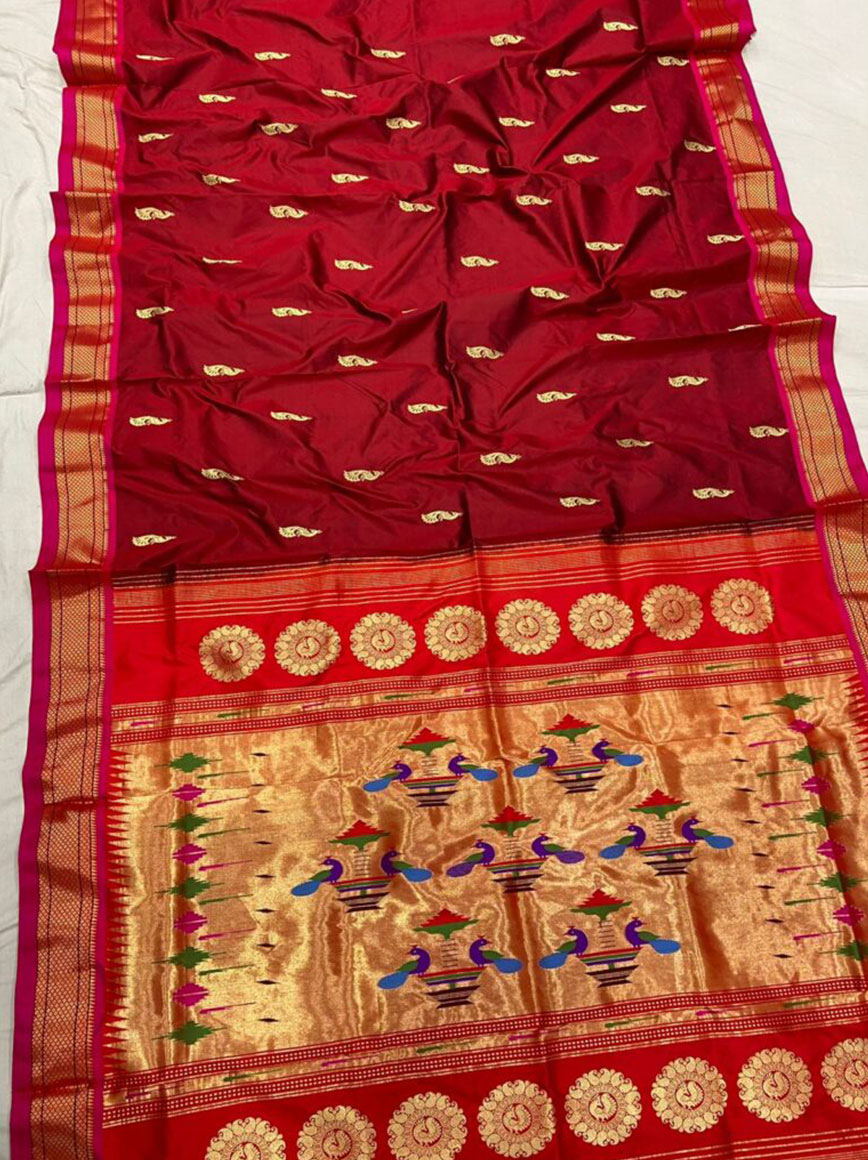
    Yeola Paithani saree manufacturer Maharashtra silk
    Pure silk Yeola handloom Paithani.

    35,000+ artisans · 3,000 active looms · GI tag 2010. Maharashtra hasn’t published consolidated turnover, but the state just approved a ₹12.5 Cr Paithani tourism centre at Yeola and a common facility centre in July 2025 (30Stades).

    Source from here if: you’re building a premium-only label at ₹40K–₹3L AOV. A genuine Paithani takes 6–18 months to weave. High margin per unit, low volume per month — plan inventory turns accordingly.


    9. Sambalpuri Saree Suppliers (Odisha Ikat) — Under-explored, Weaver-direct Still Possible
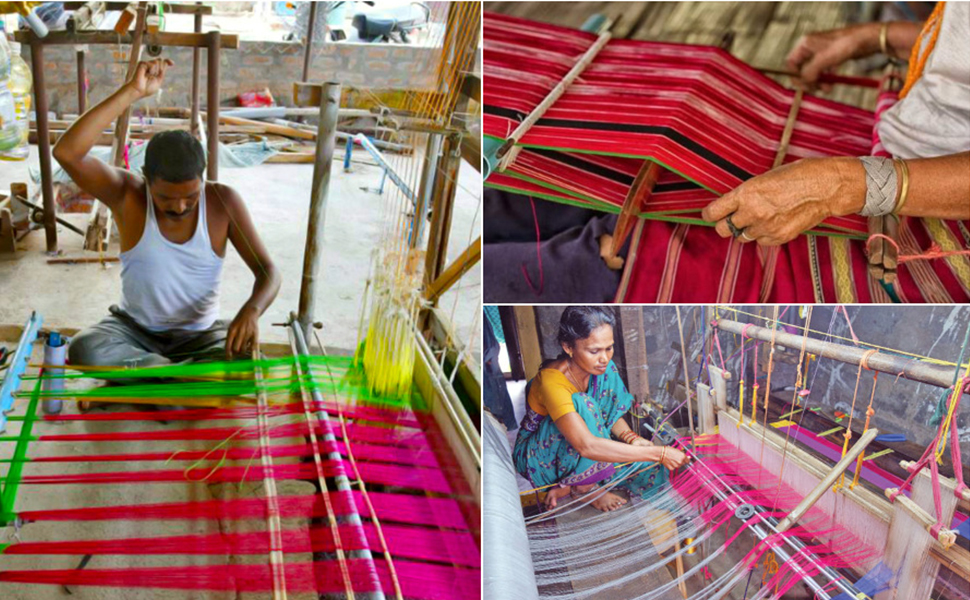
    Sambalpuri saree supplier Odisha cotton ikat
    Sambalpuri cotton saree from Odisha.

    No published cluster turnover. Balijori Haat in Bargarh is Asia’s largest open-air handloom market — “several crores of textiles change hands monthly”. A single Sambalpuri sari = 6+ weeks of work. Cotton retails ₹2K–₹40K; silk ₹12K–₹1L (30Stades).

    Source from here if: you can put 18 months into weaver relationships before scaling. Boyanika (the state co-op), Priyadarshini Handloom and Utkalamrita are the only consolidated digital footprints. Whitespace.


    10. Chanderi Saree Manufacturers — 11,000 Weavers, ₹15 Cr, Very Premium
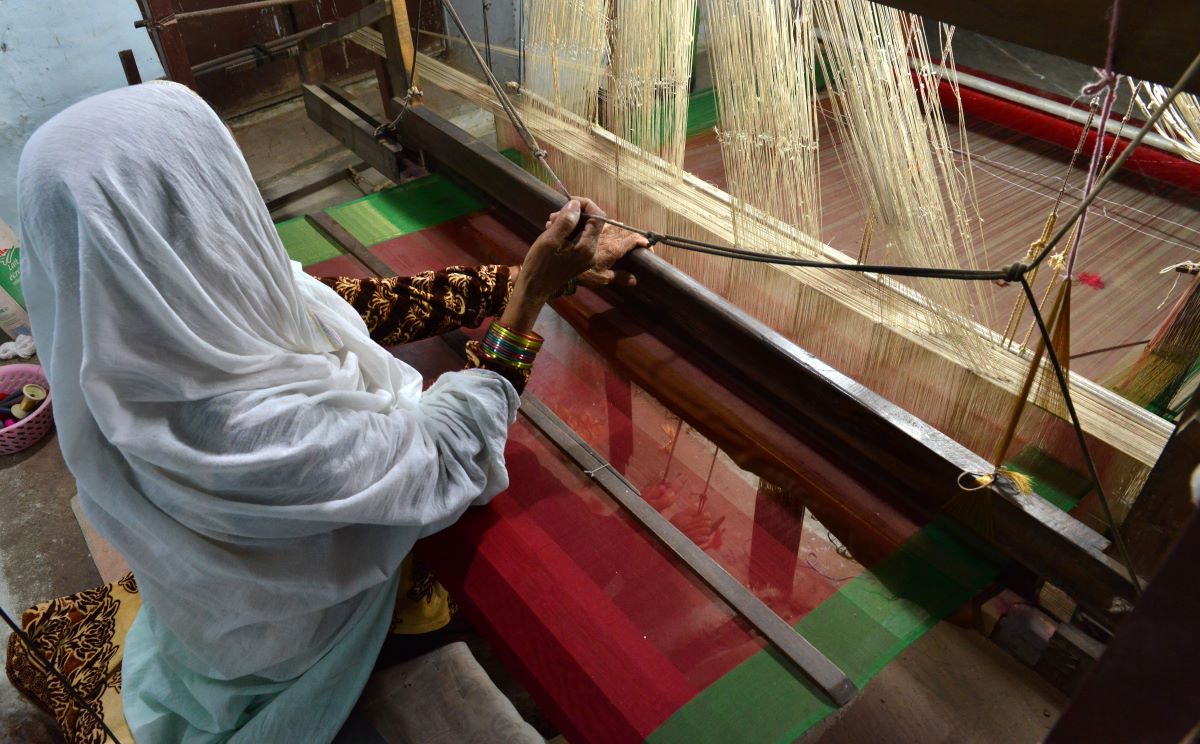
    Chanderi saree manufacturer Madhya Pradesh handloom
    Chanderi weave — gossamer-light cotton-silk hybrid from Madhya Pradesh.

    ~₹15 Cr · 3,600 active handlooms · 11,000 weavers · GI tag 2005 (India’s 4th GI product). Weaving is the primary income source for 60% of Chanderi’s population. The Padma Doree initiative (May 2026) is pairing ahimsa silk with Chanderi gold for global luxury (The Week) — a rare platform play that could 10× cluster economics in five years.

    Source from here if: you’re building a contemporary craft / luxury crossover brand. Small cluster, premium positioning, almost no D2C competition yet.


    The 10 clusters at a glance

    #ClusterVerified turnoverWeavers / loomsGI year
    1Surat~₹68,000 Cr cluster · ₹10,000 Cr exports1M+ power looms
    2Banaras~₹5,000 Cr~200,000 weavers2009
    3Pochampally + Gadwal~₹1,000 Cr10,000 families2004–05 / 2010
    4Mysore Silk (KSIC)₹332 Cr789 in-house2005
    5Kanchipuram~₹200 Cr (co-ops)50,000 / 60,0002005–06
    6Bengal Jamdani~₹150 Cr5,000 weaversTangail 2024
    7Sualkuchi (Assam)~₹100 Cr20,000 / 7,000Muga 2007
    8Yeola PaithaniNo public number35,000 artisans2010
    9Sambalpuri“Several Cr/month”Major clusterYes
    10Chanderi~₹15 Cr11,000 / 3,6002005

    How to vet a saree supplier in 4 conversations

    By WhatsApp, free, no commitment:

    1. First message — get the catalogue. Ask for the latest catalogue, MOQ, and starting price. Use the script in the next section. A good supplier replies within hours with photos or a video catalogue. Slow response = your customer’s RTO problem.
    2. Second message — get a sample. Ask for one or two pieces shipped at your cost. The fabric hand, finish quality, and packaging are non-negotiable. Anyone who refuses to ship samples at ₹500–₹2,000 is either flaky or has something to hide.
    3. Third conversation — ask about repeat orders. “If I order this design again in 30 days, can you produce 50 more pieces in the same quality?” The answer separates loom owners (yes, with timeline) from re-sellers (vague).
    4. Fourth conversation — agree on a single trial PO. ₹10K–₹25K for first order. If they deliver on time, with the agreed quality and quantity, scale. If not, walk away — there are 70,000 traders in Surat alone.

    Your first WhatsApp message — copy-paste this

    Hi [Supplier Name], Raghoo from GrowwwTech.com recommended you for
    saree supply. Could you share your catalogue, MOQ, and pricing?
    Thanks.

    That single message gets you the three things you need to evaluate any supplier (catalogue, MOQ, pricing) in one round. The “Raghoo from GrowwwTech.com” line tells the supplier where you came from — they take it more seriously than a cold ping. The WhatsApp links in the supplier directory above are pre-populated with this script.


    Common red flags

    • No physical address. A real supplier has a Pan Bazar / Ring Road / Sahara Darwaza-type address. Online-only with no shop is a re-seller.
    • “All sarees in stock, ship in 24 hours” for handloom. A real handloom weaver makes 4–5 pieces/month. 24-hour dispatch on Kanchipuram or Pochampally = power-loom imitation.
    • No catalogue, just “DM for prices”. Wastes your time. Walk.
    • Pressure to pay in full upfront. Standard term is 30–50% advance, balance on dispatch. Anyone demanding 100% upfront for a first order is either inexperienced or scamming.
    • Refuses to ship a paid sample. Biggest red flag. Real suppliers send samples — they want repeat orders.

    FAQ

    Who are the top saree manufacturers in Surat?

    Surat has 10,000+ saree manufacturing units across 240 textile markets — 70,000+ traders within a 20-km radius. Big organised names you’ll see ranking on directories: Vivera International, Kesaria Textile, Karishma Prints, Yasho Bhumi Textiles, Ajmera Fashion. Mid-market wholesalers we’ve worked with directly: Vasudha Agencies (synthetic, printed, festive — MOQ ₹5K–₹10K, contacts in the directory above). The “best” one depends on whether you want printed georgettes, fancy synthetics, or festival drops.

    How do I find a wholesale saree supplier in India?

    Four routes, ranked by reliability: (1) Vetted personal referrals like the directory at the top of this guide — fastest path to a real loom owner, not a re-seller. (2) Visit the cluster in person — Pan Bazar Secunderabad, Surat Ring Road, Varanasi Chowk all have wholesale rows. (3) IndiaMART / TradeIndia — high reach but you’ll spend weeks filtering re-sellers. (4) Trade exhibitions — IIGF, India International Garment Fair, Tex-Styles India. Use the 4-conversation vetting framework above before placing your first PO.

    Is Surat or Banaras cheaper for saree sourcing?

    Surat is dramatically cheaper for synthetic and printed sarees — wholesale starts ₹150–₹500/piece, retail ₹500–₹3,000. Banaras is more expensive but for handloom silk — wholesale ₹2,000–₹15,000/piece, retail ₹6,000–₹1L+. They’re not competitors on price; they’re different categories. If you’re sourcing for an Instagram boutique at ₹999 ASP, go Surat. If you’re building a wedding-wear brand at ₹15K AOV, go Banaras (or Kanchipuram for South Indian wedding markets).

    Where is the biggest saree market in India?

    Surat. ₹68,000 Cr saree-industry output, 10 million sarees per day, 70,000+ traders, 240 textile markets within a 20-km radius. Banaras leads handloom at ₹5,000 Cr. Kanchipuram leads silk wedding sarees. Pan Bazar in Secunderabad is the de facto wholesale hub for Telangana silks.

    What is the size of the Indian saree market?

    The formal retail saree market is USD 6.15 billion (~₹50,000 Cr) in 2025, projected to USD 10.77B by 2034 (IMARC). Add unorganised retail and exports and the full economy is well past ₹1 lakh crore.

    Which sarees have a GI tag?

    Major GI-tagged sarees: Banarasi (2009), Kanchipuram (2005–06), Pochampally Ikat (2004–05), Mysore Silk (2005), Chanderi (2005), Paithani (2010), Gadwal (2010), Muga / Mekhela Chador (2007), Tangail Saree of Bengal (2024). The GI is what protects the original cluster from power-loom imitations sold under the same name.

    Which Indian state has the most saree weavers?

    Per the Fourth All-India Handloom Census: 36 lakh weavers and allied workers nationally, 72% rural women. West Bengal, Assam, and Tamil Nadu lead by count.

    What’s the typical MOQ for saree wholesale in India?

    Synthetic Surat suppliers: ₹5K–₹10K worth per order is common (low entry). Premium handloom weavers: 1–10 pieces with 30-day pre-order. Multi-cluster wholesalers like Haneef Brothers (Telangana): ₹5K–₹10K per order with mixed lots.


    Building a saree D2C brand on Shopify?

    If you’re already running an ethnic-wear store and stalled at a ceiling — ₹10L/mo, ₹50L/mo, wherever — the leak is usually in the supply chain: paying middlemen too much, selling power-loom as handloom, or carrying 200 SKUs when the cluster can produce 30. The fix is rarely more ad spend.

    We’ve built and scaled 200+ Shopify stores for Indian D2C brands — see what we ship for ethnic-wear founders. From ₹50,000, 4-week launch, fixed-price. No AMC, ever. Bug fixes for what we shipped stay included for the lifetime of the store.

    30-minute call, no pitch — just a look at your PDPs, COD/RTO numbers, and supplier mix.

    Start a WhatsApp Chat


    Sources

    IMARC Group · Mordor Intelligence — India D2C · Shiprocket CargoX — Saree Exports · IBEF Handloom · PIB National Handloom Day 2025 · DD News — Silk Production · PM MITRA Park · Ajmera Fashion — Surat · Surat Updates 2025 · Scroll — Banaras · TwoCircles — Banarasi tariff hit · Fibre2Fashion — Pochampally · Deccan Chronicle — KSIC · 101Reporters — Sualkuchi · 30Stades — Yeola Paithani · 30Stades — Balijori Haat · IJCRT — Chanderi · The Week — Padma Doree

  • Annual Content Report — What Worked, What Flopped

    Annual Content Report — What Worked, What Flopped

    The Numbers: Year 1 Content Performance

    MetricTargetActual
    Articles published96104
    Monthly organic traffic (Month 12)5,0006,200
    Total organic visitors (Year 1)35,00042,000
    Leads from blog500680
    Clients acquired from blog content2531
    Average time on page3 min4.2 min
    Top-performing article monthly traffic8001,100

    Top 10 Performing Articles (by Traffic)

    1. D2C Unit Economics Guide — 1,100 monthly visitors. Our most linked-to article.
    2. RTO Reduction Playbook — 950 monthly. Strong SEO performance for ‘reduce RTO’ keywords.
    3. Filter Fake COD Orders — 880 monthly. Solves a specific, urgent pain point.
    4. Meta Ads Complete Playbook — 820 monthly. Pillar content with strong internal linking.
    5. Best Shopify Apps for Indian Stores — 750 monthly. High commercial intent.
    6. Shipping Aggregators Comparison — 700 monthly. Comparison content converts well.
    7. GST for Ecommerce Sellers — 650 monthly. Compliance content has consistent demand.
    8. First 100 Orders Guide — 600 monthly. Captures new founder audience.
    9. WhatsApp Marketing Guide — 580 monthly. Growing topic with less competition.
    10. Amazon Seller Fees Guide — 550 monthly. High search volume topic.

    What Worked

    • Comparison and ‘vs’ content — ‘Razorpay vs Cashfree’, ‘Google vs Meta’, ‘Shopify vs WooCommerce’ consistently rank and convert.
    • Problem-specific how-to guides — ‘How to filter fake COD orders’ solves a specific pain. These articles have the highest lead conversion rate (5-8% of readers become leads).
    • Data-driven reports — Our ‘State of Indian D2C’ report was shared 200+ times and generated 50+ backlinks.
    • Case studies with real numbers — Transparency builds trust. Case studies convert readers to leads at 3x the rate of how-to articles.

    What Flopped

    • Generic ‘complete guide’ articles without specific Indian context — competed against international content and lost.
    • Podcast episode blog posts — We published show notes for 12 podcast episodes. Average traffic: 40/month. Not worth the effort.
    • Trend prediction posts — Published too early, didn’t rank for timely searches.
    • City pages — Early results are weak (50-100 visitors/month each). But these are 6-12 month plays — too early to call them failures.

    Year 2 Strategy

    1. Double down on what works — More comparison content, more problem-specific guides, more case studies with numbers.
    2. Update Year 1 content — Refresh top 20 articles with 2027 data, new screenshots, updated recommendations.
    3. Regional language experiment — Publish top 10 articles in Hindi. Test whether Hindi search traffic converts.
    4. Video content — Create YouTube companion videos for top 20 articles. Embed in blog posts for engagement.
    5. Gated content — Create 3-4 downloadable templates (unit economics calculator, ad budget planner) as lead magnets.

    The Bottom Line

    Content marketing works for Indian D2C — but it’s a 6-12 month investment. Our first meaningful organic leads came in month 5. By month 12, blog content was our #1 lead source, surpassing paid ads.

    If you’re a D2C brand not investing in content, you’re leaving money on the table — money that compounds over time while ad costs keep rising.

    Want a Content Strategy?

    At Growww Tech, we build content marketing strategies for D2C brands. Let’s build your content engine.

    Related reading:

  • Ecommerce Agency in Pune — D2C Growth Partner

    Ecommerce Agency in Pune — D2C Growth Partner

    Why Pune for D2C?

    Pune has quietly become a D2C hotspot:

    • Young, educated demographic — IT parks and universities create a consumer base that shops online regularly
    • Lower costs than Mumbai — Warehouse rent, office space, and salaries 30-40% lower than Mumbai while being just 3 hours away
    • Growing startup stack — Venture Center, Pune Startup Grid, and university incubators support D2C founders
    • Food and wellness hub — Pune has a thriving organic food, wellness, and healthy living culture
    • Proximity to Mumbai market — Access Mumbai’s consumer base while operating at Pune costs

    Our Services for Pune Brands

    • Shopify store setup and optimization
    • Performance marketing (Meta + Google ads)
    • Marketplace management (Amazon, Flipkart)
    • Retention marketing (WhatsApp, email, loyalty)
    • Supply chain optimization (using Pune’s logistics connectivity)

    Get a 30-minute strategy call — Pune brands

    Brands across Pune and Maharashtra run their D2C operations remote-first; we work the same way. The first call is a 30-minute diagnostic — you tell us where you’re stuck (Instagram-only selling, broken store, RTO above 25%, dead ads), we map the top three fixes. No sales pitch. You walk away with a clear roadmap whether you hire us or not. We’ve done it for 200+ Indian D2C brands. ₹385Cr+ revenue processed. 4.5x average ROI. 98% retention.

    The Shopify build is ₹50,000 fixed-price with no AMC — bug fixes for what we ship are included for the lifetime of the store, and you ship on the Growww Tech custom theme customised to your brand. The only optional cost is the ₹30K/month Growth Retainer if you want active month-over-month optimisation work.

    Start a WhatsApp chat: Message the Growww Tech team on WhatsApp →

    Related reading:

  • Ecommerce Agency in Chennai — D2C Growth Partner

    Ecommerce Agency in Chennai — D2C Growth Partner

    Why Chennai for D2C?

    Chennai and Tamil Nadu offer unique advantages for D2C brands:

    • Strong textile and fashion heritage — Kanchipuram silk, Chettinad cotton, and Chennai’s fashion industry support apparel D2C brands
    • IT talent pool — Chennai’s IT industry provides tech talent for ecommerce operations
    • Growing ecommerce adoption — Tamil Nadu is India’s 3rd largest ecommerce market by order volume
    • Regional language opportunity — Tamil-language product pages and ads tap into underserved demand
    • Manufacturing clusters — Leather goods (Ambur), textiles (Erode/Tirupur), jewellery (Coimbatore)

    Our Services for Chennai Brands

    • Shopify store setup and optimization (Tamil + English)
    • Performance marketing (Meta + Google ads)
    • Marketplace management (Amazon, Flipkart, Myntra)
    • WhatsApp commerce and retention marketing
    • Regional language content strategy (Tamil product descriptions and ads)

    Get a 30-minute strategy call — Chennai brands

    Brands across Chennai and Tamil Nadu run their D2C operations remote-first; we work the same way. The first call is a 30-minute diagnostic — you tell us where you’re stuck (Instagram-only selling, broken store, RTO above 25%, dead ads), we map the top three fixes. No sales pitch. You walk away with a clear roadmap whether you hire us or not. We’ve done it for 200+ Indian D2C brands. ₹385Cr+ revenue processed. 4.5x average ROI. 98% retention.

    The Shopify build is ₹50,000 fixed-price with no AMC — bug fixes for what we ship are included for the lifetime of the store, and you ship on the Growww Tech custom theme customised to your brand. The only optional cost is the ₹30K/month Growth Retainer if you want active month-over-month optimisation work.

    Start a WhatsApp chat: Message the Growww Tech team on WhatsApp →

    Related reading:

  • How to Build a D2C Brand That Survives When Ad Costs Double

    How to Build a D2C Brand That Survives When Ad Costs Double

    The Ad Cost Reality

    Meta CPM for Indian D2C:

    • 2022: ₹60-80
    • 2024: ₹100-150
    • 2026: ₹150-250
    • 2027: ₹200-350

    Ad costs have roughly tripled in 5 years. Brands spending 40% of revenue on ads in 2022 now need to spend 70%+ to maintain the same volume. That’s unsustainable.

    The 4 Pillars of Ad-Cost-Proof D2C

    Pillar 1: Organic Traffic (SEO + Content)

    • Build a blog with 50-100 articles targeting purchase-intent keywords in your category
    • Example: A skincare brand ranking for ‘best moisturizer for oily skin in India’ gets 5,000+ free visits/month
    • Timeline: 6-12 months to see significant traffic. But it compounds — unlike ads that stop the moment you stop paying.
    • Cost: ₹15-30K/month for content production. ROI: organic traffic typically converts at 2-3x the rate of paid traffic.

    Pillar 2: Retention (Email + WhatsApp + Loyalty)

    • Getting a second purchase costs 5-7x less than getting a first purchase
    • Set up: Welcome flow, abandoned cart flow, post-purchase flow, win-back flow, VIP flow
    • Target: 30%+ of revenue from repeat buyers within 12 months
    • Every repeat buyer reduces your effective CAC across all orders from that customer

    Pillar 3: Community (Social + UGC + Referral)

    • Build an Instagram community that engages with your content beyond just sales
    • UGC program: incentivize customers to share photos/videos of your product
    • Referral program: reward customers for bringing new buyers. CAC through referral: ₹50-150 (vs ₹500+ via ads).
    • WhatsApp community: exclusive group for top 100-500 customers

    Pillar 4: Multi-Channel Distribution

    • Don’t rely on one channel. Spread across: D2C website + Amazon + Flipkart + Quick Commerce + WhatsApp Commerce
    • Each channel has its own discovery mechanism — marketplace search, quick commerce browse, WhatsApp broadcast
    • If Meta ads become 2x more expensive, you still have 4 other channels driving revenue

    The Revenue Mix to Aim For

    Revenue SourceAd-Dependent BrandAd-Proof Brand
    Paid ads (Meta + Google)70-80%25-35%
    Organic traffic (SEO)5-10%15-25%
    Repeat buyers (email/WhatsApp)5-10%20-30%
    Marketplace (Amazon/Flipkart)0-5%15-20%
    Referral/word-of-mouth2-5%5-10%
    Quick commerce0%5-10%

    The ad-proof brand isn’t anti-ads — it still runs profitable ads. But when ad costs spike 30% during Diwali, it doesn’t panic. It has 5 other revenue streams absorbing the shock.

    The 12-Month Roadmap

    1. Month 1-3: Launch blog (10 articles). Set up email + WhatsApp flows. Start UGC collection.
    2. Month 3-6: Publish 20 more articles. Launch referral program. List on Amazon.
    3. Month 6-9: Blog traffic growing. Email/WhatsApp driving 15%+ of revenue. List on quick commerce.
    4. Month 9-12: Organic traffic hitting 2,000+/month. Repeat buyers at 25%+. Ad spend as % of revenue dropping below 30%.

    Need Help Diversifying?

    At Growww Tech, we help D2C brands build ad-independent growth. Let’s diversify your revenue channels.

    Related reading:

  • State of Indian D2C 2027 — Q1 Update (CAC, RTO)

    State of Indian D2C 2027 — Q1 Update (CAC, RTO)

    Q1 2027: What Changed Since Our 2026 Report

    In October 2026, we published the State of Indian D2C 2026 report. Here’s what shifted in Q1 2027 based on data from 200+ brands.

    Customer Acquisition Costs: Still Rising

    Channel Q3 2026 Q1 2027 Change
    Meta Ads (blended) ₹502 ₹565 +12.5%
    Google Ads (Search) ₹650 ₹720 +10.8%
    Quick Commerce Ads ₹280 ₹320 +14.3%
    Organic (SEO + Social) ₹85 ₹78 -8.2%
    WhatsApp Marketing ₹120 ₹105 -12.5%

    Key insight: Paid acquisition costs keep rising. But owned channels (organic and WhatsApp) are getting cheaper as brands invest in content and community. The gap between paid-dependent brands and content-driven brands is widening.

    Retention: The Dividing Line

    Metric Bottom 25% Average Top 25% Change vs 2026
    90-day repeat rate 7% 20% 35% Top brands improving, bottom stagnant
    Customer LTV (12 months) ₹1,100 ₹3,200 ₹7,800 Top brands +20% vs 2026
    Revenue from repeat buyers 8% 30% 45% Increasing across the board

    The divide is clear: brands investing in retention are pulling away from those relying solely on new customer acquisition.

    Quick Commerce: The Channel That Kept Growing

    • Quick commerce revenue share for FMCG D2C brands: 12% (up from 6% in 2026)
    • Average monthly orders from quick commerce: 400 (for brands active on 2+ platforms)
    • Quick commerce ads ROI: 3.5x (competitive with Meta for consumable products)
    • New development: Zepto and Blinkit launched brand storefront features, giving D2C brands mini-stores within the app

    AI Adoption Accelerated

    AI Application Adoption Rate (brands using) Average Cost Savings
    Customer support chatbot 45% 40-60% reduction in support costs
    AI product descriptions 35% 5-8 hours/week saved
    AI ad creative generation 25% 3x faster creative production
    Predictive inventory 15% 20-30% reduction in stockouts
    AI-powered pricing 10% 5-10% margin improvement

    Predictions for Q2-Q4 2027

    1. Meta ad costs will stabilize in Q2 as more brands diversify to other channels, reducing bidding pressure.
    2. Quick commerce will hit 15-20% of revenue for FMCG D2C brands by year-end.
    3. AI will become table stakes — brands not using AI chatbots will be at a competitive disadvantage.
    4. Subscription revenue will grow 50%+ as more brands implement subscribe-and-save models.
    5. Regional-language content will open up tier 2/3 city growth for the brands that ship Hindi, Tamil, Telugu, and Marathi product copy ahead of competitors.

    Want the full Q1 2027 dataset?

    The complete dataset — category-specific CAC, retention curves, RTO benchmarks, and the raw founder-survey data — is free for brands on a 30-minute call. We work with 200+ Indian D2C brands. ₹385Cr+ revenue processed. 4.5x average ROI. 98% retention.

    The Shopify build is ₹50,000 fixed-price with no AMC — bug fixes for what we ship are included for the lifetime of the store.

    Start a WhatsApp chat: Message the Growww Tech team on WhatsApp →

    Related reading:

  • Ecommerce Agency in Hyderabad — D2C Growth Partner

    Ecommerce Agency in Hyderabad — D2C Growth Partner

    Why Hyderabad for D2C?

    Hyderabad is emerging as India’s next D2C hub:

    • Fast-growing startup stack — T-Hub, RICH, and Hyderabad’s tech corridor attract D2C founders
    • Lower operational costs — Office space, warehouse rent, and salaries 20-30% lower than Bangalore/Mumbai
    • Pearl and jewellery heritage — Strong base for jewellery and accessory D2C brands
    • Pharma and wellness cluster — Hyderabad’s pharma stack supports wellness and supplement D2C brands
    • Biryani capital advantage — Growing food D2C scene with authentic Hyderabadi and South Indian specialties

    Our Services for Hyderabad Brands

    • Shopify store setup and optimization
    • Performance marketing (Meta + Google ads)
    • Marketplace management (Amazon, Flipkart, Myntra)
    • WhatsApp commerce and retention marketing
    • Quick commerce onboarding (Blinkit, Zepto, Instamart)

    Get a 30-minute strategy call — Hyderabad brands

    Brands across Hyderabad and Telangana run their D2C operations remote-first; we work the same way. The first call is a 30-minute diagnostic — you tell us where you’re stuck (Instagram-only selling, broken store, RTO above 25%, dead ads), we map the top three fixes. No sales pitch. You walk away with a clear roadmap whether you hire us or not. We’ve done it for 200+ Indian D2C brands. ₹385Cr+ revenue processed. 4.5x average ROI. 98% retention.

    The Shopify build is ₹50,000 fixed-price with no AMC — bug fixes for what we ship are included for the lifetime of the store, and you ship on the Growww Tech custom theme customised to your brand. The only optional cost is the ₹30K/month Growth Retainer if you want active month-over-month optimisation work.

    Start a WhatsApp chat: Message the Growww Tech team on WhatsApp →

    Related reading:

  • Ecommerce Agency in Delhi — D2C Growth Partner

    Ecommerce Agency in Delhi — D2C Growth Partner

    Why Delhi NCR for D2C?

    Delhi NCR is India’s largest ecommerce market:

    • Highest ecommerce penetration in India — 45%+ of NCR households shop online regularly
    • Gateway to North India — Delhi serves as logistics hub for UP, Haryana, Punjab, Rajasthan
    • Diverse consumer base — From Lutyens Delhi luxury shoppers to Noida’s tech-savvy millennials to Gurgaon’s startup stack
    • Manufacturing proximity — Noida/Ghaziabad for electronics, Panipat for textiles, Moradabad for handicrafts
    • Best logistics connectivity — All major couriers have NCR as primary hub, ensuring fastest delivery nationwide

    D2C Categories Strong in Delhi NCR

    • Fashion — Designer wear, Indo-Western fusion, winter fashion (seasonal advantage)
    • Food & spices — North Indian specialties, health foods, premium ghee and oils
    • Home furnishing — Handloom, carpets, home decor (proximity to artisan clusters)
    • Electronics & gadgets — Ghaziabad/Noida manufacturing hub for electronics brands
    • Wellness & Ayurveda — Growing hub for Ayurvedic and natural wellness brands

    Our Services for Delhi NCR Brands

    • Shopify store setup and optimization — Mobile-first, Indian payments, speed optimization
    • Performance marketing — Meta + Google ads with creative production
    • Marketplace management — Amazon, Flipkart, Meesho setup and optimization
    • Retention marketing — WhatsApp automation, email flows, loyalty programs
    • Supply chain optimization — Use NCR’s logistics advantage for faster, cheaper delivery nationwide

    Get a 30-minute strategy call — Delhi NCR brands

    Brands across Delhi NCR and North India run their D2C operations remote-first; we work the same way. The first call is a 30-minute diagnostic — you tell us where you’re stuck (Instagram-only selling, broken store, RTO above 25%, dead ads), we map the top three fixes. No sales pitch. You walk away with a clear roadmap whether you hire us or not. We’ve done it for 200+ Indian D2C brands. ₹385Cr+ revenue processed. 4.5x average ROI. 98% retention.

    The Shopify build is ₹50,000 fixed-price with no AMC — bug fixes for what we ship are included for the lifetime of the store, and you ship on the Growww Tech custom theme customised to your brand. The only optional cost is the ₹30K/month Growth Retainer if you want active month-over-month optimisation work.

    Start a WhatsApp chat: Message the Growww Tech team on WhatsApp →

    Related reading:

  • D2C Funding 2027 — Bootstrapped vs Funded

    D2C Funding 2027 — Bootstrapped vs Funded

    The Funding Landscape in 2027

    After the D2C funding boom of 2021-22 and the correction of 2023-24, the landscape has stabilized:

    • Total D2C funding in 2026: $450M (down from $2.2B in 2021)
    • Average seed round: ₹1-3Cr (for brands with ₹10L+/month revenue)
    • Investor focus shifted to: profitability, unit economics, retention metrics (not just revenue growth)
    • Most active investors: Titan Capital, First Cheque, 100X.VC, DSG Consumer Partners

    Bootstrapped vs Funded: Honest Comparison

    FactorBootstrappedFunded (Seed/Series A)
    Growth speedSlower (organic + profitable ads only)Faster (can afford unprofitable CAC temporarily)
    Founder control100%Diluted (15-30% typically)
    RiskLimited to personal investmentInvestor expectations, board pressure
    Unit economics pressureMust be profitable from day 1Can delay profitability for growth
    Hiring speedConstrained by revenueCan hire ahead of revenue
    Exit pressureNone — grow at your paceExpected exit (acquisition/IPO) within 5-7 years
    Emotional stressFinancial pressurePerformance pressure

    When to Bootstrap

    • Your category has good margins (40%+) — you can fund growth from profits
    • Your CAC is reasonable (under ₹300) — profitability without outside capital is achievable
    • You value independence and control over speed
    • Your goal is a profitable lifestyle business (₹10-50L/month) rather than a ₹100Cr+ company
    • You’re in a niche category without winner-takes-all dynamics

    When to Raise

    • Your category requires scale to win (market dynamics favor the biggest player)
    • You need significant upfront investment (manufacturing, technology, inventory)
    • You’ve proven product-market fit (₹10L+/month) and need capital to scale what works
    • Competitors are funded and outspending you on ads and expansion
    • You have a clear path to ₹100Cr+ revenue and want to get there faster

    How to Pitch in 2027

    What investors want to see has changed dramatically:

    2021 (What Worked)2027 (What Works Now)
    ‘We’re growing 30% month-over-month’‘We’re profitable at ₹20L/month with 45% gross margins’
    ‘Our TAM is ₹50,000 crore’‘We have 2,000 repeat customers with 3.2x LTV:CAC ratio’
    ‘We need funds to scale ads’‘We need funds to build subscriptions and expand to quick commerce’
    Large team slideLean team + specific hire plan
    Revenue hockey stickUnit economics waterfall showing path to profitability

    The Middle Path: Revenue-Based Financing

    Not bootstrapping and not VC? Consider revenue-based financing:

    • How it works: Lender gives you ₹10-50L. You repay as a % of monthly revenue (5-10%) until you’ve paid back 1.3-1.5x the amount.
    • Providers: Velocity, GetVantage, Klub
    • Best for: Brands doing ₹5-20L/month needing working capital for inventory or ads without diluting equity
    • Typical terms: ₹10-50L, 12-18 month repayment, 1.3-1.5x total repayment factor

    Need Help With Growth Strategy?

    At Growww Tech, we help D2C brands grow profitably — whether bootstrapped or funded. Let’s build your growth plan.

    Related reading:

  • D2C Hiring Guide 2027 — Roles, Salaries, Talent

    D2C Hiring Guide 2027 — Roles, Salaries, Talent

    What Changed in 2027

    The D2C hiring landscape shifted significantly:

    • AI-related roles emerged — Brands need people who can manage AI tools, not just traditional marketers
    • Quick commerce requires dedicated attention — Managing Blinkit/Zepto is a full-time job at scale
    • Remote work is standard — Most D2C roles (except warehouse/operations) can be remote, expanding your talent pool
    • Freelancer economy matured — Quality freelancers on Upwork/Toptal for specialized tasks (ad creative, email flows)

    2027 Salary Benchmarks

    RoleExperienceMumbai/BangaloreTier 2 CitiesRemote
    Operations Executive0-2 years₹18-25K/mo₹12-18K/mo₹15-20K/mo
    Customer Support0-2 years₹15-22K/mo₹10-15K/mo₹12-18K/mo
    Performance Marketer2-4 years₹35-60K/mo₹25-40K/mo₹30-50K/mo
    Content Creator1-3 years₹22-40K/mo₹15-25K/mo₹18-35K/mo
    Ecommerce Manager3-5 years₹50-80K/mo₹35-55K/mo₹40-65K/mo
    AI/Automation Specialist2-4 years₹40-70K/mo₹30-50K/mo₹35-60K/mo
    Quick Commerce Manager2-3 years₹30-50K/mo₹20-35K/mo₹25-40K/mo

    New Roles for 2027

    AI Operations Specialist

    • Manages AI chatbot (training, optimization, escalation rules)
    • Implements AI product descriptions and ad copy workflows
    • Monitors AI-assisted customer segmentation
    • Reports to: Ecommerce Manager or Founder
    • Doesn’t need to be an AI engineer — needs to be someone who can use AI tools effectively

    Quick Commerce Manager

    • Manages listings on Blinkit, Zepto, Instamart
    • Handles dark store inventory planning and replenishment
    • Runs platform ads and optimizes listings for discovery
    • Tracks category trends and competitor pricing
    • Reports to: Ecommerce Manager or Founder

    Hiring vs Outsourcing

    FunctionHire In-HouseOutsource/FreelanceAgency
    Performance marketingAbove ₹2L/mo ad spendBelow ₹2L/mo ad spendAbove ₹5L/mo for additional scale
    Content/creativeIf you need daily contentFor specific campaignsFor high-quality video production
    Customer supportAbove 50 queries/dayBelow 50 queries/dayNot recommended
    OperationsAlways in-houseNever outsource core ops3PL for logistics only
    Accounting/financeAbove ₹50L/mo revenueBelow ₹50L/mo (use a CA)Not applicable

    Where to Find Talent

    • LinkedIn — Best for experienced hires. Post with specific outcomes expected, not vague job descriptions.
    • D2C WhatsApp/Telegram groups — Many D2C community groups have job boards. Post there for industry-specific talent.
    • Internshala — Best for interns and freshers. Good for customer support and content roles.
    • Your own Instagram — Post hiring announcements on your brand page. Followers who love your brand make passionate employees.
    • Referrals — Still the #1 source of quality hires. Offer ₹5-10K referral bonus to your team.

    Need Help Building Your Team?

    At Growww Tech, we help D2C brands hire the right people at the right time. Let’s build your growth team.

    Related reading: