Shopify store setup and optimization (Tamil + English)
Performance marketing (Meta + Google ads)
Marketplace management (Amazon, Flipkart, Myntra)
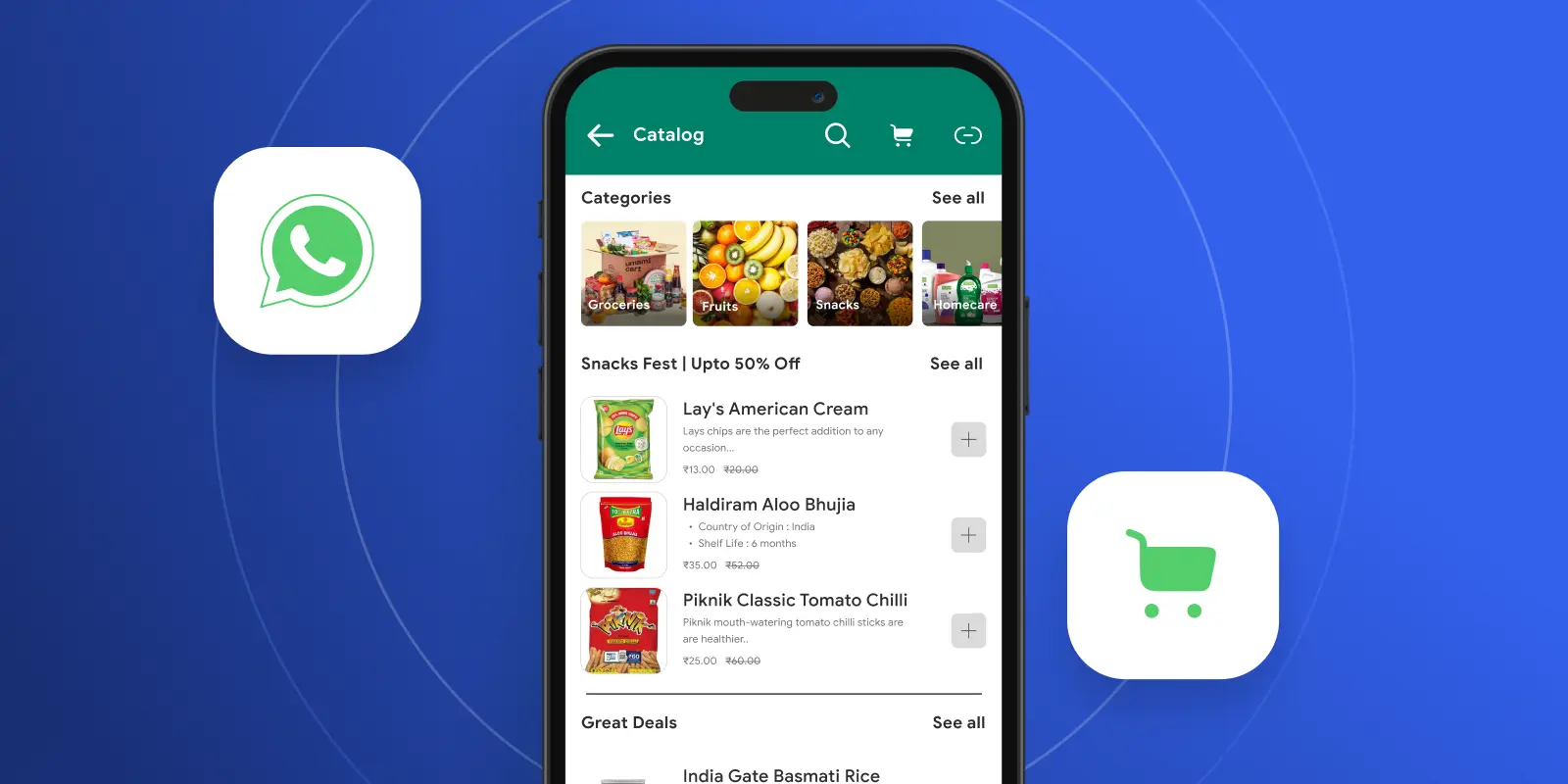
WhatsApp commerce and retention marketing
Regional language content strategy (Tamil product descriptions and ads)
Get a 30-minute strategy call — Chennai brands
Brands across Chennai and Tamil Nadu run their D2C operations remote-first; we work the same way. The first call is a 30-minute diagnostic — you tell us where you’re stuck (Instagram-only selling, broken store, RTO above 25%, dead ads), we map the top three fixes. No sales pitch. You walk away with a clear roadmap whether you hire us or not. We’ve done it for 200+ Indian D2C brands. ₹385Cr+ revenue processed. 4.5x average ROI. 98% retention.
The Shopify build is ₹50,000 fixed-price with no AMC — bug fixes for what we ship are included for the lifetime of the store, and you ship on the Growww Tech custom theme customised to your brand. The only optional cost is the ₹30K/month Growth Retainer if you want active month-over-month optimisation work.
Category: Premium Ayurvedic beauty (face care, hair care, body care)
Starting point (March 2026): ₹8L/month revenue, Shopify store, running Meta ads in-house, no email/WhatsApp automation, no marketplace presence.
Goal: ₹30L/month by March 2027.
Our fee: ₹75K/month + 5% of revenue above ₹15L/month.
Quarter 1 (Apr-Jun 2026): Foundation
What We Did
Complete website audit and optimization: speed, mobile UX, checkout flow
Set up Klaviyo for email marketing: 5 automated flows
Set up Interakt for WhatsApp Business API: order updates + marketing broadcasts
Restructured Meta ad campaigns: 3-campaign framework
Created 20 new ad creatives (UGC focus)
Listed on Amazon India (top 20 products)
Results
Metric
March 2026
June 2026
Monthly revenue
₹8L
₹14L
Ad spend
₹2L
₹3.5L
ROAS
4x
4x (maintained while scaling)
Email/WhatsApp revenue
₹0
₹1.8L (13%)
Amazon revenue
₹0
₹1.2L
Quarter 2 (Jul-Sep 2026): Growth
What We Did
Launched subscription model (subscribe & save, 15% off)
Scaled Meta ads to ₹5L/month with horizontal scaling
Added Google Shopping ads
Implemented AI chatbot for customer support
Created ‘Skin Type Quiz’ on website → personalized product recommendations
Listed on Blinkit (top 5 SKUs)
Results
Metric
June 2026
September 2026
Monthly revenue
₹14L
₹28L
Subscription revenue
₹0
₹4L
Quick commerce revenue
₹0
₹2L
Support cost/order
₹22
₹8
Repeat purchase rate
14%
28%
Quarter 3 (Oct-Dec 2026): Diwali + Authority
What We Did
Executed full Diwali campaign (90-day prep, week-by-week execution)
Launched ‘Gift Sets’ collection for Diwali
Ran influencer campaign with 25 micro-influencers
Published 12 blog articles for SEO
Added regional language product descriptions (Hindi, Tamil)
Results
Metric
September 2026
December 2026
Monthly revenue
₹28L
₹42L (Diwali peak: ₹55L)
Organic traffic
200/month
1,800/month
Blog-driven revenue
₹0
₹1.5L/month
Repeat purchase rate
28%
35%
Quarter 4 (Jan-Mar 2027): Optimization
What We Did
Reduced ad spend efficiency: same revenue at 15% lower ad cost
Scaled subscriptions to 800+ active subscribers
Expanded to Zepto (in addition to Blinkit)
Launched city-specific landing pages for top 5 cities
Implemented RFM-based customer segmentation for targeted campaigns
Final Results
Metric
March 2026
March 2027
Change
Monthly revenue
₹8L
₹45L
+462%
Monthly ad spend
₹2L
₹7L
+250%
Revenue from ads
₹8L
₹20L (44%)
Reduced dependency
Revenue from retention
₹0
₹12L (27%)
New channel
Revenue from marketplaces
₹0
₹8L (18%)
New channel
Revenue from organic
₹0
₹3L (7%)
New channel
Revenue from quick commerce
₹0
₹2L (4%)
New channel
Repeat purchase rate
10%
35%
+250%
Customer LTV
₹1,800
₹5,200
+189%
Support cost/order
₹22
₹7
-68%
Active subscribers
0
820
New revenue stream
ROI of Working With Growww Tech
Amount
Revenue increase (monthly)
₹37L (₹8L → ₹45L)
Our monthly fee
₹75K + 5% of revenue above ₹15L = ₹2.25L
Total annual fee
₹27L
Additional revenue generated (annual)
₹4.44Cr
ROI
16.4x
Honest Mistakes We Made
Influencer campaign underdelivered — Only 6 of 25 influencers generated measurable sales. We should have started with 10 vetted creators instead of 25 untested ones.
Flipkart launch was premature — We listed on Flipkart in Q3 but pulled out after 2 months due to unprofitable unit economics in this category on that platform.
Blog should have started in Q1, not Q3 — SEO takes 6+ months. Starting earlier would have meant organic traffic arriving sooner.
Plan the next 12 months on a call
The full-year results above came from a long-term partnership — not a one-off project. That’s why our build doesn’t carry an AMC: we’d rather earn the second year on the strength of the first one’s outcomes than via a recurring fee. We’ve done it for 200+ Indian D2C brands. ₹385Cr+ revenue processed. 4.5x average ROI. 98% retention.
The Shopify build is ₹50,000 fixed-price with no AMC — bug fixes for what we ship are included for the lifetime of the store. Active ongoing growth work sits on the optional ₹30K/month Growth Retainer.
Ad costs have roughly tripled in 5 years. Brands spending 40% of revenue on ads in 2022 now need to spend 70%+ to maintain the same volume. That’s unsustainable.
The 4 Pillars of Ad-Cost-Proof D2C
Pillar 1: Organic Traffic (SEO + Content)
Build a blog with 50-100 articles targeting purchase-intent keywords in your category
Example: A skincare brand ranking for ‘best moisturizer for oily skin in India’ gets 5,000+ free visits/month
Timeline: 6-12 months to see significant traffic. But it compounds — unlike ads that stop the moment you stop paying.
Cost: ₹15-30K/month for content production. ROI: organic traffic typically converts at 2-3x the rate of paid traffic.
Pillar 2: Retention (Email + WhatsApp + Loyalty)
Getting a second purchase costs 5-7x less than getting a first purchase
Target: 30%+ of revenue from repeat buyers within 12 months
Every repeat buyer reduces your effective CAC across all orders from that customer
Pillar 3: Community (Social + UGC + Referral)
Build an Instagram community that engages with your content beyond just sales
UGC program: incentivize customers to share photos/videos of your product
Referral program: reward customers for bringing new buyers. CAC through referral: ₹50-150 (vs ₹500+ via ads).
WhatsApp community: exclusive group for top 100-500 customers
Pillar 4: Multi-Channel Distribution
Don’t rely on one channel. Spread across: D2C website + Amazon + Flipkart + Quick Commerce + WhatsApp Commerce
Each channel has its own discovery mechanism — marketplace search, quick commerce browse, WhatsApp broadcast
If Meta ads become 2x more expensive, you still have 4 other channels driving revenue
The Revenue Mix to Aim For
Revenue Source
Ad-Dependent Brand
Ad-Proof Brand
Paid ads (Meta + Google)
70-80%
25-35%
Organic traffic (SEO)
5-10%
15-25%
Repeat buyers (email/WhatsApp)
5-10%
20-30%
Marketplace (Amazon/Flipkart)
0-5%
15-20%
Referral/word-of-mouth
2-5%
5-10%
Quick commerce
0%
5-10%
The ad-proof brand isn’t anti-ads — it still runs profitable ads. But when ad costs spike 30% during Diwali, it doesn’t panic. It has 5 other revenue streams absorbing the shock.
The 12-Month Roadmap
Month 1-3: Launch blog (10 articles). Set up email + WhatsApp flows. Start UGC collection.
Month 3-6: Publish 20 more articles. Launch referral program. List on Amazon.
Month 6-9: Blog traffic growing. Email/WhatsApp driving 15%+ of revenue. List on quick commerce.
Month 9-12: Organic traffic hitting 2,000+/month. Repeat buyers at 25%+. Ad spend as % of revenue dropping below 30%.
In October 2026, we published the State of Indian D2C 2026 report. Here’s what shifted in Q1 2027 based on data from 200+ brands.
Customer Acquisition Costs: Still Rising
Channel
Q3 2026
Q1 2027
Change
Meta Ads (blended)
₹502
₹565
+12.5%
Google Ads (Search)
₹650
₹720
+10.8%
Quick Commerce Ads
₹280
₹320
+14.3%
Organic (SEO + Social)
₹85
₹78
-8.2%
WhatsApp Marketing
₹120
₹105
-12.5%
Key insight: Paid acquisition costs keep rising. But owned channels (organic and WhatsApp) are getting cheaper as brands invest in content and community. The gap between paid-dependent brands and content-driven brands is widening.
Retention: The Dividing Line
Metric
Bottom 25%
Average
Top 25%
Change vs 2026
90-day repeat rate
7%
20%
35%
Top brands improving, bottom stagnant
Customer LTV (12 months)
₹1,100
₹3,200
₹7,800
Top brands +20% vs 2026
Revenue from repeat buyers
8%
30%
45%
Increasing across the board
The divide is clear: brands investing in retention are pulling away from those relying solely on new customer acquisition.
Quick Commerce: The Channel That Kept Growing
Quick commerce revenue share for FMCG D2C brands: 12% (up from 6% in 2026)
Average monthly orders from quick commerce: 400 (for brands active on 2+ platforms)
Quick commerce ads ROI: 3.5x (competitive with Meta for consumable products)
New development: Zepto and Blinkit launched brand storefront features, giving D2C brands mini-stores within the app
AI Adoption Accelerated
AI Application
Adoption Rate (brands using)
Average Cost Savings
Customer support chatbot
45%
40-60% reduction in support costs
AI product descriptions
35%
5-8 hours/week saved
AI ad creative generation
25%
3x faster creative production
Predictive inventory
15%
20-30% reduction in stockouts
AI-powered pricing
10%
5-10% margin improvement
Predictions for Q2-Q4 2027
Meta ad costs will stabilize in Q2 as more brands diversify to other channels, reducing bidding pressure.
Quick commerce will hit 15-20% of revenue for FMCG D2C brands by year-end.
AI will become table stakes — brands not using AI chatbots will be at a competitive disadvantage.
Subscription revenue will grow 50%+ as more brands implement subscribe-and-save models.
Regional-language content will open up tier 2/3 city growth for the brands that ship Hindi, Tamil, Telugu, and Marathi product copy ahead of competitors.
Want the full Q1 2027 dataset?
The complete dataset — category-specific CAC, retention curves, RTO benchmarks, and the raw founder-survey data — is free for brands on a 30-minute call. We work with 200+ Indian D2C brands. ₹385Cr+ revenue processed. 4.5x average ROI. 98% retention.
The Shopify build is ₹50,000 fixed-price with no AMC — bug fixes for what we ship are included for the lifetime of the store.
Brands across Hyderabad and Telangana run their D2C operations remote-first; we work the same way. The first call is a 30-minute diagnostic — you tell us where you’re stuck (Instagram-only selling, broken store, RTO above 25%, dead ads), we map the top three fixes. No sales pitch. You walk away with a clear roadmap whether you hire us or not. We’ve done it for 200+ Indian D2C brands. ₹385Cr+ revenue processed. 4.5x average ROI. 98% retention.
The Shopify build is ₹50,000 fixed-price with no AMC — bug fixes for what we ship are included for the lifetime of the store, and you ship on the Growww Tech custom theme customised to your brand. The only optional cost is the ₹30K/month Growth Retainer if you want active month-over-month optimisation work.
Supply chain optimization — Use NCR’s logistics advantage for faster, cheaper delivery nationwide
Get a 30-minute strategy call — Delhi NCR brands
Brands across Delhi NCR and North India run their D2C operations remote-first; we work the same way. The first call is a 30-minute diagnostic — you tell us where you’re stuck (Instagram-only selling, broken store, RTO above 25%, dead ads), we map the top three fixes. No sales pitch. You walk away with a clear roadmap whether you hire us or not. We’ve done it for 200+ Indian D2C brands. ₹385Cr+ revenue processed. 4.5x average ROI. 98% retention.
The Shopify build is ₹50,000 fixed-price with no AMC — bug fixes for what we ship are included for the lifetime of the store, and you ship on the Growww Tech custom theme customised to your brand. The only optional cost is the ₹30K/month Growth Retainer if you want active month-over-month optimisation work.
Prepaid incentive — ₹50-100 off for prepaid. Even 10% shift from COD to prepaid saves significantly.
WhatsApp order confirmation — After COD order, send WhatsApp: ‘Confirm your order by replying YES.’ Non-responders within 6 hours → cancel before shipping.
Strategy 3: Pincode-Based Delivery Optimization
Not all tier 2/3 pincodes are equal. Some have good courier coverage, others don’t.
Use Shiprocket’s pincode serviceability API to check: which couriers serve the pincode? What’s the EDD?
For well-served pincodes: offer standard delivery at normal rates
For poorly served pincodes: show longer EDD upfront, consider not offering COD
Some brands restrict COD to specific pincodes — if your RTO data shows certain pincodes have 30%+ RTO, disable COD there
Strategy 4: Hyperlocal Partnerships
For cities where you have high order volume (100+/month from one city), explore local delivery partnerships
Local courier services in tier 2 cities charge ₹30-50 per delivery (vs ₹60-100 from national couriers)
Same-day or next-day delivery becomes possible even in smaller cities
Example: A brand shipping 200 orders/month to Jaipur partnered with a local logistics company, saving ₹8,000/month on shipping alone
The Financial Impact
Optimization
Savings per Order
At 1,000 Tier 2/3 Orders/Month
Regional warehouse
₹15-25
₹15,000-25,000
COD verification (RTO reduction)
₹20-40
₹20,000-40,000
Prepaid shift (10%)
₹5-10
₹5,000-10,000
Pincode optimization
₹5-10
₹5,000-10,000
Total monthly savings
₹45,000-85,000
Need Help With Supply Chain?
At Growww Tech, we optimize supply chain and logistics for D2C brands expanding to tier 2/3 India. Let’s cut your logistics costs.
Bot asks height/weight/usual size → recommends based on size chart
‘Do you have X in blue?’
Yes (80%)
Bot searches catalog → shows available options
‘Product is damaged’
Partial
Bot collects photos and details → creates ticket → routes to human for resolution
Payment/refund issues
No
Immediately routes to human agent
Angry/escalated customer
No
Bot detects negative sentiment → immediate human handoff
The Results (After 3 Months)
Metric
Before AI
After AI
Change
Queries handled by humans
500/day
180/day
-64%
Average response time
3-4 hours
Under 2 minutes
-98%
Support team size
4 agents
2 agents (₹36K/month saved)
-50%
Customer satisfaction
3.2/5
4.1/5
+28%
Monthly support cost
₹72K
₹28K (agents) + ₹5K (tools)
-54%
Resolution rate (first contact)
65%
82%
+26%
Key Lessons
AI handles volume, humans handle complexity — The goal isn’t replacing humans, it’s freeing them for high-value interactions.
Training data quality matters more than AI model quality — A well-trained simple bot outperforms a poorly trained advanced one.
Always offer human handoff — The #1 customer complaint with chatbots is being stuck without a way to reach a person.
Monitor weekly — Review bot conversations weekly. Customers ask new questions. Keep updating the knowledge base.
Hindi/Hinglish support is mandatory — 45% of queries came in Hindi or Hinglish. The bot needed to understand both.
Want AI support that cuts your bill 60%?
A well-trained simple bot — built for the 80% of repeat questions, with proper Hindi/Hinglish handling and clean human-handoff — beats a poorly-trained advanced one. The implementation is 3-4 weeks if we run it. The 60% support-cost reduction holds when bot accuracy stays above 88% and human handoff stays below 12%. We’ve done it for 200+ Indian D2C brands. ₹385Cr+ revenue processed. 4.5x average ROI. 98% retention.
The Shopify build is ₹50,000 fixed-price with no AMC — bug fixes for what we ship are included for the lifetime of the store.