If you live inside WhatsApp Web for sales conversations and rely on Zoho Bigin to keep your pipeline organised, you have probably felt the constant friction of tab switching. You read a message, flip to Bigin to pull up the contact, scan their deal history, jot a note, add a tag, and then return to the chat to reply. It is a small tax per conversation, but it compounds hard across every conversation in a full sales day.
WaBigin is a free, open-source Chrome extension that removes that friction entirely. It embeds a Zoho Bigin CRM sidebar directly inside WhatsApp Web, so your CRM is already open the moment you start a chat. No tab switching. No copy-pasting phone numbers. No lost context. The project lives on GitHub at github.com/RaghooBokam/WaBigin — try it and share what you want to see next.
The moment you open an individual WhatsApp Web chat, WaBigin injects a sidebar on the right side of the screen and looks up the contact in Bigin using their phone number or name. If the contact already exists, you instantly see their tags, open deals, notes, and core details. If they do not exist yet, the extension creates the contact automatically so you never lose a lead because someone forgot to add them.
From inside that sidebar you can manage tags with a searchable dropdown that lets you create new ones on the fly, view all open deals, and create new deals with pipeline, stage, amount, and close date filled in — without leaving the conversation. The Notes tab lets you type a fresh note or, in one click, capture the last 30 messages of the WhatsApp chat as a clean formatted note on the Bigin record. The Details tab gives you inline editing for name, phone, email, company, and pipeline stage, plus a sync button that pulls the WhatsApp profile photo into Bigin so the contact record actually looks like a person.
Why WaBigin Matters for Sales Teams
Most CRM hygiene problems are not caused by lazy salespeople — they are caused by friction. The more steps it takes to log a conversation, the less often it gets logged. By collapsing the gap between a WhatsApp conversation and the Bigin CRM record to zero clicks, WaBigin makes the right thing the easy thing. Tags get added in the moment, notes get captured while context is fresh, and deals get created the second a buying signal appears.
WaBigin is also genuinely privacy-friendly. There is no middleman server. The extension talks directly from your browser to Zoho APIs, and OAuth tokens are stored locally. It supports all major Zoho data centres including India, US, EU, Australia, and Japan, so your data stays in your region of choice.
How to Install WaBigin in Five Minutes
Because WaBigin is not yet on the Chrome Web Store, you install it manually in Developer Mode. Clone or download the repo, load the unpacked folder at chrome://extensions, create a Server-based OAuth client in your regional Zoho API Console, paste the Client ID and Client Secret into the extension popup, click Connect to Bigin, and approve the Zoho login prompt. Once connected, open web.whatsapp.com, start any chat, and the Bigin sidebar appears. The README on GitHub walks through every step, including the exact Redirect URI the extension expects.
Under the Hood: How WaBigin Works
WaBigin is a Manifest V3 Chrome extension. A service worker handles the OAuth flow and Bigin API calls, a content script injects the sidebar UI into WhatsApp Web, and a small page-context script reads the active chat from WhatsApp’s internal webpack store so the sidebar always knows which conversation you are in. The permission set is intentionally minimal: storage for tokens and settings, identity for OAuth, alarms to keep the service worker alive for background token refresh, tabs to detect WhatsApp Web, and host permissions limited to Zoho APIs and whatsapp.com.
Help Shape What Comes Next
WaBigin is an early-stage project and the most useful thing you can do right now is try it and share what is missing, what is broken, and what would make it indispensable for your workflow. A few questions worth community input: Would group chat support be valuable, or is one-to-one enough? Should the sidebar surface closed-won and lost deals as historical context? Is 30 messages the right default for capturing a chat as a note, or should it be configurable? Would you want to push WhatsApp media attachments into Bigin records? And which custom field types need inline editing most urgently?
If you spot a bug, have a feature request, or want to contribute code, head to the WaBigin repository on GitHub and open an issue or a pull request. Stars are appreciated, but a description of your real WhatsApp-plus-Bigin workflow is worth far more.
Looking for saree suppliers and manufacturers in India? Skip the IndiaMART rabbit hole. We’ve built and shipped 200+ Shopify stores — here’s our hand-vetted, cluster-by-cluster guide to who supplies what (Surat printed sarees to Banaras handloom), with direct WhatsApp contacts, MOQs, and the operator’s view of where each cluster actually adds value to your inventory.
Verified suppliers we’ve personally worked with
We’ve shipped real orders with the suppliers below. We don’t take commission and we don’t charge them to be listed. Each WhatsApp link is pre-populated — “Hi [Name], Raghoo from GrowwwTech.com recommended you for saree supply…” — so the supplier knows where you came from.
Vasudha Agencies — Surat(synthetic, printed, fancy, festive) MOQ ₹5,000–₹10,000 per order. Low entry barrier — useful for first-time resellers and Instagram boutiques testing inventory. WhatsApp Shiva · WhatsApp Vishnu
Haneef Brothers — Pan Bazar, Secunderabad(Pattu silk, Gadwal, Pochampally, Venkatagiri, Mangalagiri, designer, wedding sarees) MOQ ₹5,000–₹10,000 per order. Multi-cluster catalogue under one roof — handy for testing several Telangana silks in one shipment. Pan India dispatch. 2,000+ wholesale customers (Instagram). WhatsApp Ikran Bhai · Store line
Are you a saree supplier? D2C founders read this guide looking for supply chain. If you’ve been in business 3+ years and want to be listed, WhatsApp us — we vet, no fee.
How big is the Indian saree market, really?
Three numbers you’ll see thrown around: ₹50,000 crore (formal retail), ₹68,000 crore (Surat’s saree-industry output alone), and “₹1 lakh crore+” (the full economy when you add unorganised retail and exports). They all coexist because they measure different stages — what consumers buy formally, what factories produce, and what changes hands across the whole supply chain. The takeaway for sourcing: most popular cluster rankings are off by 10–70× because they confuse these layers. The cluster cards below use verified production-side numbers, sourced cluster-by-cluster.
1. Saree Manufacturers in Surat — India’s Synthetic Capital
Surat’s textile hub — 25–30 million metres of cloth daily.
~₹68,000 Cr cluster output · ~₹10,000 Cr saree exports · 10 million sarees/day · 70,000+ traders. Surat owns synthetic — 90% of India’s synthetic fabric and 30% of global fabric production come from this 20-km radius. The new PM MITRA mega park at Vansi (1,142 acres) is targeting ₹10,000 Cr more investment by 2027 (India.gov.in).
Source from Surat if: you sell printed sarees, georgettes, fancy synthetics, festival drops at ₹500–₹3,000 retail. The cheapest quote is almost always a re-seller — pick on response time and consistency, not unit price.
2. Banarasi Saree Wholesalers — The Falling Crown, Still ₹5,000 Cr
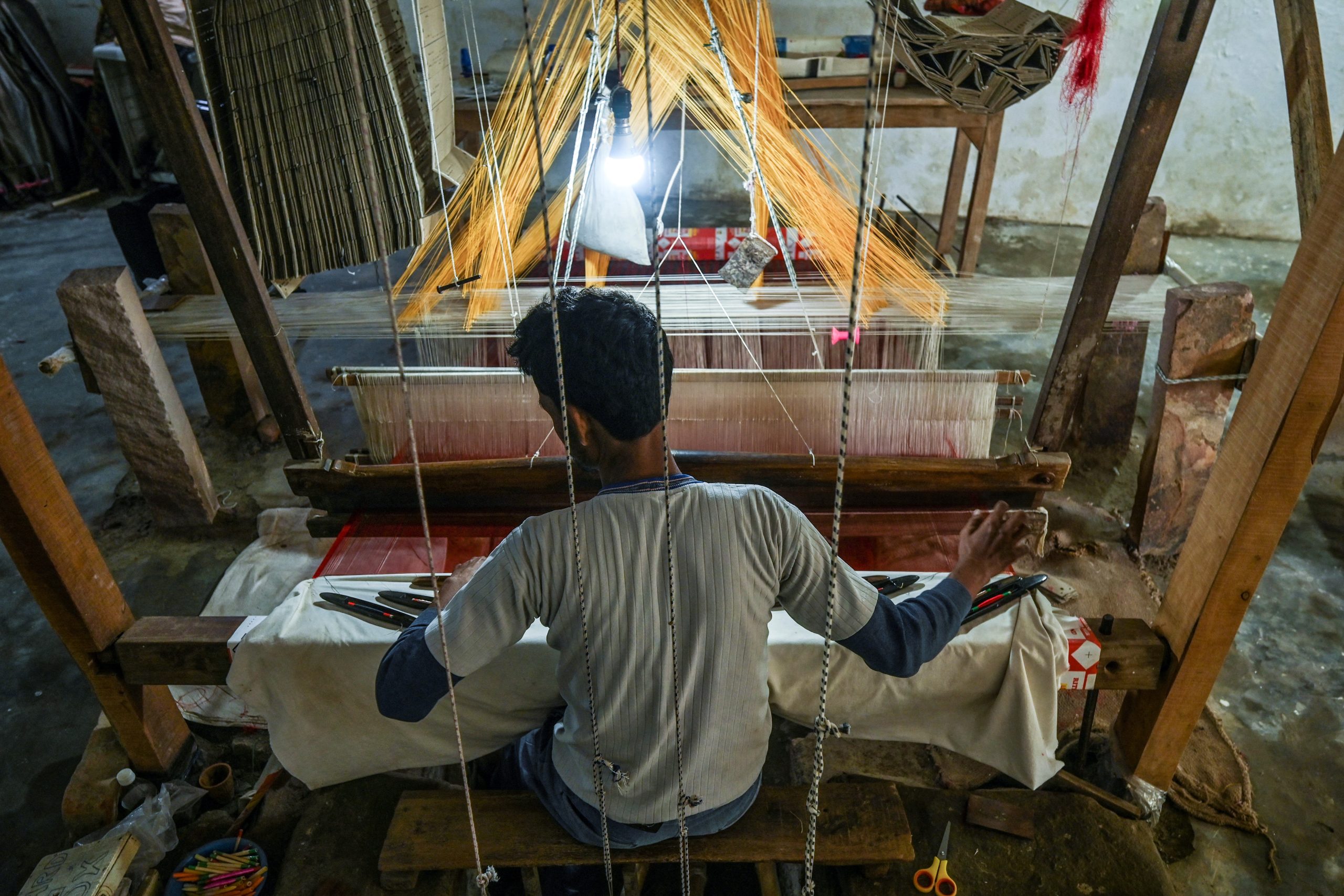
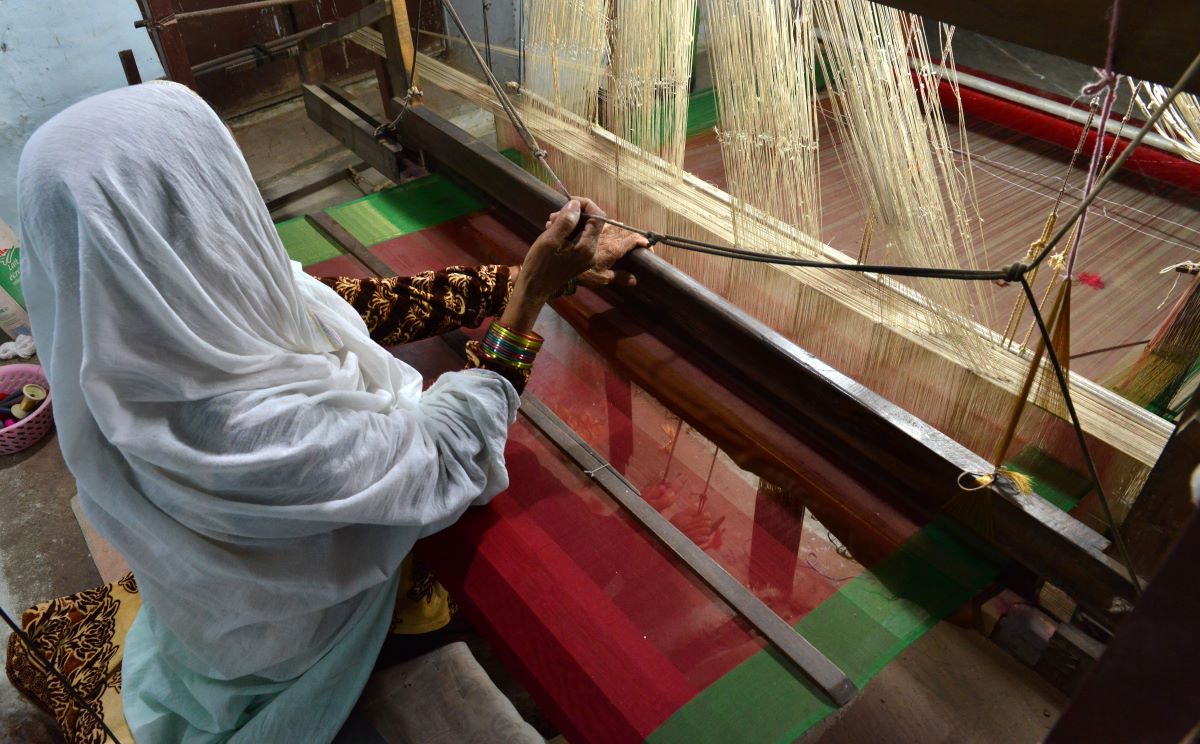
A Banarasi weaver in Varanasi. The cluster has lost ~50% of its weavers in a decade. (Al Jazeera)
₹5,000 Cr/year (down from ₹7,000 Cr) · 200,000 weavers (halved from 4 lakh in a decade) · GI tag 2009. GST 2017, US tariffs in 2024, the Bangladesh export freeze — Banaras has taken every macro hit possible, yet every Indian wedding wardrobe still wants one (Scroll).
Source from Banaras if: you’re building a wedding/heritage brand and can do weaver-direct sourcing. The opportunity is the gap left by the Chowk middlemen — provenance proof, named weavers on the PDP, online distribution that bypasses wholesale.
~₹1,000 Cr · 10,000 weaving families · Pochampally GI 2004–05, Gadwal GI 2010. Both are Telangana (state bifurcated 2014). The trap: only 800–1,200 GI-registered handlooms in Gadwal — ~80% of “Gadwal silk” sold online is power-loom imitation (Gadwal Weavers Society).
Source from here if: you’re building a premium ikat/silk brand. A real Gadwal weaver makes 4–5 sarees/month — if your store lists 200 SKUs and promises 7-day dispatch, you’re selling power-loom under a heritage name. Stock 30, pre-order the rest, name the weaver.
₹332 Cr KSIC turnover (FY24-25, up from ₹126 Cr in 2020-21) · 1,03,347 sarees/year · 789 in-house weavers · GI tag 2005. KSIC is the only legally authorised producer (Deccan Chronicle). The 4 AM queues outside KSIC outlets aren’t an exaggeration — production is structurally under-supplied.
Source from here if: you can negotiate a KSIC trade arrangement. Anyone selling “Mysore-style silk” online without it is selling a Bangalore weave with a hijacked name — the brand-trust cost is permanent.
5. Kanchipuram Silk Saree Manufacturers — ₹200 Cr Co-ops, GI is the Moat
A Kanchipuram weaver at the pit loom.
~₹200 Cr formal cooperative turnover · 50,000 weavers · 60,000 looms · 24 cooperative societies · GI tag 2005–06. The “₹10,000 Cr Kanchipuram market” you see online conflates retail across India (mostly Bangalore/Salem imitations) with the actual cluster (New Kerala).
Source from here if: you sell wedding silks at ₹40K+ AOV. GI authenticity is the pricing lever — customers pay 3–5× premium for verified GI over “Kanchi-style”. Build the proof into the PDP: weaver name, loom number, GI certificate.
6. Bengal Jamdani Saree Suppliers / Tangail — ₹150 Cr, GI Just Landed
A Phulia Bengal Jamdani handloom saree.
Jamdani specifically: ~₹150 Cr · 5,000 weavers. Bengal handloom cluster (Phulia + Shantipur + Nabadwip): 125,000+ looms. Two facts to fix: Jamdani is a muslin/cotton hybrid, not pure cotton; and it’s traditionally a Dhaka craft — Bangladesh holds the original GI. Tangail Saree of Bengal got its GI on 2 Jan 2024 (Wikipedia).
Source from here if: you’re building a contemporary handloom brand. The GI on Tangail is brand-new — Bengal weavers are still pricing pre-recognition. There’s a 12–18 month window to lock capacity at the old rates.
7. Assam Silk Saree Manufacturers (Sualkuchi) — ₹100 Cr Cluster, ₹40 Cr in Muga
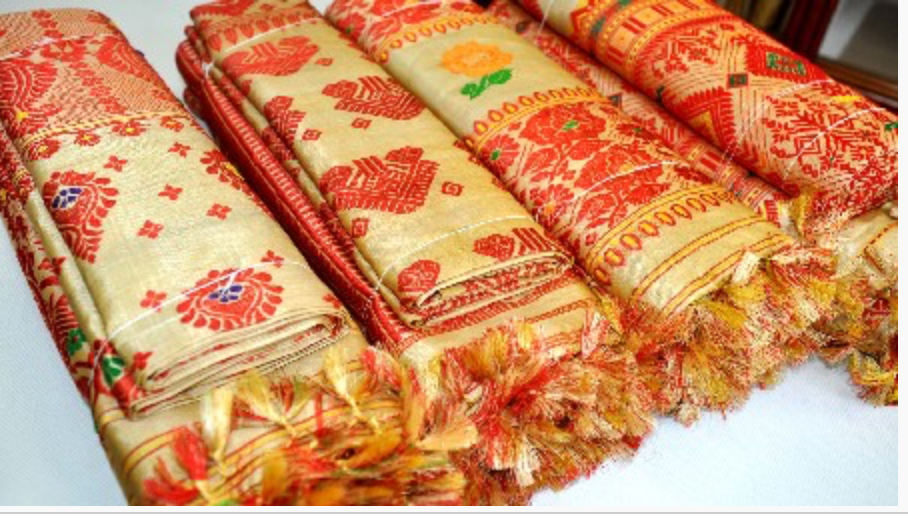
Muga silk Mekhela Chador — Assam’s two-piece traditional drape.
~₹100 Cr cluster · 50,000 livelihoods · 7,000 looms · 20,000 weavers · Muga GI 2007. Assam produces 95% of India’s muga silk and 65% of eri. Muga is the only naturally golden silk in the world — climate-stressed, increasingly positioned for global luxury (The Fourth Plate).
Source from here if: you sell premium ethnic at ₹15K+ AOV. Heads up: Mekhela Chador is a two-piece garment (mekhela + sador + blouse) — your Shopify variant structure has to handle the bundle, not three separate SKUs. Most stores get this wrong.
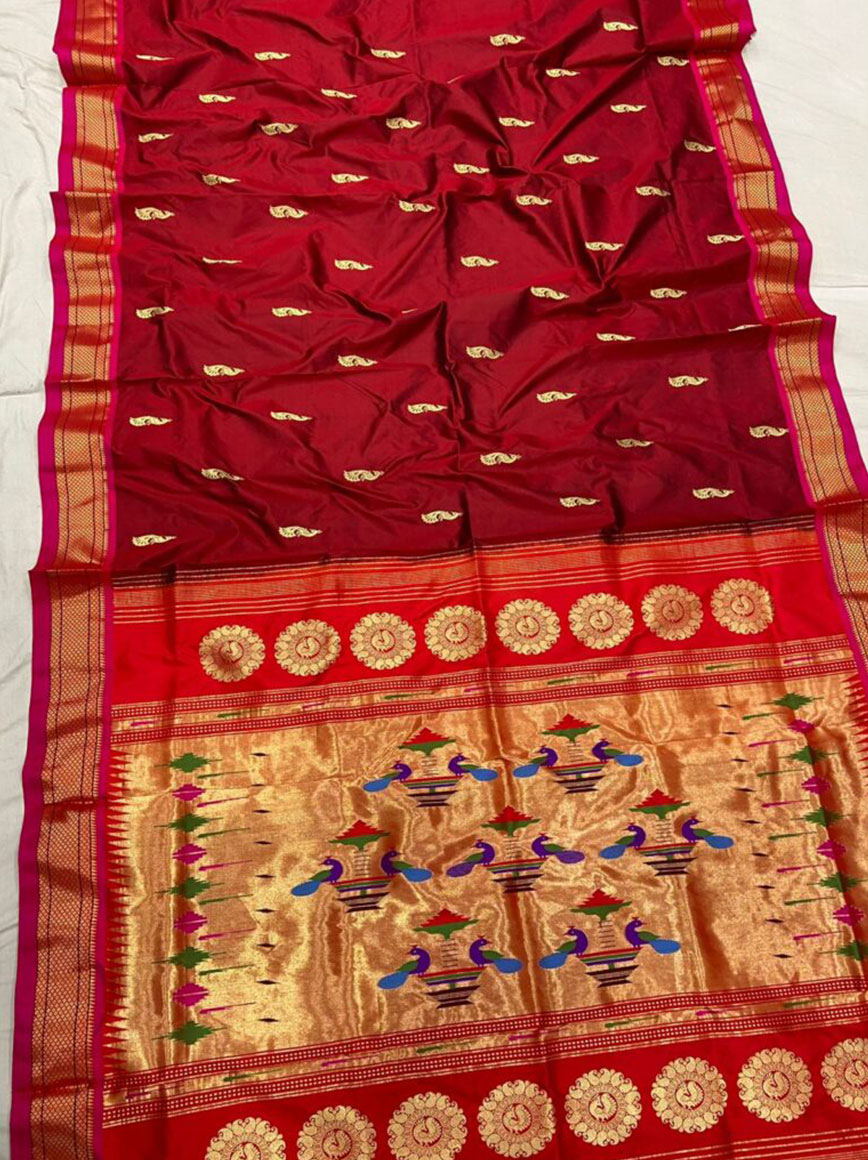
35,000+ artisans · 3,000 active looms · GI tag 2010. Maharashtra hasn’t published consolidated turnover, but the state just approved a ₹12.5 Cr Paithani tourism centre at Yeola and a common facility centre in July 2025 (30Stades).
Source from here if: you’re building a premium-only label at ₹40K–₹3L AOV. A genuine Paithani takes 6–18 months to weave. High margin per unit, low volume per month — plan inventory turns accordingly.
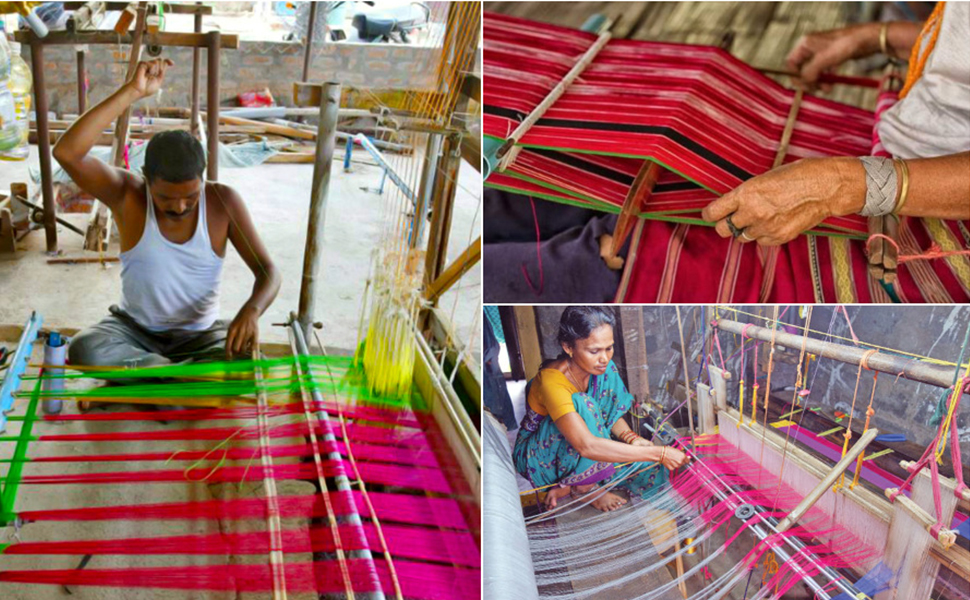
9. Sambalpuri Saree Suppliers (Odisha Ikat) — Under-explored, Weaver-direct Still Possible
Sambalpuri cotton saree from Odisha.
No published cluster turnover. Balijori Haat in Bargarh is Asia’s largest open-air handloom market — “several crores of textiles change hands monthly”. A single Sambalpuri sari = 6+ weeks of work. Cotton retails ₹2K–₹40K; silk ₹12K–₹1L (30Stades).
Source from here if: you can put 18 months into weaver relationships before scaling. Boyanika (the state co-op), Priyadarshini Handloom and Utkalamrita are the only consolidated digital footprints. Whitespace.
Chanderi weave — gossamer-light cotton-silk hybrid from Madhya Pradesh.
~₹15 Cr · 3,600 active handlooms · 11,000 weavers · GI tag 2005 (India’s 4th GI product). Weaving is the primary income source for 60% of Chanderi’s population. The Padma Doree initiative (May 2026) is pairing ahimsa silk with Chanderi gold for global luxury (The Week) — a rare platform play that could 10× cluster economics in five years.
Source from here if: you’re building a contemporary craft / luxury crossover brand. Small cluster, premium positioning, almost no D2C competition yet.
The 10 clusters at a glance
#
Cluster
Verified turnover
Weavers / looms
GI year
1
Surat
~₹68,000 Cr cluster · ₹10,000 Cr exports
1M+ power looms
—
2
Banaras
~₹5,000 Cr
~200,000 weavers
2009
3
Pochampally + Gadwal
~₹1,000 Cr
10,000 families
2004–05 / 2010
4
Mysore Silk (KSIC)
₹332 Cr
789 in-house
2005
5
Kanchipuram
~₹200 Cr (co-ops)
50,000 / 60,000
2005–06
6
Bengal Jamdani
~₹150 Cr
5,000 weavers
Tangail 2024
7
Sualkuchi (Assam)
~₹100 Cr
20,000 / 7,000
Muga 2007
8
Yeola Paithani
No public number
35,000 artisans
2010
9
Sambalpuri
“Several Cr/month”
Major cluster
Yes
10
Chanderi
~₹15 Cr
11,000 / 3,600
2005
How to vet a saree supplier in 4 conversations
By WhatsApp, free, no commitment:
First message — get the catalogue. Ask for the latest catalogue, MOQ, and starting price. Use the script in the next section. A good supplier replies within hours with photos or a video catalogue. Slow response = your customer’s RTO problem.
Second message — get a sample. Ask for one or two pieces shipped at your cost. The fabric hand, finish quality, and packaging are non-negotiable. Anyone who refuses to ship samples at ₹500–₹2,000 is either flaky or has something to hide.
Third conversation — ask about repeat orders. “If I order this design again in 30 days, can you produce 50 more pieces in the same quality?” The answer separates loom owners (yes, with timeline) from re-sellers (vague).
Fourth conversation — agree on a single trial PO. ₹10K–₹25K for first order. If they deliver on time, with the agreed quality and quantity, scale. If not, walk away — there are 70,000 traders in Surat alone.
Your first WhatsApp message — copy-paste this
Hi [Supplier Name], Raghoo from GrowwwTech.com recommended you for
saree supply. Could you share your catalogue, MOQ, and pricing?
Thanks.
That single message gets you the three things you need to evaluate any supplier (catalogue, MOQ, pricing) in one round. The “Raghoo from GrowwwTech.com” line tells the supplier where you came from — they take it more seriously than a cold ping. The WhatsApp links in the supplier directory above are pre-populated with this script.
Common red flags
No physical address. A real supplier has a Pan Bazar / Ring Road / Sahara Darwaza-type address. Online-only with no shop is a re-seller.
“All sarees in stock, ship in 24 hours” for handloom. A real handloom weaver makes 4–5 pieces/month. 24-hour dispatch on Kanchipuram or Pochampally = power-loom imitation.
No catalogue, just “DM for prices”. Wastes your time. Walk.
Pressure to pay in full upfront. Standard term is 30–50% advance, balance on dispatch. Anyone demanding 100% upfront for a first order is either inexperienced or scamming.
Refuses to ship a paid sample. Biggest red flag. Real suppliers send samples — they want repeat orders.
FAQ
Who are the top saree manufacturers in Surat?
Surat has 10,000+ saree manufacturing units across 240 textile markets — 70,000+ traders within a 20-km radius. Big organised names you’ll see ranking on directories: Vivera International, Kesaria Textile, Karishma Prints, Yasho Bhumi Textiles, Ajmera Fashion. Mid-market wholesalers we’ve worked with directly: Vasudha Agencies (synthetic, printed, festive — MOQ ₹5K–₹10K, contacts in the directory above). The “best” one depends on whether you want printed georgettes, fancy synthetics, or festival drops.
How do I find a wholesale saree supplier in India?
Four routes, ranked by reliability: (1) Vetted personal referrals like the directory at the top of this guide — fastest path to a real loom owner, not a re-seller. (2) Visit the cluster in person — Pan Bazar Secunderabad, Surat Ring Road, Varanasi Chowk all have wholesale rows. (3) IndiaMART / TradeIndia — high reach but you’ll spend weeks filtering re-sellers. (4) Trade exhibitions — IIGF, India International Garment Fair, Tex-Styles India. Use the 4-conversation vetting framework above before placing your first PO.
Is Surat or Banaras cheaper for saree sourcing?
Surat is dramatically cheaper for synthetic and printed sarees — wholesale starts ₹150–₹500/piece, retail ₹500–₹3,000. Banaras is more expensive but for handloom silk — wholesale ₹2,000–₹15,000/piece, retail ₹6,000–₹1L+. They’re not competitors on price; they’re different categories. If you’re sourcing for an Instagram boutique at ₹999 ASP, go Surat. If you’re building a wedding-wear brand at ₹15K AOV, go Banaras (or Kanchipuram for South Indian wedding markets).
Where is the biggest saree market in India?
Surat. ₹68,000 Cr saree-industry output, 10 million sarees per day, 70,000+ traders, 240 textile markets within a 20-km radius. Banaras leads handloom at ₹5,000 Cr. Kanchipuram leads silk wedding sarees. Pan Bazar in Secunderabad is the de facto wholesale hub for Telangana silks.
What is the size of the Indian saree market?
The formal retail saree market is USD 6.15 billion (~₹50,000 Cr) in 2025, projected to USD 10.77B by 2034 (IMARC). Add unorganised retail and exports and the full economy is well past ₹1 lakh crore.
Which sarees have a GI tag?
Major GI-tagged sarees: Banarasi (2009), Kanchipuram (2005–06), Pochampally Ikat (2004–05), Mysore Silk (2005), Chanderi (2005), Paithani (2010), Gadwal (2010), Muga / Mekhela Chador (2007), Tangail Saree of Bengal (2024). The GI is what protects the original cluster from power-loom imitations sold under the same name.
Which Indian state has the most saree weavers?
Per the Fourth All-India Handloom Census: 36 lakh weavers and allied workers nationally, 72% rural women. West Bengal, Assam, and Tamil Nadu lead by count.
What’s the typical MOQ for saree wholesale in India?
Synthetic Surat suppliers: ₹5K–₹10K worth per order is common (low entry). Premium handloom weavers: 1–10 pieces with 30-day pre-order. Multi-cluster wholesalers like Haneef Brothers (Telangana): ₹5K–₹10K per order with mixed lots.
Building a saree D2C brand on Shopify?
If you’re already running an ethnic-wear store and stalled at a ceiling — ₹10L/mo, ₹50L/mo, wherever — the leak is usually in the supply chain: paying middlemen too much, selling power-loom as handloom, or carrying 200 SKUs when the cluster can produce 30. The fix is rarely more ad spend.
We’ve built and scaled 200+ Shopify stores for Indian D2C brands — see what we ship for ethnic-wear founders. From ₹50,000, 4-week launch, fixed-price. No AMC, ever. Bug fixes for what we shipped stay included for the lifetime of the store.
30-minute call, no pitch — just a look at your PDPs, COD/RTO numbers, and supplier mix.
Shopify vs Medusa.js: Headless Open-Source vs Hosted in 2026
Shopify powers roughly 20.2% of the global ecommerce platform market. Medusa.js sits inside the "Other" 25% bucket — small, but growing fast in dev-led D2C circles.
If you're a founder who's talked to a senior engineer recently, you've probably heard the pitch. "Why pay Shopify forever? Own your stack." It sounds clean on paper.
The reality is messier. This guide cuts through the hype. We'll show you what Medusa actually costs in India, what Reddit says about running it in production, and when Shopify is still the right call — even for technical founders.
Quick verdict
Factor
Shopify
Medusa.js
Type
Hosted SaaS
Self-hosted, MIT licensed
Stack
Closed, proprietary
Node.js, TypeScript, Postgres
Monthly cost
$29–$2000+ (₹2.4K–₹1.7L)
Hosting only (₹5K–₹50K)
Transaction fees
0–2% (unless using Shopify Payments)
None
Launch time
4–8 weeks
8–16 weeks
India payments
Turnkey (Razorpay, UPI, COD apps)
Community plugins, partial
Plugin stack
200K+ apps
Thin, still maturing
Best for
Most D2C founders
Dev-led brands with custom needs
What is Medusa.js (in one paragraph)
Medusa is an open-source headless commerce engine. It's Node.js and TypeScript on the backend, MIT licensed, and you host it yourself.
Founded in 2021 out of Denmark. Medusa v2 shipped late 2024 — a major architectural rewrite with a new modules system, a better admin dashboard, and cleaner workflows. Many older tutorials still refer to v1.
The backend exposes REST and GraphQL APIs. You build your own storefront — usually Next.js — and talk to Medusa like any headless CMS. No license fee. No transaction fee. You own the code.
What Reddit and the community say about Medusa
Here's the honest bit — Reddit discussion of Medusa is sparse. The platform's too new and niche for dedicated complaint threads. Most real signal lives on GitHub issues, the Medusa Discord, and dev-focused subreddits cross-referencing headless commerce. We pulled themes from those plus GitHub Discussions.
1. Docs have gaps. Docs cover the happy path well, but edge cases send you to Discord or GitHub. Newcomers hit this wall in week two.
2. Plugin stack is thin. The "awesome-medusajs" list exists, but compared to Shopify's 200K apps, it's tiny. Many plugins are community-maintained and lag behind v2.
3. "Is it production-ready?" comes up weekly. Yes, brands run it in production — but not without engineering effort. It's not a plug-and-play SaaS.
4. Customisation wins are real. Devs who stuck with it rave about modules, workflows, and extending the data model. This is where Medusa genuinely beats Shopify.
5. Community over customer support. The Medusa Discord has 4,800+ devs. Helpful, but it's peer support, not a vendor SLA. When production breaks at 2am, you fix it.
What Reddit says about Shopify (and Hydrogen)
Shopify has its own headless story — Hydrogen (Remix-based frontend) plus Oxygen (hosting). It's the closest apples-to-apples comparison with Medusa.
3. Pricing surprises stick. When Shopify Tax moved to paid with a 10-day opt-out window (r/shopify, Aug 2024), merchants felt railroaded. Hosted SaaS means their pricing decisions are your pricing decisions.
5. But the backend "just works." Inventory, checkout, payments, taxes, webhooks — stable and battle-tested. The complaint is always billing, support, or apps — rarely the core.
The real cost — Medusa.js in India
"Open-source" doesn't mean free. Here's what a production Medusa store actually costs monthly.
Line item
Low end
High end
Backend hosting (Railway/Render)
₹2,000
₹15,000
Postgres database
₹1,500
₹10,000
Redis cache
₹1,000
₹5,000
Storefront hosting (Vercel)
₹0
₹15,000
Media storage (S3 + CDN)
₹500
₹5,000
Monitoring (Sentry, logs)
₹0
₹5,000
Infra total
₹5,000
₹55,000
That's just servers. The real cost is people.
You need a developer — in-house or agency — for the initial build (8–16 weeks) and ongoing maintenance. Budget ₹3–12 lakh for a v1 launch. Budget ₹30K–₹1L monthly for maintenance and features.
No license fee. No transaction fee. But the "free" tax is real.
The real cost — Shopify in India
Shopify is transparent on pricing. You know what you're paying.
Plan
USD
₹ (approx)
Transaction fee (non-Shopify Payments)
Basic
$29
₹2,400
2%
Shopify
$79
₹6,600
1%
Advanced
$299
₹24,800
0.5%
Plus
$2,000+
₹1,66,000+
Custom
Add apps — Judge.me, Klaviyo, Shiprocket, Razorpay plugin. A typical D2C app stack adds ₹5K–₹25K per month.
No server costs. No maintenance bill. Security patches, uptime, scaling — Shopify's problem.
Customisation ceiling
This is where the platforms genuinely diverge.
Shopify gives you theme customisation, checkout extensions (on Plus), and apps. You can do a lot — but you work within their rails. Complex B2B logic, multi-tenant stores, or custom pricing engines hit walls.
Medusa is a codebase you own. Want custom promotion logic? Write it. Want a subscription box with weekly cadence and swap-out SKUs? Build a module. Want one backend powering five storefronts with different catalogs? That's the architecture out of the box.
If you're doing something nobody else does, Medusa wins. If you're doing what most D2C brands do, Shopify wins.
GST invoices — build or buy a PDF generator, integrate with your tax rates
Shipping — Shiprocket has no official Medusa plugin; you wrap their API
Every India integration on Medusa is "possible" but "you'll build it." That's the honest tradeoff.
Time to launch
A rough picture from real engagements.
Stage
Shopify
Medusa
Setup + theme
1 week
2–3 weeks
Catalog + pricing
1 week
2 weeks
Checkout + payments
1 week
2–3 weeks
Shipping + COD
1 week
2 weeks
Storefront (if headless)
2–3 weeks
3–5 weeks
QA + launch
1 week
1–2 weeks
Total
4–8 weeks
8–16 weeks
Medusa launches take longer because you're building what Shopify gives you for free.
Maintenance and ownership
This is the hidden tradeoff most founders miss.
Medusa — your code, your problem. Security patches? You apply them. Node version upgrades? You plan them. Postgres failover at 3am? You page someone. You own everything — the upside and the downside.
Shopify — their platform, their problem. PCI compliance, DDoS protection, core upgrades, checkout A/B tests on Plus — Shopify handles it. You focus on growth.
Ownership cuts both ways. Freedom means responsibility.
Pick Shopify if you…
Want to launch in 4–8 weeks and start selling
Don't have a full-time engineer (or don't want to hire one)
Value the 200K+ app stack — Klaviyo, Judge.me, GoKwik, Shiprocket
Want India payments and COD working on day one
Plan to do $0–$50M in GMV without exotic custom logic
Most Indian D2C founders belong here. The "Shopify tax" is real, but it's smaller than the cost of running your own platform badly.
Pick Medusa.js if you…
Have a technical founder or a real in-house engineering team
Need absolute data ownership (regulated categories, EU compliance, data residency)
Are building a multi-brand group where one backend powers many storefronts
Can commit to 8–16 weeks of build and ongoing maintenance
You're not picking Medusa to save money. You're picking it to open up things Shopify won't let you do.
Pick Shopify Hydrogen if you…
Want Shopify's backend stability with a fully custom Next.js/Remix storefront
Are willing to accept Hydrogen's framework lock-in and V1→V2-style rewrites
Need Shopify Plus anyway and can justify Oxygen hosting
Hydrogen is the middle path — Shopify plumbing, your frontend. Just know you're tied to Shopify's release cadence.
Pick neither if you…
Run enterprise B2B with complex quote-to-cash — look at Magento (Adobe Commerce)
Sell something so unique no platform fits — consider a true custom build on Next.js + Stripe/Razorpay
FAQ
Is Medusa.js free?
The software is MIT licensed and free. Hosting, developers, and maintenance cost real money. Budget ₹5K–₹55K monthly for infra plus developer time.
Can Medusa handle Indian payments like UPI and Razorpay?
Yes, via community plugins. Quality varies. Expect to test, patch, and sometimes fork the Razorpay plugin for Medusa v2.
Is Medusa.js production-ready in 2026?
For teams with real engineering capability — yes. For solo non-technical founders — no. Medusa v2 is stable, but it's not a SaaS.
Can I migrate from Shopify to Medusa later?
Yes, but it's a 3–6 month project. Catalog, customers, orders, redirects, SEO — all need mapping. Most brands who migrate do it because they've outgrown Shopify's limits, not because of cost.
The Growww Tech take
We build on Shopify because it wins for 90% of Indian D2C brands. Fast launch, mature India payments, app stack, and predictable costs beat "ownership" when you're trying to hit ₹1Cr/month GMV.
But we evaluate Medusa seriously when it fits — complex catalogs, subscription engines, multi-brand architecture, or founders who've already scaled past Shopify's ceiling. If that's you, the honest conversation looks different.
Pick the platform that matches your stage. Don't let "open source" or "no transaction fees" trick you into buying a second full-time engineering job.
Shopify vs Wix Stores: Which Fits Indian D2C Brands in 2026?
You've seen the Wix ads. Big templates, drag-and-drop, done in an afternoon.
Then you've seen Shopify's pitch. "Built for commerce." More apps, bigger merchants, higher price tag.
Both are real options for an Indian D2C founder in 2026. But they solve different problems. Shopify holds roughly 20.2% of the global ecommerce platform market. Wix sits inside the "Other" 25% bucket — smaller, but genuinely popular with early-stage sellers and service-first brands.
This guide is brutally honest. No platform worship. We'll pull real Reddit complaints, translate costs into ₹, and tell you when each one makes sense — and when it doesn't.
Quick verdict
Your situation
Better pick
Small catalog, content-heavy site, service + few products
Wix
Serious D2C brand with paid ads, SKUs growing past 50
Reddit threads on r/WIX and r/webdev surface the same pains repeatedly.
1. Messy code, bloated features, slow pages. Developers in r/webdev, May 2023 pile on Wix's output — bloated scripts, sluggish loads, code you can't clean up.
2. Support runs you in circles. A founder in r/WIX, Dec 2024 describes customer service dodging issues and the 14-day cancellation window being genuinely hard to navigate.
3. The interface fights you. In r/WIX, Jan 2025, a user calls Wix Studio cumbersome and mobile editing a nightmare of broken layouts.
4. Marketplace has a scam problem.r/WIX, Apr 2023 warns about scammers on Wix Marketplace — and refunds are painful to claw back.
What Reddit says about Shopify
Shopify's fan base is larger on Reddit. So are the complaints.
1. Support ghosts you when it matters. In r/shopify, Jan 2025, a merchant rants about the app review team ignoring emails for weeks on end.
2. Payouts can freeze without warning. A seller in r/shopify, Nov 2024 says Shopify withheld over $37,000 for months over payment processor disputes.
3. Paid features show up with tight opt-outs.r/shopify, Aug 2024 flags Shopify Tax flipping to paid with only 10 days to opt out.
4. Mobile loading bugs bite at launch.r/shopify, Mar 2022 describes a store that won't load on the owner's phone while everyone else sees it fine.
The real cost — Wix
Wix prices in USD but bills in INR. Here's what Indian D2C actually pays.
Wix plan
Monthly (₹ approx)
Fit
Business Basic
₹1,600
Tiny store, under 20 products
Business
₹2,250
Most small D2C
Business Elite
₹6,000
Higher-volume, more storage
Add-ons to budget for:
Wix app market: ₹500–₹2,500/month per app
Custom domain renewal: ₹1,200/year
Email marketing upgrade: ₹800–₹2,400/month
Payment gateway fees: 2% + ₹3 per transaction (Razorpay, most popular on Wix India)
Wix Payments charges a cut, but it's not live in India yet. So you'll route through Razorpay or PayU.
Realistic total for a small Indian store: ₹3,500 to ₹7,500/month all-in.
The real cost — Shopify
Shopify bills in USD and is more transparent. But apps add up.
Shopify plan
Monthly (₹ approx)
Fit
Basic
₹3,300
Launch stage, 1–2 staff
Shopify
₹8,200
Growing D2C, 3–5 staff
Advanced
₹33,000
Scaling, multi-location
Add-ons you'll actually use:
Klaviyo or Mailmodo: ₹4,000–₹12,000/month
Judge.me reviews: ₹800/month
Shiprocket integration: free, but ₹25–₹60/shipment fulfillment
Razorpay gateway: 2% + ₹3 per transaction
GST invoice app: ₹400–₹1,200/month
COD validator: ₹1,500–₹3,500/month
Realistic total for a growing D2C brand: ₹15,000 to ₹40,000/month all-in.
Shopify is more expensive. But the apps work better, and support is faster.
Setup and ease of use
Wix "easy" means drag-and-drop. You literally move elements on a canvas. A non-technical founder can ship a pretty site in a weekend.
Shopify "easy" means fewer decisions. You pick a theme, fill in product info, and the structure is set. Less creative freedom, more predictable output.
For a designer who wants pixel control — Wix wins. For a founder who wants to sell by Friday — Shopify wins.
Design and customisation
Wix's drag-and-drop is genuinely fun. You can build wild, brochure-style pages without touching code.
But it traps you. Change your mind on layout? You rebuild. Want a modular design system? Wix doesn't really do that.
Shopify uses a theme system with reusable sections. Swap a theme, keep your products and content. The theme store has 200+ options. Paid themes like Dawn, Impulse, Broadcast run ₹16,000–₹25,000 one-time.
Custom theme development is where Shopify shines for serious brands. Liquid is simple enough for any frontend dev to learn in a week.
Ecommerce depth
This is where the gap gets real.
Feature
Wix
Shopify
Product variants
Up to 6 options, 1000 combos
Up to 3 options, 100 variants (lifting to 2000 on Plus)
Inventory alerts
Basic
Robust + third-party apps
Multi-channel (Instagram, Amazon, Flipkart)
Limited
Native + app stack
Abandoned cart recovery
Built-in, basic
Built-in + Klaviyo-grade options
B2B / wholesale pricing
Weak
Strong (especially Plus)
Subscriptions
Via app
Native Subscriptions app + stack
Headless / API
Limited
Full Storefront API, Hydrogen
If your D2C brand plans to sell on Myntra, Nykaa, and Instagram — Shopify's channel integrations are simply deeper. Wix handles your website. Shopify handles your stack.
SEO reality
Wix had a terrible SEO reputation for years. It has genuinely improved — clean URLs, schema markup, better page speed controls.
But the reputation lingers for a reason. Elite Strategies' 2025 audit showed Wix sites still average 3.4 second load times vs 1.2s on lean WordPress. Reddit SEO threads still warn founders away.
Shopify isn't perfect either. URL structures are rigid — /products/, /collections/ slugs can't be changed. The blog is basic compared to WordPress. But Core Web Vitals are generally better, and schema is automatic on good themes.
For a D2C brand doing content marketing seriously — Shopify is safer. For a tiny catalog relying on paid traffic — both will work.
India-specific: payments, COD, GST
Feature
Wix
Shopify
Razorpay
Yes
Yes
PayU
Yes
Yes
Cashfree
Yes
Yes
UPI at checkout
Via gateway
Via gateway
COD (native)
Yes
Yes (with app)
GST-compliant invoice
Via app
Via app (Sufio, GST Invoice India)
Shiprocket integration
Yes
Yes, deeper
Delhivery, Bluedart, Ekart
Via Shiprocket
Via Shiprocket or direct apps
Shopify's India integrations are more mature because more Indian agencies build on it. Wix works — but you'll stitch more yourself.
Pick Wix if you…
Sell under 20 SKUs and don't plan to scale fast
Run a service business with a few products (coach, studio, consultant)
Need a content-heavy site with a small shop on the side
Want one person to build and maintain everything
Care more about visual design than operational depth
Pick Shopify if you…
Are building a real D2C brand, not a side hustle
Plan to run paid ads (Meta, Google) at ₹50K+/month
Will cross 50 SKUs or introduce subscriptions
Want to sell on multiple channels — Instagram, Amazon, Flipkart
Need serious email, reviews, retention, and analytics tooling
Pick neither if you…
Want full code ownership — go WordPress + WooCommerce or custom
Are doing high-volume B2B wholesale with complex pricing — go BigCommerce Enterprise or Shopify Plus
FAQ
Is Wix really cheaper than Shopify long-term?
At tiny scale, yes. Past ₹5L/month revenue, app gaps force you to migrate. Migration eats 2–4 weeks.
Can I move from Wix to Shopify easily?
Products and customers migrate via apps like Cart2Cart. Design does not — you rebuild. Budget ₹80K–₹2L for a clean migration.
Does Shopify support UPI and COD in India?
Yes, both. UPI via Razorpay/PayU at checkout. COD via native settings plus a validator app to cut RTO.
Which is better for SEO in India?
Shopify, marginally. Both need work. Content quality and page speed matter more than the platform.
So which should you pick?
If you're launching a serious D2C brand in India — skincare, apparel, food, home — pick Shopify. Not because Wix is bad. Because Shopify's stack, integrations, and scaling path fit D2C specifically.
If you're a designer, coach, or content creator with a small merch drop — Wix is genuinely fine. Don't overbuild.
We build on Shopify at Growww Tech because 90% of the D2C brands we work with need what Shopify offers — Razorpay integration, Shiprocket deep-links, COD validation, subscription logic, Meta pixel tracking that actually works. We've launched 200+ D2C brands. Not one has asked to move from Shopify back to Wix.
Build your first store where your tenth store can still live.
Shopify now powers 20.2% of the ecommerce web. Magento sits at 4.26% — and shrinking.
The gap is not marketing. It is migration. Shopify gained hundreds of stores from Magento in the last quarter alone.
Magento is not dead. But it is being quietly sunsetted by Adobe. Innovation is shifting to Adobe Commerce Storefront and their MACH stack.
Mid-market brands are moving to Shopify Plus. Enterprises with real complexity are still holding the line on Magento. Everyone else has left the building.
This guide is brutally honest. We build on Shopify for a living. We will still tell you when Magento is the right answer.
Quick Verdict
Question
Winner
Fastest time to revenue
Shopify
Lowest total cost of ownership
Shopify
Unlimited customization
Magento
Complex B2B catalogs and pricing
Magento
India payments and COD maturity
Shopify
Enterprise brand at ₹100Cr+ ARR
It depends
Startup or early D2C
Shopify, always
What Reddit Says About Magento
The r/Magento and r/webdev threads are a graveyard of burnt-out developers. A few patterns come up again and again.
"It's a ticking time bomb." A r/webdev, Jun 2023 thread argues Magento 2 has felt like legacy ever since Adobe's acquisition. Devs are betting on other stacks now.
"Adobe reps ghost you." On r/Magento, Aug 2024, paying customers share stories of account reps cancelling meetings and never returning emails. Enterprise support — but only on paper.
"It's turning into a legacy platform." An r/Magento, Oct 2024 discussion flags how expensive Magento is to maintain. Skilled devs are getting harder to hire every quarter.
"The dev experience is brutal." An older but still-referenced r/webdev, Jul 2018 thread lays out the customization pain — complexity, steep learning curve, fragile upgrades.
"Every upgrade is a rebuild." Minor version jumps brick themes. Extensions conflict silently. QA cycles stretch into weeks.
What Reddit Says About Shopify (Especially at Scale)
Shopify is not perfect either. The pain shifts — it does not disappear.
"App review just ignores you." A r/shopify, Jan 2025 rant covers weeks of silence from Shopify's app review team. Emails bounce into a black hole — shipping stalls.
"They held $37k of our money." An r/shopify, Nov 2024 post details payment-processor freezes that starved a real business of cash. Shopify Payments is convenient — until it isn't.
"Free features turn into paid ones." On r/shopify, Aug 2024, merchants got 10 days to opt out before Shopify Tax flipped to a paid tier. The pricing creep is real.
"The mobile store just dies." A r/shopify, Mar 2022 thread captures a conversion-killing mobile load bug that support brushed off. You do not control the stack when it breaks.
"Some integrations need workarounds." B2B on Shopify does not support Shop Pay, Apple Pay, or subscriptions cleanly. Wholesale merchants hit this wall hard.
The Real Cost in ₹ — Magento
Magento Open Source is "free." The word free is doing a lot of work here.
Line item
Realistic cost (₹)
License — Open Source
Free
License — Adobe Commerce
₹18L–₹1Cr+/year
Hosting (self-managed AWS/GCP)
₹50,000–₹2,00,000/month
Adobe Commerce Cloud
₹1.5L–₹5L/month
Initial build (Indian agency)
₹15L–₹50L+
In-house dev team (2–3 heads)
₹25L–₹60L/year
Extensions and themes
₹3L–₹15L upfront
Security patches and upgrades
₹5L–₹15L/year
Performance tuning (Varnish, Redis)
₹2L–₹5L/quarter
Conservative first-year cost for a real Magento Commerce build — north of ₹75 lakh. Ongoing — ₹40–80L per year.
This is not a small-brand platform. It never was.
The Real Cost in ₹ — Shopify
Shopify is transparent. The monthly invoice is close to the real cost.
Line item
Realistic cost (₹)
Shopify Basic
~₹2,000/month
Shopify (standard)
~₹7,000/month
Shopify Advanced
~₹30,000/month
Shopify Plus
₹1,70,000+/month
Transaction fees (non-Shopify Payments)
0.5–2% extra
Theme (Dawn free or premium)
Free–₹30,000
Custom theme build (agency)
₹3L–₹15L
App stack (Klaviyo, reviews, etc.)
₹15,000–₹1,50,000/month
Plus build (agency)
₹8L–₹30L
First-year cost for a solid D2C launch on Shopify Advanced — ₹8–15 lakh. On Plus — ₹25–50 lakh. That is less than the Magento hosting line alone at enterprise scale.
Customization — What Each Opens up
Magento gives you the keys. Full PHP, full database, full templating. You can rewrite checkout. You can fork the admin.
Shopify gives you rails. Liquid, Hydrogen, Checkout Extensibility, and a strict app API. You cannot rewrite the core.
For 95% of D2C brands, rails are what you want. Rails ship. Keys distract.
B2B and Complex Catalogs
This is where Magento still earns its keep.
Native multi-store. Customer-group pricing. Tiered catalogs. Request-a-quote flows. Company accounts with purchase approvers. Configurable products with 500+ SKUs each.
Shopify B2B has closed a lot of ground. It now handles company accounts, catalogs, and net terms. But checkout limits and Shop Pay gaps remain.
If your product is industrial parts with 10,000 SKUs and customer-specific contract pricing — Magento wins. If your product is a 40-SKU skincare line sold to 500 salons — Shopify B2B is plenty.
Speed to Launch
Shopify launches in weeks. Magento launches in quarters.
Milestone
Shopify
Magento
Theme selection
Day 1
Week 4
Checkout live
Week 2
Month 3
Full catalog migration
Week 4
Month 4
Integrations stable
Week 6
Month 6
Launch-ready
Week 4–8
Month 4–9
Every week a brand is not live costs orders. That math is brutal for bootstrapped D2C.
India-Specific: Payments, GST, COD
Both platforms support Razorpay, PayU, Cashfree, and Instamojo. The depth differs.
Shopify India. Razorpay integration is first-party. UPI, cards, netbanking, wallets — native. COD apps like Advance COD and GoKwik are battle-tested. GST-compliant invoicing via apps like GST Invoice Genie.
Magento India. Payment modules exist but require dev work. UPI needs manual config. COD is custom-built every time. GST requires a paid extension and custom tax rules. None of it is plug-and-play.
For Indian D2C, Shopify saves you three months of payments engineering.
The Magento 1 EOL Lesson
In June 2020, Adobe pulled support for Magento 1. Thousands of stores went unpatched overnight. PCI compliance lapsed. Card-skimming malware spread across the stack.
Brands paid agencies ₹20–60 lakh for emergency Magento 2 migrations. Many migrated straight to Shopify instead — and never came back.
The lesson is simple. Platform risk is real. Vendor direction matters more than feature lists.
Adobe is repeating the pattern. Commerce Storefront is the new direction. Classic Magento is on borrowed time.
Pick Shopify If You…
Are launching your first D2C brand with under ₹50Cr ARR
Want to be live in 6–8 weeks, not 6–8 months
Have a small in-house team and no full-time devs
Sell standard products with fewer than 5,000 SKUs
Pick Shopify Plus If You…
Are doing ₹25Cr+ ARR and need checkout customization
Run 3+ international stores or currencies
Pick Magento If You…
Do ₹100Cr+ ARR with a dedicated tech team of 5+ engineers
Run complex B2B with customer-group pricing and quote workflows
Operate a multi-brand portfolio with 50,000+ SKUs and shared inventory logic
Pick Neither If You…
Are doing under ₹2Cr ARR — start on WooCommerce or Dukaan first
Need deep marketplace selling only — focus on Amazon and Flipkart
FAQ
Is Magento still free?
Magento Open Source is free. Adobe Commerce — the paid tier — starts around ₹18L per year. Hosting, dev, and maintenance are never free.
Can I migrate from Magento to Shopify without losing SEO?
Yes, with a proper redirect map. Keep URL structure, 301 every product and category, migrate reviews and metadata. Plan 4–8 weeks.
Does Shopify handle Indian B2B?
Yes, via Shopify B2B on the Plus plan. Company accounts, net terms, and custom catalogs work. GST invoicing needs an app.
Will my current Magento store still work in 2028?
Magento 2.4.8 is supported till April 2028. After that, Adobe's direction is unclear. Plan your migration runway now.
The Honest Recommendation
If you are an Indian D2C brand under ₹50Cr ARR — go Shopify. Every time.
If you are scaling past ₹25Cr with checkout needs — go Shopify Plus.
If you are a ₹100Cr+ B2B operation with complex catalogs and a real tech team — Magento still has a seat at the table. Just know what you are signing up for.
We build on Shopify Plus for Indian D2C brands. We have migrated stores off Magento and off WooCommerce. We will not pitch you Shopify if Magento fits better — but 99 times out of 100, it does.
Sources
Reddit threads cited above, plus supporting analyst and vendor references.
Shopify Plus vs Standard Shopify: When to Upgrade in 2026
Shopify (standard) runs about 20.2% of the global ecommerce platform market. Shopify Plus owns another 6.7% — its own meaningful slice.
That gap matters. Plus isn't a glorified Shopify account — it's a different product with its own pricing math.
Indian D2C founders hit this question around ₹25–50Cr GMV. The dashboard looks the same. The monthly bill doesn't.
We've migrated brands up. We've also told brands to stay put. Here's the honest call — with real pain points pulled from Reddit and Shopify's own community threads.
Quick verdict table
Situation
Best plan
₹0–5Cr ARR, testing product-market fit
Basic Shopify
₹5–25Cr ARR, scaling paid + organic
Shopify (Grow)
₹25–50Cr ARR, need better reports + lower fees
Advanced
₹50Cr+ GMV, B2B, multi-store, or custom checkout
Shopify Plus
₹100Cr+ GMV, multi-region, complex ops
Plus (non-negotiable)
What Reddit says about Standard Shopify
Most complaints on r/shopify cluster around four things.
Checkout is locked. You can tweak colors and logos. You can't add a real upsell step, custom fields for GST invoicing, or conditional shipping logic.
Scripts are gone. Shopify deprecated checkout.liquid and Scripts on August 13, 2024. Non-Plus stores must migrate by August 26, 2026.
Transaction fees bite. If you're not on Shopify Payments, Advanced charges 0.6% on every third-party transaction. On ₹5Cr/month GMV, that's ₹3L/month — just for using Razorpay or Cashfree.
Support gaps hurt. One merchant (r/shopify, Jan 2025) vented that Shopify's app review team kept ignoring emails for weeks.
Payments can freeze. Another thread (r/shopify, Nov 2024) described Shopify withholding $37,000+ over a payment integration dispute.
Vendor pricing flips suddenly. A r/shopify, Aug 2024 post flagged Shopify Tax moving to paid with just a 10-day opt-out window.
Mobile loads break. A r/shopify, Mar 2022 thread surfaced a store that wouldn't load on mobile while everyone else saw it fine.
What Reddit says about Shopify Plus
Plus-specific Reddit threads are thin — most r/shopify discussion covers all tiers. But the pain points above don't vanish at Plus; several bite harder with more GMV on the line.
Camp one — happy: brands doing ₹80Cr+ who needed checkout control, launched a second region, or moved B2B off spreadsheets. They point to Launchpad for sale automation, Flow for backend triggers, and Functions replacing old Scripts.
Camp two — regret: brands that upgraded at ₹15Cr because a competitor did, or because their agency pushed it. Common quote: "We're paying $2k/month and using 20% of it."
The most-cited buyer's remorse — paying for the badge, not the features. Plus doesn't create growth. It removes ceilings.
The second regret — complexity. Shopify Functions replaced Scripts, but they're written in Rust or JavaScript and need a developer. Most brands can't self-serve.
Shopify Payments isn't live in India the way it is in the US. You'll use Razorpay, Cashfree, or PayU — which means you pay the third-party transaction fee on top of the gateway's own cut.
Math on ₹3Cr/month GMV on Advanced: platform (₹25K) + 0.6% ShopFee (₹1.8L) + ~2% Razorpay (₹6L) = roughly ₹8L/month just to process orders. Apps, themes, and devs sit on top.
The real cost — Shopify Plus
Plus starts at $2,000/month (~₹1.67L/month) on a 3-year commit. One-year deals sit closer to $2,500.
Once monthly sales cross $800,000 (₹6.6Cr), you flip to a variable rate — 0.35% of revenue on a 3-year term, 0.40% on a 1-year term. Capped at $40,000/month.
Real monthly bill for an Indian brand doing ₹10Cr/month GMV on Plus:
Line item
₹/month
Plus platform fee (flat, early stage)
₹1,67,000
Payment gateway (Razorpay @ ~2%)
₹20,00,000
Premium apps (Klaviyo, Yotpo, Gorgias)
₹1,50,000
Agency retainer (optional but typical)
₹3–6L
Total
~₹27–30L/month
Implementation cost — migrating from Advanced to Plus with theme rebuild, checkout extensions, B2B setup, and data migration — runs ₹12–40L depending on scope. That's one-time, but it's real.
B2B on Shopify — company profiles, price lists, net terms, custom catalogs.
Up to 10 expansion stores under one contract — same-brand only.
Dedicated Merchant Success Manager — actual human, not ticket queues.
Wholesale channel, customer segmentation, certificate of $1M storefront indemnification.
The features most brands overestimate — the "enterprise" dashboard looks similar to Advanced. Reports are slightly better. Day-to-day merchandising feels the same.
Performance and scalability
Standard Shopify handles a lot more traffic than founders assume. Shopify's backend is the same across all tiers.
Where Advanced hits walls — checkout conversion (you can't optimize what you can't edit), API call limits for complex integrations, and the 15-staff cap.
Plus raises API limits significantly and opens up checkout UI extensions. That's the real scale difference — not raw traffic.
B2B and wholesale
If your brand sells to retailers, distributors, or corporates — Plus is the path. Period.
Standard Shopify now has some B2B features (price lists, company accounts) but caps catalogs at three, has only two B2B user roles, and doesn't support checkout customization for B2B buyers.
For a wholesale brand doing even ₹5Cr/month, the three-catalog cap breaks — you need separate pricing for tier-1 distributors, tier-2 stockists, and export buyers. Plus gives you more room, plus custom B2B checkout.
Heads up — Plus B2B still doesn't handle EDI natively, and quote-driven sales need custom work. It's not a SAP replacement.
India-specific: payments, GST, COD
Both tiers integrate with Razorpay, Cashfree, PayU, and UPI collect-request flows. Same apps, same gateways.
COD — both support it via apps (GoKwik, Simpl, Shipway). COD-to-prepaid conversion is purely app-layer.
GST invoicing — both tiers need a third-party app (like GST Invoicer or Vyapari) for compliant invoices. Plus doesn't change that.
Shiprocket, Delhivery, Ekart — same integrations across tiers.
Where Plus wins in India — the 0.6% non-Shopify-Payments fee on Advanced disappears on Plus (negotiable to 0.2% or zero depending on volume). On ₹10Cr/month, that's ₹4L/month saved. Meaningful.
The "should I upgrade?" decision framework
Stay on Standard if you…
Do under ₹50Cr GMV/year and sell direct-to-consumer only.
Haven't maxed out the 15 staff accounts on Advanced.
Don't have B2B, multi-region, or custom checkout needs.
Can't commit a developer or agency to use Plus features.
Upgrade to Plus if you…
Cross ₹50Cr GMV and the 0.6% third-party fee starts stinging (₹30L+/year saved is real).
Need true B2B — price lists, company accounts, net terms.
Launch a second region, brand, or storefront under one dashboard.
Want checkout extensions to run upsells, gifting, or conditional logic.
Don't upgrade just because you…
Want the "Plus" badge in your pitch deck.
"Are scaling fast" — Plus doesn't scale you; it removes ceilings you haven't hit.
Saw a competitor do it — their constraints aren't yours.
Migration reality
Upgrading isn't a toggle. Real work involved:
Theme migration — your current Liquid theme mostly ports, but checkout customizations don't.
Checkout rebuild — every Script, every checkout.liquid tweak, every hardcoded cart logic has to move to Extensions or Functions.
App audit — some apps have separate Plus pricing; some need reinstall with new permissions.
Data — customers, orders, products migrate clean. Custom metafields sometimes don't.
SEO redirects — URL structure often changes subtly. Miss this and you lose ranks.
Typical migration timeline with an agency — 6–10 weeks. DIY — don't. We've seen brands lose 20% of organic traffic for two months because they skipped redirect mapping.
Agency cost for migration in India — ₹8–25L depending on complexity. Add ongoing retainer of ₹2–5L/month for the first six months.
FAQ
What's the cheapest way to get Plus-like checkout control?
There isn't one cleanly. Advanced + checkout extensions (post-Aug 2026 upgrade) gets you part-way, but Functions and deep extensibility remain Plus-only.
Does Shopify Plus make sense for a ₹20Cr brand?
Almost never. You'll pay $2k/month for features you won't use. Stay on Advanced, reinvest the delta in ads or product.
Is Plus negotiable on pricing?
Yes. Volume discounts, contract length, and Plus Payments adoption all flex the number. But the floor is real.
Can I run two unrelated brands on one Plus contract?
No. Plus is one-brand-per-contract. Two brands = two contracts.
When to actually make the call
The quick test — add up what the 0.6% third-party transaction fee costs you today, plus the revenue you're losing to a generic checkout. If that number crosses $24,000/year (~₹20L), Plus pays for itself.
Below that, you're buying prestige.
We've helped D2C brands at every stage — from ₹5Cr founders staying on Advanced, to ₹80Cr brands scaling Plus with B2B and multi-region. The right answer is almost never the one that costs more.
If you're weighing this call, talk to someone who's done the migration both ways. Growww Tech runs Shopify Plus implementations for Indian D2C — and we'll tell you when not to upgrade.
Shopify vs Open-Source Carts: PrestaShop, OpenCart, nopCommerce Compared
"Free" is the most expensive word in ecommerce.
PrestaShop, OpenCart, and nopCommerce all let you download the code for zero rupees. Then hosting bills, module licences, and developer fees show up. Shopify dominates roughly 20.2% of the global market. Open-source carts sit inside the "Other platforms" bucket — around 25% collectively, but split across dozens of systems.
Indian D2C founders still look at them. The pitch is simple. No monthly SaaS fee. Full control. Own your data. That pitch is half-true at best.
This guide is brutally realistic. We run Shopify stores for a living — but we've also rescued brands stuck on each of these platforms. Here's what actually happens.
Quick verdict
Platform
Best for
Real monthly cost (India)
Dev help needed
Shopify
95% of Indian D2C
₹2,500 + apps (₹6k–₹20k total)
Light
PrestaShop
Europe-first catalogues
₹4k–₹15k + dev retainer
Medium–heavy
OpenCart
Very thin budgets, simple catalogues
₹2k–₹8k + dev hours
Medium
nopCommerce
B2B, .NET-native teams
₹10k–₹30k (Windows hosting)
Heavy
PrestaShop in 2026
PrestaShop powers around 300,000 stores — mostly France, Spain, Italy. Strong European payment support. Multi-language and VAT features are genuinely good.
That's where the good news ends.
The 8-to-9 upgrade has been a documented disaster. The PrestaShop forum thread titled "8.2.1 to 9 Upgrade is a nightmare" captures the mood. GitHub issue #38983 documents how the ps_mbo module breaks the admin panel after upgrade. Issue #40455 shows fresh 9.0.2 installs returning 500 errors with broken product images.
Updates break things constantly. One builder with 50+ stores says PrestaShop isn't for beginners — updates frequently break live sites.
Dev experience gets flagged too. r/ecommerce threads call out PrestaShop's update cadence and rough dev-experience as recurring complaints.
Module quality is uneven. The official marketplace has modules charging €80–€250 that stop working after core updates.
The India developer pool is small. Finding a PrestaShop dev in Bengaluru or Mumbai is harder than finding a Shopify one — and rates are similar.
Checkout UX feels dated. Out-of-the-box checkout still looks like 2018 unless you pay for a premium theme or custom work.
OpenCart in 2026
OpenCart is the easiest open-source cart to install. A competent developer can spin up a store in a weekend. The admin panel is forgiving for non-technical founders.
The stack is its weak spot.
The OpenCart community forum thread "What's the future of OpenCart" captures the sentiment. Isenselabs — one of the most-used extension vendors — publicly discontinued OpenCart extension support in favour of Shopify.
What Reddit says:
Security concerns run deep.r/PHP, Jul 2015 documents vulnerabilities and poor design choices throughout the core.
Extensions hit hard limits.r/PHP, Dec 2015 — the returns system only handles one product per request.
It's fast but dated.r/webdev, Jul 2014 praises speed for startups, but calls the codebase dated even then.
Extensions break silently after core updates. Many haven't been touched since 2022.
OpenCart 4 vs OpenCart 3 split. Most serious agencies still recommend OpenCart 3 because 4's extension stack isn't mature. You're choosing between old-stable and new-empty.
Payment gateway support is patchy. Razorpay and Cashfree have community-maintained modules, not official ones. Quality varies.
It's not dead. It's drifting.
nopCommerce in 2026
nopCommerce is the odd one out. It's built on Microsoft .NET. You need Windows hosting or Linux with .NET Core. The typical customer is an Eastern European B2B distributor, not a D2C skincare brand in Pune.
Strengths are real. Multi-store from one admin. Strong B2B features — quote management, tiered pricing, customer-specific catalogues. Enterprise-grade architecture.
Real weaknesses from nopCommerce forums, Capterra, and Reddit — note Reddit discussion of nopCommerce is thin, mostly cross-platform threads rather than nop-specific deep-dives:
Updates cause pain for .NET stacks.r/Entrepreneur, Oct 2023 flags Lemonstand-style update breakage that hits ASP.NET carts too.
Plugin sprawl is a recurring gripe.r/EcommerceWebsite, Dec 2024 — founders cite platform sprawl and plugin bloat as dealbreakers.
Hosting is expensive. Good .NET hosting in India runs ₹8k–₹25k/month. Shopify's ₹2,500 plan looks cheap next to that.
.NET developer scarcity for ecommerce. Indian .NET devs usually work on enterprise SaaS, not stores. You'll pay a premium.
Plugin quality is uneven. Users report "terrible experiences with plugins" in review aggregator comments.
Overkill for most D2C. If you're doing ₹50L/year in apparel, you don't need this.
Shopify in 2026 — honest view
Shopify isn't perfect. Let's be clear about that.
Transaction fees on Shopify Payments are 2% on the Basic plan unless you use Shopify's own gateway. App costs stack fast — a typical Indian D2C store runs 8–15 paid apps at ₹500–₹3,000 each. That adds ₹5k–₹25k/month on top of your plan.
What Shopify founders gripe about on Reddit:
Support gets ignored.r/shopify, Jan 2025 — the app review team sits on emails for weeks.
Pricing changes with short notice.r/shopify, Aug 2024 — Shopify Tax went paid with a 10-day opt-out window.
Mobile loading glitches happen.r/shopify, Mar 2022 documents stores that won't load for owners on mobile.
Theme customisation beyond Liquid gets painful. Migration out later is non-trivial. You don't own the platform — Shopify can and does change rules.
But here's what Shopify buys you: security patches happen automatically, the checkout is industry-best, Razorpay/Cashfree/PayU have official apps, and Shiprocket integration is one-click.
For most Indian D2C founders, that trade is worth it.
The real cost — open-source
"Free" pricing broken down for a typical Indian D2C store doing ₹30L–₹1Cr/year:
Cost item
Monthly (INR)
Hosting (VPS or managed)
₹2,000–₹8,000
Premium theme (amortised)
₹800–₹2,500
Paid modules (5–10 typical)
₹2,000–₹6,000
Security patching + backups
₹3,000–₹8,000
Developer retainer (bug fixes)
₹8,000–₹25,000
Total realistic monthly
₹15,800–₹49,500
Add your time. Every broken plugin is a WhatsApp message to your developer at 11pm.
The real cost — Shopify
Cost item
Monthly (INR)
Shopify Basic plan
₹2,499
Theme (amortised over 2 years)
₹500–₹1,200
Paid apps (8–15 typical)
₹5,000–₹20,000
Transaction fees (2% if not Shopify Payments)
varies
Total realistic monthly
₹8,000–₹24,000
No dev retainer. No patching panic. No 2am module crisis.
India-specific — payments, COD, GST
This is where open-source carts struggle most for Indian D2C.
Feature
Shopify
PrestaShop
OpenCart
nopCommerce
Razorpay official app
Yes
Community
Community
Community
Cashfree official
Yes
No
No
No
UPI support
Native (via gateways)
Via module
Via module
Via module
COD with OTP verification
Multiple apps
Custom dev
Custom dev
Custom dev
Shiprocket 1-click
Yes
Partial
Partial
Manual
GST invoice templates
App-based
Custom
Custom
Custom
Abandoned cart SMS
Native app stack
Custom
Custom
Custom
On Shopify, these are one-click installs. On open-source platforms, each one is a developer ticket.
When each one makes sense
Pick PrestaShop if you…
Ship heavily to Europe and need native multi-VAT/multi-language from day one.
Have a French or Spanish technical co-founder already comfortable with it.
Sell a large catalogue (5,000+ SKUs) with complex attribute filtering.
Pick OpenCart if you…
Have a very tight budget (under ₹50k total setup) and a dev friend willing to help.
Sell fewer than 200 SKUs with simple variants.
Can live with a basic storefront — customers don't expect much polish.
Pick nopCommerce if you…
Run a B2B distribution business with customer-specific pricing and quotes.
Already have an in-house .NET team for another product.
Need multi-store with shared admin under one roof.
Pick Shopify if you…
Are a D2C brand in India selling to Indian consumers.
Want to launch in under 30 days without a tech hire.
Plan to run Meta/Google ads — tracking setup on Shopify is 10x easier.
Value your time over platform fees.
Don't pick any of these if you…
Do ₹5Cr+/year and need custom checkout, custom logic, and headless architecture — look at Shopify Plus, BigCommerce, or headless Medusa.
Are a marketplace (multi-vendor) — none of these fit well. Look at Magento or a custom build.
FAQ
Is PrestaShop really free?
The code is free. Everything else costs. Expect ₹15k–₹50k/month all-in for a serious store.
Which is best for Indian payment gateways?
Shopify, by a wide margin. Official Razorpay, Cashfree, PayU, PhonePe apps with maintained code.
Can I migrate from OpenCart to Shopify later?
Yes. Cart2Cart, LitExtension, or Shopify's own migration tools handle product/customer/order data. Budget ₹30k–₹1.5L depending on catalogue size.
Is nopCommerce worth it for a ₹1Cr/year D2C brand?
Almost never. You're paying enterprise infrastructure costs for non-enterprise needs.
Our recommendation
If you're an Indian D2C founder reading this — pick Shopify. That's not brand bias. We've seen too many brands lose 6–12 months to "free" platforms that cost ₹5L+ in developer fees before they switched anyway.
The exceptions are narrow: heavy European B2C (PrestaShop), B2B distribution with .NET legacy (nopCommerce), or a genuinely tech-comfortable founder on a shoestring (OpenCart).
Everyone else — build on Shopify, invest the saved time into product, brand, and performance marketing. That's where your margin lives.
Growww Tech has migrated 40+ brands from open-source carts onto Shopify. If you're stuck on a platform that's draining your weekends, talk to us before you replatform again.
Shopify runs about 20% of the world's ecommerce stores. WooCommerce trails at roughly 9%. Both power serious D2C brands in India today.
Most comparison posts read like affiliate ads. This one won't.
We build on Shopify for a living — but that doesn't mean it's the right pick every time. This is the honest version. Real complaints, real costs, real trade-offs.
You'll see where Shopify genuinely wins. You'll also see where WooCommerce is the smarter call — and where both platforms quietly fail you. If you're a founder weighing ₹50 lakh in GMV against ₹5 lakh in platform costs, read on.
Quick verdict table
Factor
Shopify
WooCommerce
Setup time
Hours
Days to weeks
Monthly base cost
₹2,500–₹24,000+
₹800–₹8,000 hosting
Transaction fees
0–2% on third-party
Zero
India payment gateways
Native Razorpay, PayU
Any plugin, any rail
Maintenance burden
Near zero
You own it
Customization ceiling
Medium
Unlimited
Breaks at scale
Shopify Plus jump
DB and plugin hell
Best fit
Speed to market
Control and flexibility
What Reddit users actually say about Shopify
Here's what real Shopify merchants are venting about on Reddit.
Support ignores you when it matters
One dev ranted in r/shopify, Jan 2025 that the app review team ignores emails and basic instructions. Tier-1 support reads from scripts. You escalate, wait, repeat.
Payments can freeze your cash flow
A merchant in r/shopify, Nov 2024 reported Shopify withheld over $37,000 from their business during a payment-processor dispute. If you rely on weekly payouts — that's existential risk.
Free features quietly turn paid
In r/shopify, Aug 2024, merchants got 10 days to opt out of a paid Shopify Tax tier. You don't control the roadmap — Shopify does.
Mobile performance can tank without warning
A store owner in r/shopify, Mar 2022 couldn't get their store to load on mobile while everyone else could. That's dead conversions — and Shopify's abstraction means you can't always fix it yourself.
Vendor lock-in is real
Your data lives in Shopify's schema. Migrating out means rebuilding URLs, redirects, customer accounts, reviews, and subscription logic. Founders call it a "one-way door."
What Reddit users actually say about WooCommerce
Here's what WooCommerce merchants can't stop complaining about on Reddit.
Every store seems to run slow
A developer in r/woocommerce, Nov 2024 asked why every WooCommerce store runs on a potato. Bloated code, too many plugins, sluggish admin — it's the platform's default state without serious tuning.
Bloat and bad UI are baked in
A long thread in r/Wordpress, Jun 2024 pile-on: slow sites, clunky admin UI, unnecessary database bloat. The "free" platform costs you developer hours every month.
Card testing attacks slip past your defences
A merchant in r/woocommerce, Sep 2024 described being hit by persistent card testing despite security plugins. WordPress core, Woo, themes, and 20+ plugins all patch separately — you own every gap.
Core plugins feel overpriced and under-supported
Merchants in r/woocommerce, Jun 2024 vented about WooCommerce Subscriptions — high pricing, slow support. The "free" platform has a premium-plugin tax once you need real features.
"Free" becomes expensive fast
The software is free. Hosting, premium themes, shipping plugins, subscription plugins, security monitoring — not free. Founders routinely report ₹40,000–₹80,000/year just in plugin licenses.
The real cost — Shopify
Let's price a mid-sized Indian D2C store honestly.
Cheaper on paper. Pricier in founder hours and risk.
Setup and ease of use
Shopify wins this outright. Sign up, pick a theme, add products, connect Razorpay, go live. A non-technical founder can launch in a weekend.
WooCommerce is not "easy" in the same way. You need hosting, WordPress, WooCommerce, a theme, payment plugins, shipping plugins, and tax setup. Plan 1–2 weeks with a developer, or 4 weeks solo.
After launch? Shopify stays easy. WooCommerce stays handsy.
Customization ceiling
Here's where the honest answer flips.
Shopify lets you customize most of the storefront via Liquid and theme sections. Checkout is locked unless you're on Plus. APIs are solid but opinionated.
WooCommerce lets you change anything. It's PHP, it's open source, it's yours. Want a custom B2B quote flow? Done. Custom checkout fields for GST numbers per product? Done.
If you have unusual requirements, WooCommerce gives you room. Shopify will fight you.
Payments and India
Both platforms support Razorpay, PayU, Cashfree, and Instamojo. The experience differs.
Capability
Shopify
WooCommerce
Razorpay UPI intent
Native, smooth
Plugin, works well
COD with OTP verification
Via apps (paid)
Free plugins available
Partial COD (advance + COD)
App required
Plugin available
GST invoice per state
App or custom code
Plugin stack
Shiprocket integration
Official app
Official plugin
WhatsApp abandoned cart
App (₹1,500+/month)
Free plugins exist
WooCommerce has a slight edge on India-specific edge cases — because the community ships free plugins for everything. Shopify's path is cleaner but costs more in apps.
Scalability — when does each break?
Shopify breaks financially before it breaks technically. The platform handles traffic beautifully. The problem is the jump to Shopify Plus at high GMV — it's a ₹25–30 lakh/year commitment.
WooCommerce breaks technically before it breaks financially. At 1,000+ orders/day you need read replicas, Redis, and a proper DevOps setup. At 10,000 concurrent users, unoptimized WooCommerce folds.
Neither is "unscalable." Both demand money or engineering — just different kinds.
Use-case recommendations
This is the heart of the article.
Pick Shopify if you…
Are launching in under 30 days and don't have a developer on staff
Run a straightforward catalog — apparel, beauty, food, accessories
Want to spend your time on marketing, not maintenance
Plan to stay under ₹5 crore annual GMV for the next 12 months
Pick WooCommerce if you…
Already run a content-heavy WordPress site — blog, recipes, tutorials
Have an in-house developer or a reliable agency on retainer
Want zero transaction fees and full data ownership
Don't pick either if you…
Are building a multi-region, multi-brand operation with shared inventory — look at commercetools, Medusa, or a headless build
Need deep B2B features (tiered pricing, quote workflows, ERP sync from day one) — BigCommerce B2B Edition or Shopware beats both
FAQ
Is Shopify better than WooCommerce for Indian businesses?
For most D2C brands under ₹5 crore GMV — yes, Shopify is faster to launch and easier to run. WooCommerce wins when you need deep customization or want to avoid transaction fees.
Does WooCommerce have transaction fees?
No. WooCommerce takes zero platform fees. You only pay your payment gateway — Razorpay, PayU, etc.
Can I migrate from WooCommerce to Shopify later?
Yes, but it's painful. Products, orders, customers, and redirects all need careful mapping. Budget 3–6 weeks with a specialist.
Which is better for SEO — Shopify or WooCommerce?
WooCommerce edges ahead for content-led SEO — it's WordPress underneath. Shopify's SEO is solid but more constrained on URL structures and schema control.
Closing recommendation
Most Indian D2C founders we work with are better off on Shopify — faster to launch, less to maintain, easier to hire for. But we've also advised clients to stay on WooCommerce when their needs genuinely demanded it.
At Growww Tech, we build Shopify stores for D2C brands because that's where the majority of our clients fit. If WooCommerce is the right answer for you, we'll say so.
Pick the platform that fits your team, not the one with the flashier landing page.
Comparison and ‘vs’ content — ‘Razorpay vs Cashfree’, ‘Google vs Meta’, ‘Shopify vs WooCommerce’ consistently rank and convert.
Problem-specific how-to guides — ‘How to filter fake COD orders’ solves a specific pain. These articles have the highest lead conversion rate (5-8% of readers become leads).
Data-driven reports — Our ‘State of Indian D2C’ report was shared 200+ times and generated 50+ backlinks.
Case studies with real numbers — Transparency builds trust. Case studies convert readers to leads at 3x the rate of how-to articles.
What Flopped
Generic ‘complete guide’ articles without specific Indian context — competed against international content and lost.
Podcast episode blog posts — We published show notes for 12 podcast episodes. Average traffic: 40/month. Not worth the effort.
Trend prediction posts — Published too early, didn’t rank for timely searches.
City pages — Early results are weak (50-100 visitors/month each). But these are 6-12 month plays — too early to call them failures.
Year 2 Strategy
Double down on what works — More comparison content, more problem-specific guides, more case studies with numbers.
Update Year 1 content — Refresh top 20 articles with 2027 data, new screenshots, updated recommendations.
Regional language experiment — Publish top 10 articles in Hindi. Test whether Hindi search traffic converts.
Video content — Create YouTube companion videos for top 20 articles. Embed in blog posts for engagement.
Gated content — Create 3-4 downloadable templates (unit economics calculator, ad budget planner) as lead magnets.
The Bottom Line
Content marketing works for Indian D2C — but it’s a 6-12 month investment. Our first meaningful organic leads came in month 5. By month 12, blog content was our #1 lead source, surpassing paid ads.
If you’re a D2C brand not investing in content, you’re leaving money on the table — money that compounds over time while ad costs keep rising.
Brands across Pune and Maharashtra run their D2C operations remote-first; we work the same way. The first call is a 30-minute diagnostic — you tell us where you’re stuck (Instagram-only selling, broken store, RTO above 25%, dead ads), we map the top three fixes. No sales pitch. You walk away with a clear roadmap whether you hire us or not. We’ve done it for 200+ Indian D2C brands. ₹385Cr+ revenue processed. 4.5x average ROI. 98% retention.
The Shopify build is ₹50,000 fixed-price with no AMC — bug fixes for what we ship are included for the lifetime of the store, and you ship on the Growww Tech custom theme customised to your brand. The only optional cost is the ₹30K/month Growth Retainer if you want active month-over-month optimisation work.